

There are some coincidences in life that feel almost too symbolic to ignore. Nana Patekar, one of Indian cinema’s most distinctive actors, expired on October 8, 2026, at the age of 75 at his Goa residence, as reported. It feels a portion of myself died today. October 8 is also the day India marks Air Force Day. This year, the Indian Air Force completed 94 years of service, remembering generations of air warriors who have guarded the country’s skies since its establishment in 1932.
For an actor whose relationship with the armed forces went far beyond playing soldiers on screen, the date carries quiet poignancy. Nana Patekar was not simply an actor who understood the military because he had portrayed it. His relationship with the uniform became part of his own life. While preparing for his 1991 film Prahaar: The Final Attack, which he directed and starred in, Patekar underwent extensive training with the Maratha Light Infantry unit of the Indian Army. Accounts of his preparation describe years of military training and the development of strong shooting skills.
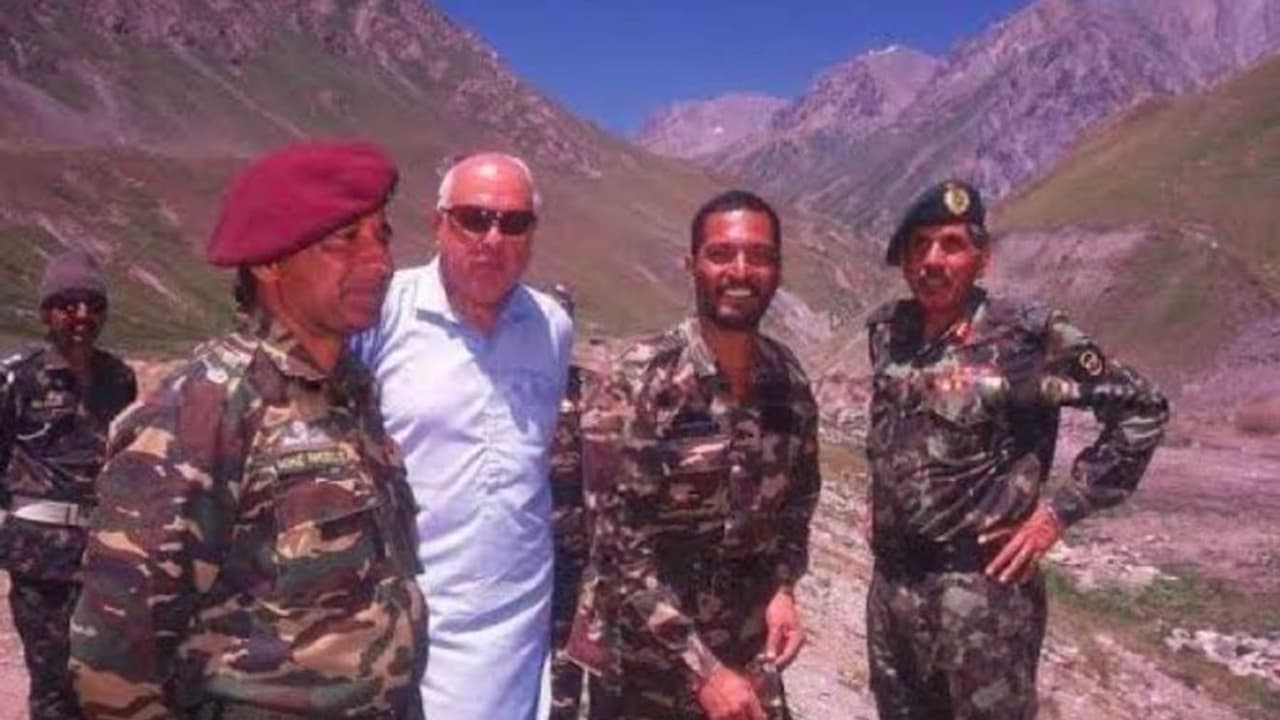
Then came 1999. India was fighting the Kargil conflict. For most people in public life, the natural response was to express solidarity, donate, speak about the troops or appear at patriotic events. Patekar wanted something different. He wanted to go closer to the soldiers, to serve the nation from the frontline.
He approached the then Defence Minister, (Late) George Fernandes, and sought special permission to accompany Army personnel. The request was not an ordinary one. An actor entering operational areas during an active conflict was obviously a matter of security and military protocol. Yet, Fernandes eventually granted special permission. Patekar subsequently spent time with troops in areas including Drass and along the Line of Control. Recent accounts of his recollections say he was associated with a Quick Reaction Team (QRT) and spent several weeks with Army personnel, while other accounts describe his duties in patrol and military hospital environments.
The important point is not to turn Patekar into a battlefield hero he never claimed to be one. It is something more human. He wanted to understand the soldier beyond the costume, the dialogue and the cinema screen. That distinction matters. Indian cinema has produced countless memorable military characters—from Haqeeqat and Border to Lakshya, Uri and Sam Bahadur. But Patekar’s connection with the armed forces had an unusual quality. He did not merely borrow the language of military discipline for a role. He carried some of that discipline into his own life and eventually became associated with the Territorial Army, retiring as a Lieutenant Colonel in 2013.
His military association also needs to be seen against India’s own history. The armed forces have repeatedly occupied that space between national security and national emotion. In 1947, the Indian Air Force played a critical role in transporting troops and equipment during the defence of Jammu and Kashmir. In 1965 and 1971, air power became central to India’s wars. In Kargil, air operations once again demonstrated how technology, courage and human endurance meet under extreme conditions.
Perhaps that is why Patekar’s military interest never appeared entirely ornamental. But there was another side to the man, away from cameras and uniforms. His social work was often quieter than his cinema.
He supported relief work after floods in Bihar, donated his remuneration from Paathshaala to charitable organizations and helped families of farmers affected by drought and debt in Maharashtra deeply. In 2015, he and actor Makarand Anaspure spearheaded the Naam Foundation, which works with drought-affected rural communities, farmers, water conservation and village development.
That work is significant because it reflected another idea of service. The soldier serves the nation in uniform. The citizen serves it through society. Patekar, in his own way, occupied both spaces. His artistic record was formidable. Three National Film Awards recognized his performances, including for Parinda, Krantiveer and Agni Sakshi. In 2013, the Government of India conferred on him the Padma Shri for his contribution to art and cinema.
Yet awards alone cannot explain why his passing feels different, to me this date. Perhaps it is because Patekar never quite fitted the conventional image of a Bollywood star to me. His voice could be theatrical, but his public persona often seemed deliberately stripped of glamour. His characters could be violent, vulnerable, angry, broken or patriotic. Behind them was an actor who appeared most comfortable when the performance had something real at its center.
And so, on October 8, as Indian Air Force aircraft take to the skies and the nation remembers its air warriors, another farewell is taking place on the ground. The Indian Air Force marks 94 years of “Touch the Sky with Glory.” Nana Patekar’s life reminds us that service to the country does not always come from a cockpit, a battlefield or a government office.
Sometimes it comes from a film set, a village, a drought-hit farmer’s home—or an actor asking a Defence Minister for permission to stand beside soldiers during a war. Nana Patekar played many roles. But, perhaps his most enduring one was never scripted.
A soldier at heart, a citizen by conviction, an actor by profession—and, finally, a man remembered beyond the screen.
This October 8, the guns may remain silent in his honour. The aircraft may fly overhead for another purpose. But somewhere between the roar of an Air Force fighter and the silence of a final farewell lies a fitting last tribute to – Nana Patekar.
A last tribute, then, not merely to the actor, but to the man who believed that patriotism was something to be lived, not simply performed. I wish to have met him once, in this lifetime. A regret to linger on.