

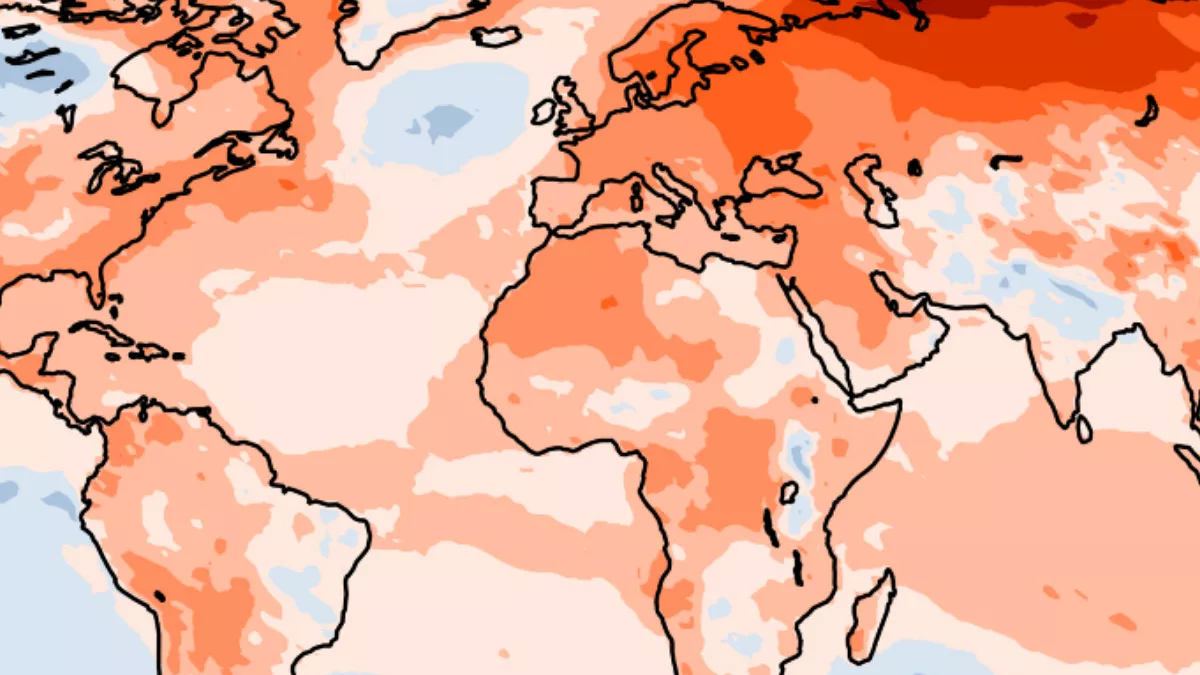
Climate change is impacting every part of the world. However, not all regions are warming at the same rate. Europe has emerged as the fastest-warming continent on Earth. In fact, according to scientific reports, the continent has warmed at nearly twice the global average over the past few decades. This rapid increase in temperatures is leading to more frequent heatwaves, melting glaciers, droughts, wildfires, and changing rainfall patterns.
But what is causing Europe to become warmer faster than the rest of the world? Many geographical, atmospheric, and environmental factors are cumulatively contributing. Decoding the reasons and gathering information about them is vital because this climate change impact on Europe isn’t only affecting its own population but also global weather patterns, ecosystems, and economies.
What is Making Europe the Fastest-Warming Continent?
Since the late 19th century, the Earth’s average temperature has risen by around 1.2°C due to human activities like burning fossil fuels and deforestation. However, Europe has experienced much higher warming of 2°C to 4°C than the global average.
The average temperatures across Europe have risen rapidly, especially since the 1980s, and the effects are becoming more visible every year, with record-breaking summer temperatures, shrinking glaciers in the Alps, and longer periods of drought.
Let’s discuss the factors contributing to this change and what makes Europe more vulnerable to rapid warming.
Europe Has a Large Land Area
Land tends to become warm faster than oceans. And Europe consists mainly of land, with fewer large bodies of water compared to many other regions. As global temperatures rise, Europe’s extensive landmass responds more quickly, causing average temperatures to increase faster.
So, one of the primary reasons Europe experiences strong warming is this difference between land and sea warming.
The Arctic is Warming Rapidly
The Arctic is warming nearly four times faster than the global average, a phenomenon known as Arctic amplification. These changes are strongly influencing Northern Europe.
Generally, snow and ice reflect a large portion of sunlight back into space. As Arctic ice melts, darker ocean water and land become exposed. These darker surfaces absorb much more heat, causing temperatures to rise even further.
Europe’s proximity to the Arctic, especially in countries like Norway, Sweden, Finland, and Iceland, leads to faster warming. The shrinking Arctic also changes atmospheric circulation, affecting weather patterns across the continent.
Fewer Cooling Aerosols in the Atmosphere
Over the last few decades, air pollution has significantly reduced in Europe. While cleaner air is excellent for human health, it has led to an unexpected climate effect.
Previously, industries released large amounts of sulphate aerosols into the atmosphere. These tiny particles reflected sunlight back into space, creating a temporary cooling effect. However, due to strict environmental regulations, these aerosols have been reduced significantly. As a result, part of the cooling effect that earlier masked some greenhouse gas warming has also been removed.
This has led to a more noticeable rise in Europe’s temperatures.
While anti-pollution measures must continue, the effect of greenhouse gases on climate change also cannot be overlooked.
Declining Soil Moisture
Healthy soil contains moisture that naturally cools the surrounding air through evaporation. However, rising temperatures are drying out the soil across much of Europe.
When soil becomes dry, less water evaporates into the atmosphere. Instead of using solar energy for evaporation, more heat directly warms the land surface. This makes heatwaves more intense and long-lasting. As a result, many southern and central European regions now experience repeated droughts.
Changes in Atmospheric Circulation
Europe’s weather is heavily influenced by atmospheric circulation patterns such as the jet stream and large-scale pressure systems. Climate change is altering these circulation patterns.
Scientists have observed that high-pressure systems are becoming more persistent during summer. These systems block rain-bearing clouds and allow hot air to remain over the same regions for several days or even weeks. As a result, there are longer heatwaves, reduced rainfall, higher daytime temperatures, and more severe drought conditions.
Countries across southern, central, and western Europe have experienced repeated heatwaves because these weather systems remain stationary for longer periods.
What are the Major Impacts of Rapid Warming?
The impact of Europe’s faster warming is already visible in daily life, public health, agriculture, and the economy. Here are the most prominent signs:
More Wildfires
Due to hotter and drier conditions, the risk of wildfires has increased in countries such as Spain, Greece, Portugal, France, and Italy. Longer fire seasons have a damaging impact on forests, wildlife habitats, and homes.
Water Shortages
Many rivers are experiencing lower water levels due to reduced rainfall and increased evaporation. The effects of lower river levels extend to drinking water supplies, agriculture, shipping, and hydroelectric power.
Melting Glaciers
The Alps serve as an important freshwater source for millions of people across Europe and other countries. As glaciers continue shrinking, water availability during dry summer months may become less reliable.
Agricultural Challenges
Farmers are facing reduced crop yields, heat stress in livestock, more frequent droughts, and increased pest outbreaks. Some crops that traditionally grew well in Europe are becoming harder to cultivate because of rising temperatures.
Health Risks
The chances of health risks increase with higher temperatures. There are more cases of heatstroke, dehydration, and heart and respiratory illnesses. Air quality also worsens, with older adults, young children, and people with existing medical conditions becoming more vulnerable to health risks.
What is Europe Doing to Slow Climate Change?
European countries are taking several steps to reduce greenhouse gas emissions and adapt to a warming climate. Some of the most prominent actions include:
- Expanding renewable energy such as wind and solar power: European nations are increasing the use of wind, solar, and other renewable energy sources to reduce their dependence on fossil fuels.
- Improving energy efficiency: Governments are encouraging energy-efficient buildings through better insulation, modern heating systems, and stricter construction standards.
- Promoting electric vehicles: Many countries are supporting the adoption of electric vehicles by expanding charging infrastructure and offering incentives to consumers.
- Protecting forests and restoring wetlands: Forest conservation and wetland restoration help absorb carbon dioxide, protect biodiversity, and reduce the impacts of climate change.
- Developing heat action plans: Cities are introducing heat action plans that include early warning systems, cooling centres, and public awareness campaigns to protect people during extreme heat.
- Investing in climate-resilient infrastructure: Governments are upgrading roads, bridges, flood defences, and public utilities to better withstand extreme weather events.
- Strengthening water conservation: European countries are promoting efficient water use, improving water storage systems, and encouraging sustainable management of rivers and reservoirs.
These efforts aim to reduce future warming while helping communities adapt to climate impacts that are already unavoidable.
Final Thoughts
Several interconnected factors have led to Europe’s faster warming than the global average. Its large landmass, proximity to the rapidly warming Arctic, cleaner air with fewer cooling aerosols, changing atmospheric circulation, declining soil moisture, and shrinking glaciers all contribute to faster temperature increases.
The consequences are already evident in stronger heatwaves, droughts, wildfires, glacier loss, and increased pressure on agriculture and water resources. While Europe is making significant efforts to reduce emissions and prepare for future climate challenges, scientists agree that global cooperation is essential. The most effective way to slow climate change and limit its impact on Europe and other nations is to reduce greenhouse gas emissions.
Article by Gayatri Sarin
List of references:
https://www.aa.com.tr/en/europe/europe-warming-at-twice-global-average-rate-eea-report-finds/3888344
https://fortune.com/2026/06/26/europe-heat-wave-record-2026-climate-warming-speed
https://wmo.int/news/media-centre/temperatures-europe-increase-more-twice-global-average