

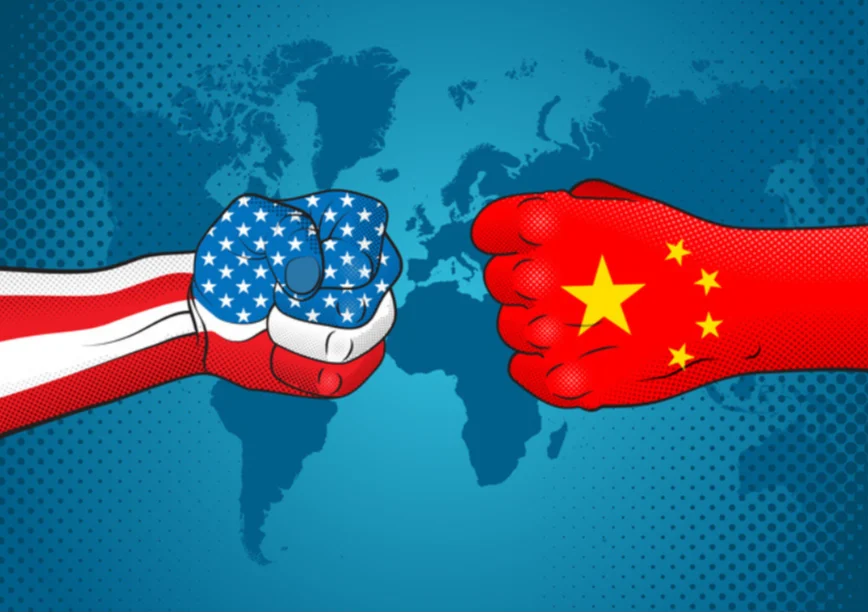
China’s economic miracle has been a subject of discussion since the 1980s, after it implemented Reforms and Opening Up in 1978 under the framework of Socialism with Chinese Characteristics. Once known as the “sick man of Asia”, China managed to achieve a dramatic economic transformation in less than five decades; it went from a rural, impoverished, and technologically backward nation to be known as the “world’s factory” in the early 2000’s and has subsequently become a pertinent technological power with cutting-edge technology and the world’s largest EV manufacturer. In 2008, when the global market crumbled under the Global Financial Crisis, China continued to grow and surpassed Japan to become the world’s second- largest economy in 2010. While China welcomed foreign direct investments for many decades since 1978, it launched the Belt and Road Initiative in 2013, enhancing its overseas investment, shifting its focus to expand its global influence through infrastructure, trade and investment. China’s BRI-related goals emphasise becoming a major partner for less developed countries. According to China’s Ministry of Commerce, direct investment from China in the region reached 14.71 billion dollars in 2024, making China one of the fastest-growing and largest investors in the region after the US, which has been present in the region since the 1830s.
China’s Growing Presence in Latin America
In 2008, looking at China’s growing investment in the Latin American region, Prof. David Shambaugh stated that “positive or negative, China’s presence in Latin America is here to stay” and warned about possible threats that Latin nations could face in the long term.
China’s engagement with Latin America is underpinned by three strategic ambitions: diplomatic competition with Taiwan, resource security, and the pursuit of broader economic and geopolitical influence in a region historically dominated by the United States. Cuba was the first Latin American country to recognise Beijing in 1960; however, the bilateral relations garnered more attention when Latin American countries also embraced China as part of their new multidirectional diplomacy, no longer content being the “backyard” of the United States. This diversified diplomacy has introduced a new set of relationships in world affairs, and China’s rapid rise in these regions has made Beijing a truly global actor, if not a global power.
Republic of China: ROC has been China’s biggest challenge for a considerable time. Its “One China Principle” states that it does not completely rule out the use of force to integrate Taiwan into China but it has made Taiwan lose its diplomatic allies steadily. In the 1960s, Taiwan had seventy diplomatic allies, the number has now come down to twelve. With China’s growing influence globally, Taiwan is likely to lose more of its allies. The seriousness of the One China Principle can be gauged by the fact that recently China imposed a ban on certain New Zealand lawmakers after they visited Taiwan, an act that violates the one-China principle. China became New Zealand’s biggest trading partner since 2017. For China, Taiwan holds not only geopolitical significance but it is also symbolically important because the CPC links Taiwan’s reunification to historical grievances, national sovereignty, and restoring China’s past strength after the “Century of Humiliation. Out of the 12 diplomatic allies that Taiwan has, nine have populations under one million and their finances are highly dependent on foreign aid. Under such structural conditions establishing diplomatic relations with China means larger aid, broader markets, and more infrastructure. For small states, this is a survival strategy under great-power competition.
Resources:
China has transformed from the “world factory” to a leading actor in global research and development (R&D), green technologies such as electronic vehicles (EVs). Thus, to keep its green industries running, China needs lithium, Yanmei Xie, Senior associate fellow at the Mercator Institute for China Studies explains that”Chinese policy makers decided that EVs could be an opportunity for the Chinese auto industry to leapfrog the west, because it was like a blank field where everybody was starting from scratch” hence, since early 2000s China focused on establishing itself in the “lithium triangle,” spanning Argentina, Chile, and Bolivia, which contains 60-70% of the world’s lithium reserves. Chinese companies have invested over $16 billion in South American lithium projects between 2018 and 2024, since 2020, lithium extraction across the region quadrupled making China a major foreign investor in Argentina’s and Chile’s lithium sector. In 2023, China’s Tianqi Lithium and Ganfeng Lithium collectively controlled access to nearly 40% of global lithium production through their South American operations and strategic partnerships.
This dominance aligns with China’s 14th Five-Year Plan (2021-2025), which states achieving the country’s energy transition goals, including the production of 21.2 million electric vehicles annually by 2030 which is not possible without lithium batteries.
China’s presence in the United States’ “backyard” is also symbolic in a geopolitical and historical sense, and not just an economic one. The Monroe Doctrine (1823) that asserted U.S. dominance in the Western Hemisphere by opposing external interference, effectively treating Latin America as a U.S. sphere of influence. The Belt and Road Initiative (BRI), by contrast, represents China’s global connectivity strategy that expands economic and infrastructure ties worldwide, including into regions traditionally dominated by U.S. influence.
With China’s presence in the region the US feels challenged as it effectively undermines US longstanding dominance in the region by deepening economic ties, financing infrastructures and expanding political partnerships in the region. Symbolically, this shows that even regions historically aligned with Washington now have alternative major partners, reflecting global systemic change showing the world is moving toward multipolarity
Does Influence Equal Hegemony?
While the United States continues to possess significant advantages in Latin America since the 19th Century, China’s presence in the region seems to offer Latin America an opportunity to choose between the two nations, providing them an opportunity to negotiate when needed. China’s growing influence should not automatically be interpreted as evidence of emerging hegemony because hegemony involves far more than economic presence. It requires the ability to shape political outcomes, establish regional norms, influence security arrangements, and maintain long-term leadership that is accepted, or at least tolerated, by other states. The US’s geographical proximity also acts as a major factor that prevents China from becoming a hegemon in the region. The United States still remains a key security partner for many countries and retains considerable political leverage through regional and global institutions.
On the question of hegemony, China has time and again reiterated a part of Deng Xiaoping’s speech, which he had delivered in 1974 addressing the United Nations General Assembly; he said “China is not a superpower, nor will she ever seek to be one. If one day China should change her color and turn into a superpower, if she too should play the tyrant in the world, and everywhere subject others to her bullying, aggression and exploitation, the people of the world should identify her as social-imperialism, expose it, oppose it and work together with the Chinese people to overthrow it.” On December 1, 2017, at the opening ceremony of the CPC in Dialogue with World Political Parties High-level Meeting, President Xi Jinping reiterated China’s commitment of never seeking hegemony or expansion no matter what stage of development it reaches. China will neither “import” models from other countries nor “export” the Chinese model or ask other countries to copy the Chinese practice.
Nations facing economic challenges have often turned to Chinese financing as an alternative to Western institutions. While these loans have supported infrastructure and development projects, they have also generated concerns regarding debt sustainability. Much of the discussion surrounding China’s global lending practices has centred on the concept of “debt-trap diplomacy,” a term that remains highly contested. Critics argue that excessive debt may create political dependence, while others contend that the narrative oversimplifies complex economic realities and ignores the agency of borrowing states, the fact that Hugo Chavez once said that “China deal Great Wall against US hegemony” speaks volumes about the Latin American nation’s desperate discontent with US hegemony in the region. Regardless of where one stands in debate of whether China is replacing the US as the new hegemon in the region, the question remains unanswered because it has not yet been fully tested on a regional scale.
So far, Beijing’s approach in Latin America reflects its broader foreign policy narrative: multipolarity and South-South cooperation. It often emphasises that countries should pursue development according to their own circumstances and should not be subjected to political conditions imposed by external powers. This message has enabled China to distinguish itself from traditional Western approaches to development assistance and governance promotion.
The real measure of hegemony is not simply the volume of trade or investment, but the capacity to shape the choices and behaviour of other states- China has undoubtedly acquired influence and can be seen as a coercing factor in case of Taiwan, but in case of Latin America, whether influence evolves into hegemony, remains uncertain. If Latin American countries encounter difficulties repaying Chinese loans, Beijing’s response will reveal whether it seeks primarily to be a development partner and an ambitious nation supporting its dream or an emerging hegemonic power. Until that moment arrives, China’s position in Latin America should be understood not as hegemony achieved, but as influence still in transition.
Article by Shital