

The word Humour has long occupied a unique place in this society. From court jesters and satirists to modern stand-up comedians, comedy has traditionally been viewed as a space where difficult subjects could be easily discussed, authority could be directly questioned, and the social realities could be reflected upon through laughter or mimicry. In the few recent years, however, the nature of comedy has changed significantly. The rise of social media, short-form video platforms, and crowd-work performances has radically changed what was once a temporary exchange between a performer and a limited audience into content proficient of reaching millions within minutes.
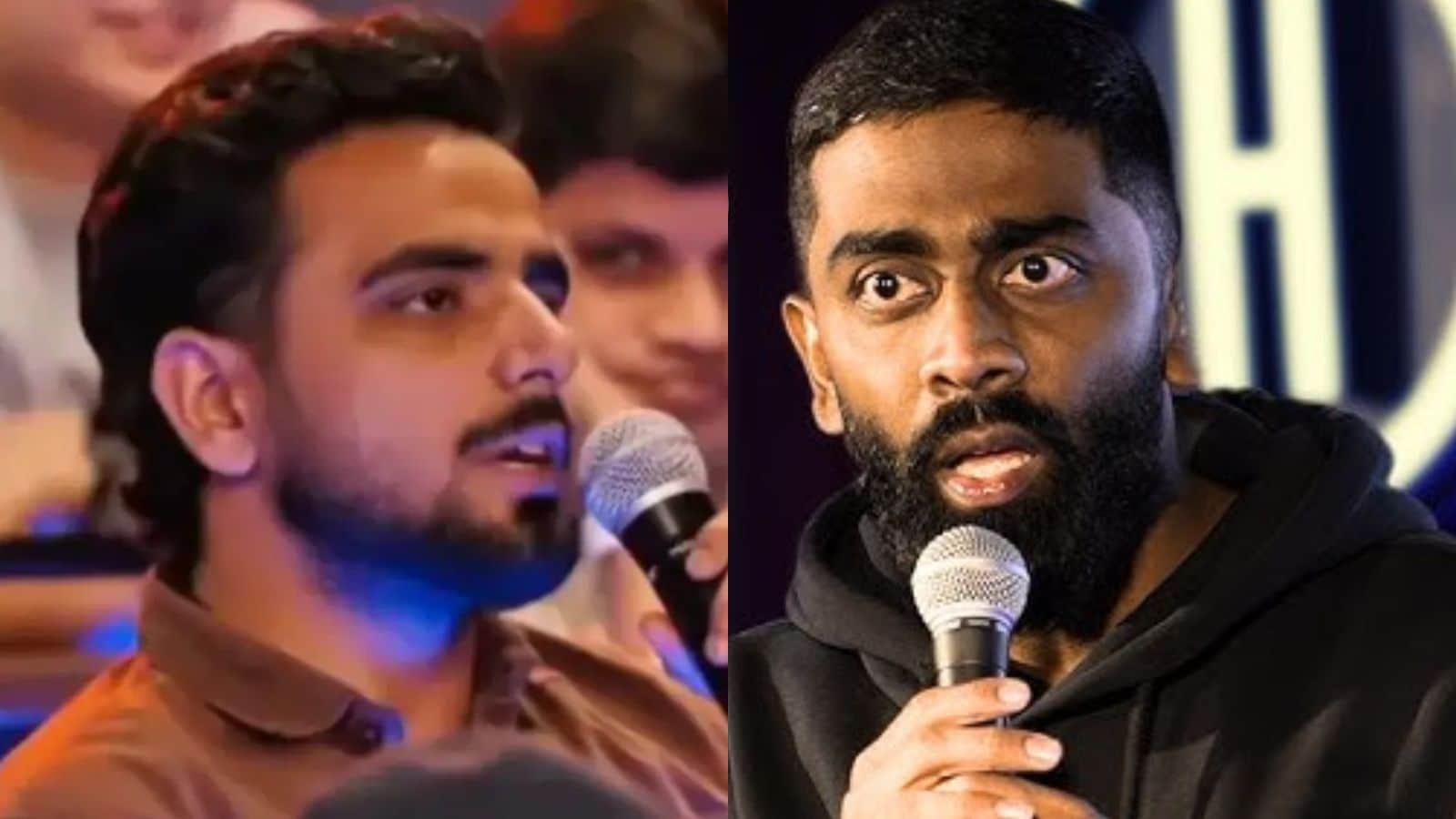
This transformation has created a complex predicament for digital societies. The migration of remarks from a performance setting into a wider arena of public fundamentally alters how responsibility is assigned. The recent controversies surrounding comedian Pranit More’s crowd-work performances have brought these questions into significant sharp focus. The ₹370 biryani controversy, the public outrage against audience participant; Himanshu Jangra, criticism surrounding comments made by a medical student regarding cadavers, subsequent public apologies, institutional inquiries, and online outrage have all become part of a broader debate involving comedy, professional ethics, accountability, and what many now describe as cancel culture.
The ₹370 biryani controversy emerged during a crowd-work interaction at one of Pranit More’s comedy shows. Crowd work is a growing feature of contemporary stand-up comedy, which involves direct interaction between comedians and audience members. Rather than relying entirely on prepared material, performers engage audience members in impromptu conversations, often turning their responses into the basis of jokes.
During one such interaction, an audience member narrated a dating experience involving a ₹370 biryani purchase. The remarks were widely perceived as conveying entitlement towards a woman in return for money spent during the date. While the atmosphere inside the comedy venue may have encouraged the ongoing exaggeration, performance, or even improvisation, the viral circulation of the clip dramatically altered a local interaction into a national controversy.
The criticism was not limited to the amount mentioned. Many observers have keenly focused on the broader implications of the remarks, arguing that they reflected the problematic attitudes toward women, relationships, and consent. The audience member later stated that parts of the story had been embellished for entertainment purposes and that he had become carried away by the atmosphere of the show. Yet by that point the clip had already spread across social media, thereby attracting intense harsh criticism and reportedly leading to professional consequences.
The controversy raises a question that extends far beyond a single comedy show: should individuals be judged primarily by remarks made during a performance, or by their broader actions and character outside that so-called mahaul setting?
A second controversy emerged when a medical student; Sejal Pawar, discussed anatomy dissections and made remarks about male cadavers during another crowd-work interaction. The violent backlash that followed focused less on comedy and more on professional ethics. Critics argued that human bodies donated for medical education are handed over to institutions with dignity and respect. For many observers, the controversy was not simply about a joke but about the standards expected from future medical professionals.
Here, a related but distinct debate emerged from this perspective. If social media increasingly demands accountability from individuals for statements made in informal settings, how should society determine the appropriate consequences? The increasing power of digital audiences has also blurred the distinction between the legitimate accountability and public shaming, thereby raising concerns regarding the proportionality of social and professional consequences.
These debates are not unique to India.
Internationally, similar controversies have repeatedly emerged on multiple occasions. In the United States, comedian Dave Chappelle’s Netflix special The Closer generated significant controversy after comments regarding transgender issues and gender identity. Chappelle argued that comedy should retain the freedom to address sensitive topics and criticized what he viewed as an increasingly restrictive culture surrounding public expression. Critics, however, argued that influential public figures carry responsibilities and that humour does not automatically exempt speech from criticism.
The debate surrounding Chappelle was not simply about comedy only. It evolved into a wider conflict further involving the core existence of free speech, minority rights, artistic freedom, social responsibility, and corporate accountability.
Similarly, television personality Roseanne Barr experienced severe professional consequences after a controversial social media post generated accusations of racism. The adverse public reaction led to the cancellation of her television programme and rekindled debates about whether a single statement should be capable of defining an individual’s entire career.
Kevin Hart’s experience offers another crucial example. Old social media posts resurfaced, leading to significant controversy and ultimately affecting his opportunity to host the Academy Awards. And once again, questions emerged regarding accountability, proportionality, and the enduring consequences of digital records.
If we view them under the same theoretical lens, these cases reveal a common pattern. A statement is made before a limited audience. The content is further amplified through digital platforms. And the public outrage follows. Institutions become involved. Professional consequences emerge. What begins as a moment of speech evolves into a larger social event.
This process illustrates what communication scholars often describe as “context collapse.” A statement originally intended for one audience is suddenly exposed to countless others who lack access to the original setting, tone, atmosphere, or surrounding circumstances. A joke told before a few hundred people can become national news headlines. A comment made in a classroom can become a social media controversy. A single tweet can alter an entire career of an individual who might not even have dreamt of such a day.
The rise of crowd work intensifies this phenomenon to a great extent. Audience members increasingly become a part of performances, while comedians act as facilitators of conversations that may later reach millions through the online platforms. This raises a few difficult questions regarding responsibility. Is responsibility borne solely by the individual who speaks? Does the comedian who provides the platform share responsibility? What role do algorithms, media coverage, and audiences themselves play in transforming isolated remarks into national controversies?
Comedian Kunal Kamra has also criticized the tendency of some performers to hide behind crowd work when controversies arise. His argument is very straightforward: comedians control the stage, the microphone, and the platform. Therefore, they cannot entirely distance themselves from the consequences of interactions they choose to amplify. This perspective introduces a third dimension to the debate beyond free speech and accountability: platform responsibility.
Three contrasting viewpoints therefore emerge. The first argues that comedy should remain a protected space where difficult subjects can be discussed without excessive restriction. The second insists that public figures possess responsibilities and should not normalize harmful attitudes. The third contends that platforms and performers share accountability for the messages they choose to amplify.
None of these positions is entirely without merit. Yet the increasing frequency of such controversies suggests that society is confronting a larger transformation. Digital audiences have acquired unprecedented power. They can reward, condemn, amplify, investigate, and influence outcomes with remarkable speed. In many respects, they have become a new form of moral jury.
The central question, therefore, is not whether comedy has become vulgar. Nor is it whether a particular individual was entirely right or entirely wrong.
The controversies surrounding contemporary crowd-work comedy also prompts urgent reflection on a much older tradition. Satire has never been an alien to public discourse. Writers of the Enlightenment Era, such as Jonathan Swift and Alexander Pope have employed humour, exaggeration, and irony to expose the contradictions of their societies. Swift’s Gulliver’s Travels used fictional worlds to critique excessive human pride, political conflict, and constant moral inconsistency, while Pope’s The Rape of the Lock transformed a seemingly trivial incident into a commentary on the values of eighteenth-century society. Humour, therefore, has long served purposes beyond the periphery of mere entertainment. The contemporary debate is not about whether satire should exist or not, but whether the existing boundaries between satire, provocation, and sensationalism are becoming increasingly blurred in an age where mass circulation often rewards shock value more than substance. As comedy frequently migrates from literary critique and stage performance to algorithm-driven digital platforms, the question is no longer simply what makes people laugh, but what kind of public culture that laughter helps create.
A statement made before a small audience can now be judged by millions of users. The boundaries between performance, private opinion, professional identity, and public reputation have become increasingly blurred. As these parameters continue to collapse, societies across the world will be forced to confront a difficult challenge: how to preserve freedom of expression while ensuring that accountability does not become permanent public trial. The controversies may begin on a comedy stage, but the debate they generate extends far beyond it.
What began as an attempt to create an interesting “mahaul” for a limited audience now frequently escapes its original context entering digital spaces where humour and accountability are reflected through vivid kinds of lens. In the age increasingly characterized by performative communication,where statements are often crafted critically for instant visibility rather than reflection. The boundaries between humour,provocation, and public responsibility have become progressively blurred.
Article by Sruti Bhaumik