
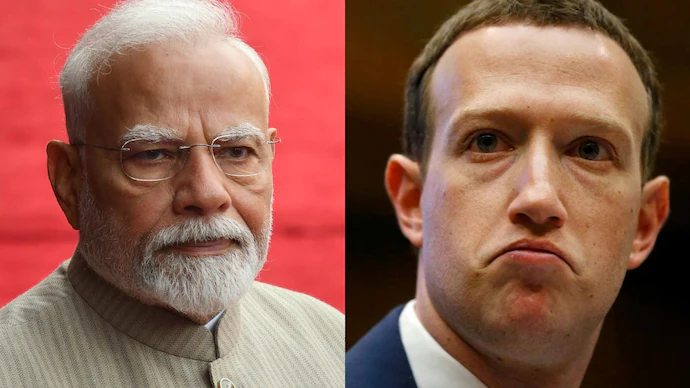
The temporary restriction of an official Facebook video posted by Prime Minister Narendra Modi has eventually evolved into a wider debate over platform accountability, intermediary liability, and the dynamic relationship between democratic governments and global technology companies. While the incident at the onset appeared to be a technical error, it has since raised certain fundamental questions pertaining to the digital sovereignty, content moderation, and the extent to which private technology companies should be held accountable for decisions altering political communication.
This controversy also stimulates broader juxtaposition with international regulatory frameworks, including the European Union’s Digital Services Act, discussions surrounding Section 230 in the United States, and the intensifying scrutiny of global technology platforms across several democratic societies. At the heart of the discussion, there lies a central question: Can democratic governments ensure accountability from global technology platforms without jeopardizing an open and independent digital space?
The controversy began when Prime Minister Narendra Modi uploaded a Facebook video in late July 2026 addressing students and young people regarding the NEET-UG 2026 paper leak issue. In the video, he was addressing stricter action against paper leaks, stronger legal measures, and the government’s robust response to concerns brought forth by the students. Soon after it was published, Facebook, which is owned by Meta, temporarily removed the video, making it inaccessible to users for several hours. Meta later restored the content, explaining that the video restriction prompted an operational or technical error rather than any political decision.
The incident immediately grasped worldwide attention and this generated widespread debate. Normally, the accidental removal of an ordinary user’s post mostly affects only that particular individual. However,since this involved the verified official account of the Prime Minister of India, a platform through which millions of citizens receive official government communication. The temporary restriction therefore raised an obvious question: How could the verified account of the Prime Minister have its official communication withdrawn?
The controversy further expanded because many users and political analysts have deliberatedly questioned whether the incident was genuinely an algorithmic or technical error or whether other factors had contributed to the removal. Although Meta maintained that it was an operational mistake, the incident immediately sparked concerns regarding the reliability of content moderation systems and the safety mechanisms governing politically significant communication.
The matter quickly garnered the attention of the Government of India. The Parliamentary Standing Committee on Communications and Information Technology summoned Meta representatives and raised serious dissatisfaction with the company’s justification that the incident was merely a technical error. The committee demanded a personal apology from Meta CEO Mark Zuckerberg, a detailed explanation regarding how the incident unfolded, and assurances that similar situations would not arise in the near future. Reports have also clearly indicated that the committee provided Meta with a three-day deadline to secure Zuckerberg’s apology. It is quite significant to note that this deadline strongly symbolised a political demand aimed at carefully guaranteeing accountability rather than a major judicial order.
One of the most vital concepts that has emerged from this controversy is Safe Harbour, provided under Section 79 of the Information Technology Act. Safe Harbour actually serves to protect the intermediaries such as Meta from being treated as the publisher of all user-generated content, provided they comply with applicable laws and remove unlawful content when legally mandated. Without these protections, social media companies could face several direct legal liability for virtually every piece of content displayed on their platforms.
This legal principle became pivotal to the existing debate because several members of the parliamentary committee directly questioned whether Meta should continue enjoying Safe Harbour protections if it appeared to exercise editorial control over strategically important content. Their argument was totally straightforward: if a platform benefits from operating within India, it must also fulfil corresponding responsibilities. At the same time, it is also essential to note that the parliamentary committee cannot itself revoke Safe Harbour protection. It may endorse strict action and increase political pressure, but any kind of legal repercussions would require the appropriate statutory process.
Meta later has subsequently apologised for the incident. Its Chief Global Affairs Officer, Joel Kaplan, expressed remorse to the Government of India and reiterated that the restriction resulted from an operational error rather than an intentional moderation decision. Reports also indicate that Mark Zuckerberg also conveyed regret through the company’s engagement with Indian authorities. Despite this, the parliamentary committee has strictly maintained that an apology alone was unsatisfactory. The members continued seeking answers regarding whether the incident resulted from an algorithmic failure, possible human intervention, and the safeguards that would prevent similar incidents in the future.
For this reason, the controversy gradually shifted beyond the temporary removal of a single video and became a broader discussion concerning platform accountability. The central issue was no longer simply why one video disappeared but how global technology companies should manage politically sensitive communication in democratic societies.
The issue also possesses certain significant geopolitical implications. At its core lies the principle of digital sovereignty. India is effectively asking whether a private American technology company should possess the authority to influence communication declared by the elected government of another sovereign state. This raises some broader questions concerning national sovereignty, platform accountability, regulation of multinational technology companies, and democratic governance in an increasingly digital world. India’s importance within this debate cannot be simply omitted. Meta owns Facebook, Instagram, and WhatsApp, while India serves as one of the company’s largest global markets, with hundreds of millions of active users. Consequently, any major disagreement between India and Meta could extend far beyond a domestic dispute and undoubtedly assumes international significance.
The controversy is also larger than Prime Minister Modi’s video itself. Tomorrow, a similar situation could again involve another Prime Minister, another President, another election, or even another democratic government. This has transformed the discussion from an isolated technical incident into a global policy debate concerning who ultimately decides what remains online: private technology companies, national governments, independent regulators, or judicial institutions.
This has produced two persuasive and credible arguments. One perspective maintains that global technology companies often require sufficient independence to moderate harmful content; otherwise misinformation, deepfakes, hate speech, and illegal material could spread rapidly. The opposing perspective strongly argues that if platforms mistakenly remove legitimate political communication, they risk influencing democratic discourse and public credibility. Governments therefore contend that greater accountability from technology companies is fundamental.
Although Meta has promptly apologised and connected the incident to an operational error, the controversy has not fully concluded yet. Parliamentary scrutiny continues to examine whether the standing checks and balances governing content moderation are comprehensive and whether current intermediary protections appropriately balance technological operational independence with democratic obligation.
Ultimately, the Meta–India controversy is not simply about the temporary deletion of a single Facebook video. It critically highlights a broader hurdle grappling with democratic societies worldwide: how governments can hold global technology platforms accountable while preserving independent content moderation, freedom of expression, and an open digital ecosystem. As technology companies persist to shape public discourse across national borders, achieving this balance will remain one of the most significant policy challenges of the digital age.
Article by Sruti Bhaumik