

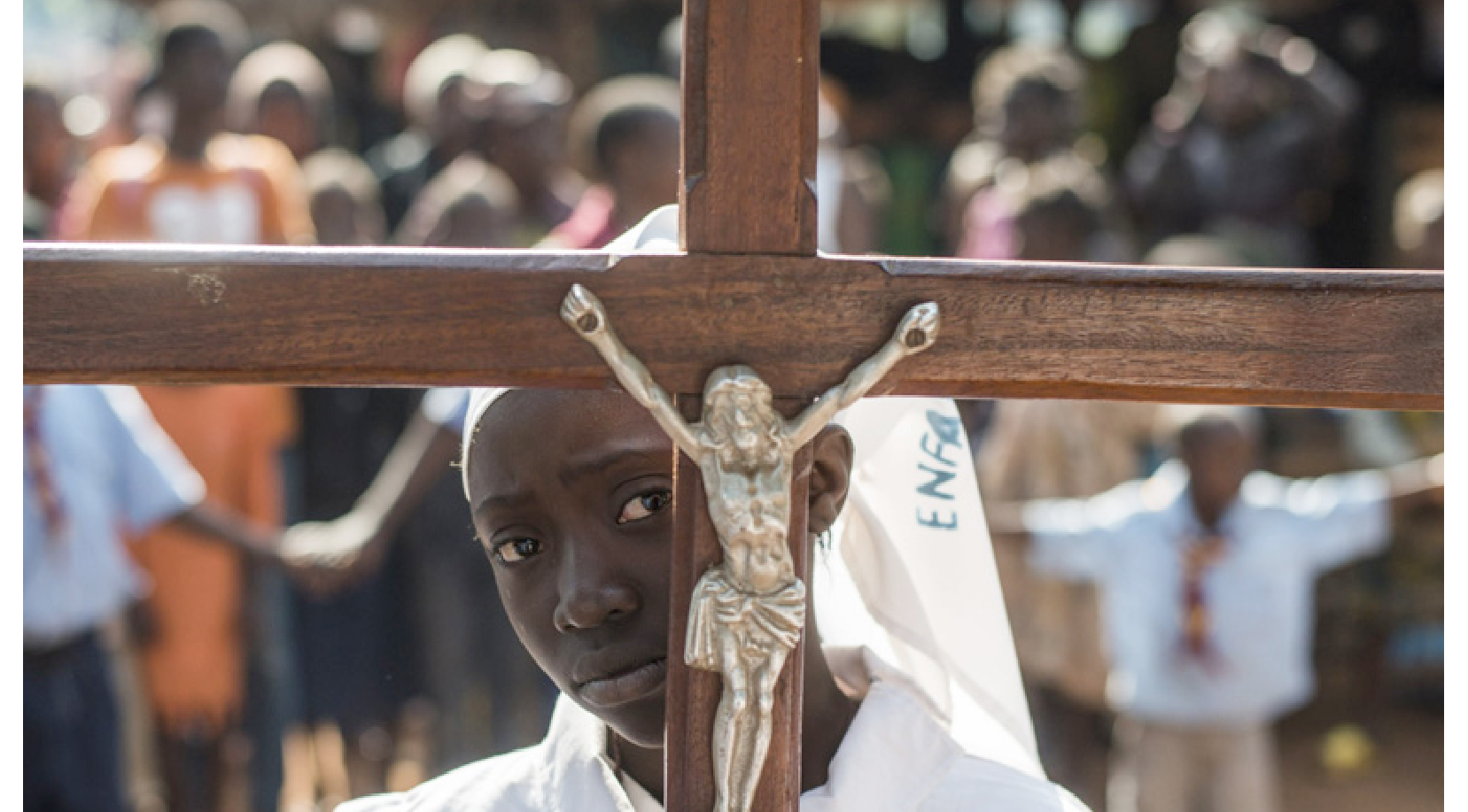
Sub-Saharan Africa has emerged as one of the world’s most significant regions for Christians. According to Pew Research Center data published on December 9, 2025, Africa is home to around 31% of the world’s Christian population, surpassing Europe, which is home to 22% of Christians. The African region has experienced this remarkable growth over the past century, particularly in recent decades. This transformation is not only demographic but also extends to social, cultural, and political aspects.
This article explores the growth of the Christian population in Sub-Saharan Africa, tracing its historical roots, analyzing key drivers, and assessing its broader implications.
Historical Background of Christianity in Sub-Saharan Africa
At the start of the 20th century, Christianity was a minority religion in Sub-Saharan Africa. Christianity and Islam followers together made up for less than a quarter of the population, while the majority practiced traditional African religions. This data is based on historical estimates from the World Religion Database.
However, the colonial period played a crucial role in the spread and expansion of Christianity. European missionaries established churches, schools, and healthcare institutions, which often became centers of social mobility and education. Gradually, conversion to Christianity became associated with access to literacy, employment, and political participation.
Between 1900 and 2010, the Muslim population between the Sahara Desert and the Cape of Good Hope grew more than 20-fold, from roughly 11 million to 234 million. During the same time frame, Christianity had expanded dramatically. The number of Christians increased almost 70-fold, from approximately 7 million to 470 million, reflecting both conversion and natural population growth.
Recent Demographic Trends
As of 2020, Christianity was the dominant religion in Sub-Saharan Africa. Approximately 62% of the region’s population, around 697 million people, identified as Christians. Between 2010 and 2020 alone, the Christian population in the region grew by 31%, mirroring the overall population growth rate.
However, in all other regions, especially in countries in America and Europe, Christians declined as a percentage of the population. Benin experienced a 5-point decline, while the United States saw a 14-point drop. In Australia, there was a 20-point drop.
Mozambique was the only region in which the proportion of the Christian population grew substantially, increasing by 5 percentage points, between 2010 and 2020. This indicates that Christianity was not only maintaining its share in Sub-Saharan Africa but also expanding in absolute numbers at a rapid pace.
Key Drivers of the Christian Population Growth
Several key factors are driving this disparity in growth rates.
1. High Fertility Rates
One of the most significant factors driving the growth of the Christian population in Sub-Saharan Africa is high fertility. The region has had some of the highest birth rates in the world, with fertility levels well above the replacement rate of 2.1 children per woman. Christian families, like other religious groups in the region, tend to have larger numbers of children. This contributes directly to the rapid expansion of the Christian population.
2. Age Structure
Sub-Saharan Africa has an exceptionally young population. As of 2010, about 41% of Christians in the region were under the age of 15. This youthful demographic ensures sustained growth over time. A large base of young people entering reproductive age leads to continued population expansion, reinforcing Christianity’s numerical increase.
3.Religious Conversion and Expansion
Although natural population growth is the primary driver, religious conversion has also contributed to the spread of Christianity. Missionary activities, evangelical movements, and the rise of Pentecostal and charismatic churches have played a major role in attracting new adherents.
In many communities, Christianity has adapted to local cultural contexts, integrating elements of traditional African beliefs. This flexibility has made it more accessible and appealing to diverse populations.
4. Urbanization and Social Change
Rapid urbanization in Sub-Saharan Africa has created new environments for religious expression. The cities often serve as hubs for religious innovation, where new churches and movements can emerge and grow quickly.Urban populations frequently seek social networks, moral guidance, and community support.
These needs are often fulfilled effectively by churches. As a result, Christianity continues to expand in both rural and urban settings.
What Are the Global Implications of The Growth?
The rapid expansion of Christianity in Sub-Saharan Africa has significant global consequences.
1. Shift in Christian Demographics
The center of Christianity is shifting from the Global North (Europe and North America) to the Global South, particularly Africa. This shift is reshaping theological perspectives, church leadership, and global religious priorities.
2. Influence on Global Christianity
African churches are increasingly influential in global Christian networks. They contribute to missionary work, theological debates, and international religious organizations. In the coming decades, African clergy and theologians are expected to play a leading role in shaping the future of Christianity.
3. Socio-Political Impact
Christian institutions in Sub-Saharan Africa often play important roles in education, healthcare, and social services. They also influence political discourse, particularly on issues such as governance, human rights, and social justice.
The Future of Christian Population Growth
In the future, the Christian population in Sub-Saharan Africa is expected to continue growing rapidly. The region’s total population is projected to more than double by 2050, reaching nearly 1.9 billion people.
Given current trends, a large share of this increase will be among Christians. The combination of high fertility, a young population, and sustained religious engagement suggests that Sub-Saharan Africa will remain central to global Christianity for decades to come.
Final Thoughts
The growth of the Christian population in Sub-Saharan Africa represents one of the most significant religious transformations of the modern era. From a minority faith in 1900 to the dominant religion today, Christianity has expanded through a combination of historical, demographic, and cultural factors.
High fertility rates, a youthful population, urbanisation, and adaptive religious practices have all contributed to this expansion. As a result, Sub-Saharan Africa has become the new epicentre of global Christianity, with profound implications for the religion’s future worldwide.
This Article is written by Gayatri Sarin