
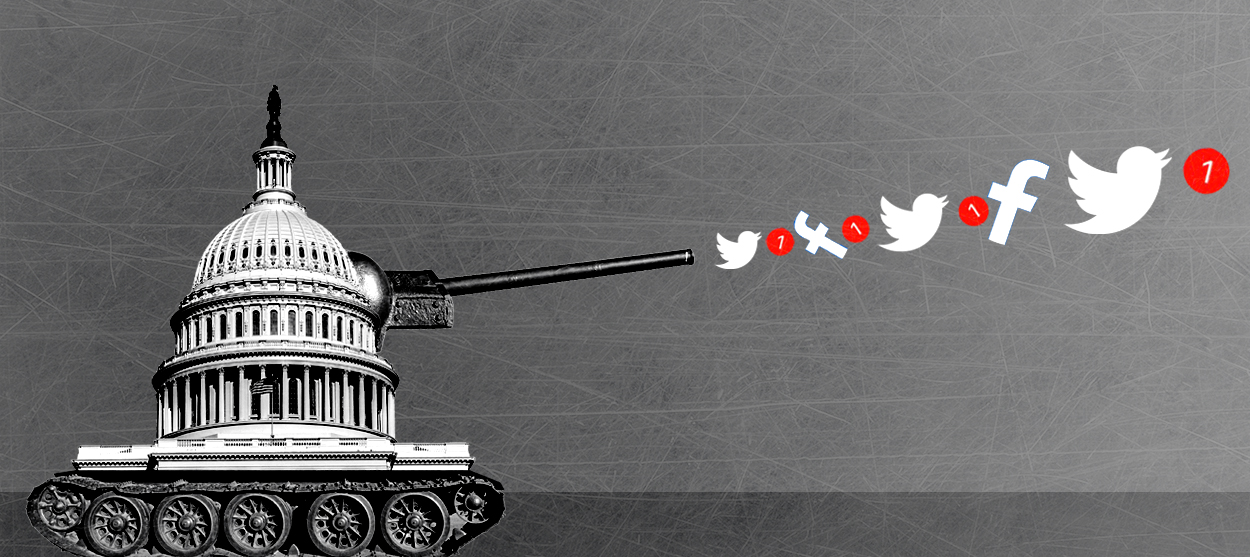
In the contemporary world, almost everything happening around us is connected, directly or indirectly, to the politics of attention. Earlier, power was something visible to almost everyone. It was more about land, military strength, and territorial control. Later, it shifted towards money and trade. But now, power has moved beyond all of this. It is no longer only about what one controls physically, but about what one can control invisibly; and that is attention.
The real question today is not ‘who controls land or money’, but ‘who is able to capture and sustain human attention.’ This is very important because human beings do not always act based on reality; rather, they act based on what they persistently see, notice, and begin to believe.
Attention and Everyday Behaviour
A very simple example makes this scenario clearer. Let’s suppose a particular phone suddenly becomes visible everywhere. People are using it, posting about it, and talking about it. Even if an individual does not actually need it, the repeated visibility automatically generated a desire to own it. People may even elongate their finances just to be part of that visible trend.
This reflects that most of our actions or behaviour are not always based on need, but on what captures our focus repeatedly.
How Algorithms Shape Choice?
This becomes even more explicit when we look at our everyday digital behaviour. For example, if I search for something on ‘Myntra’ and engage with one product, my feed starts showing similar products again and again. Now, it may seem that I am choosing this content, but in reality, I only made the very first choice.
What if I preferred to explore ‘Nykaa’, or some other platform? That option still prevails, but it is no longer equally visible. My attention has been centred around one direction.
This is the key difference:‘I control the initial action, but the system controls what follows.‘
Repetition and the Illusion of Freedom
Repetition plays a DOMINANT role here. When something appears again and again, it starts feeling normal, then suddenly important, and eventually it becomes a necessity.
Familiarity begins to feel like truth.
So even though it feels like we are choosing freely, the reality is quite different from the illusion we are indirectly forced to live in. Our choices are happening within a structured environment. We are not choosing the repetition, the intensity, or the narrowing of options. These are being shaped for us.
From Information to Attention
If we compare earlier times with today, the shift becomes crystal clear. Earlier, information was limited. We had newspapers, radio, and television. Control was centralised.
But with the internet and smartphones, information became unlimited. Everyone is now producing and consuming content. However, when information becomes too much, people cannot process everything. So attention becomes scarce.
This is where power shifts, from controlling information to controlling attention.
A Real-World Example: Strait of Hormuz
This can be understood through a real geopolitical example. Many people were not even aware of the Strait of Hormuz; its location or its importance. But the moment tensions or conflicts related to that region started grasping immediate attention,
Suddenly, everyone began searching about it, discussing it, and forming their individual opinions.
The event existed earlier as well, but it became important only when attention was channelled towards it.This clearly portrays that what we consider important is often decided not by reality itself, but by what is made visible to us.
Perception vs Reality: A Literary Insight
This idea can also be understood through literature. In the essay, A Room of One’s Own, Virginia Woolftalks about Judith Shakespeare, a fictional sister of Shakespeare. Woolf suggests that even if Judith had equal talent, she would not have received the same recognition because of the social conditions of that time.
Now, whether Judith existed or not is not the point. The point is that we begin to imagine and believe certain realities based on narratives. We form perceptions about something we have never directly experienced.
Similarly, in today’s world, we often believe what we see repeatedly, even if we do not fully understand the actual situation. And this creates an illusion of the reality we perceive.
Attention Economy and the Platform Power
This shift has also created what we often call the attention economy. Human attention has become a prime source of resources.
Today, more than 5 billion people use social media, spending around 2 to 3 hours daily on these platforms. A small number of platforms dominate this space. Facebook and WhatsApp each have around 3-3.5 billion users, YouTube has around 2.5 billion, Instagram over 2 billion, and TikTok remains significantly close to 2 billion users.This means that just a few platforms are shaping what billions of people watch every day.
Companies have clearly understood that attention means profit. The more time people spend, the more engagement and revenue they generate. So platforms are designed to keep users engaged.
If something is free, then the product is not the platform, it is the user’s attention.
Geopolitics of Attention: States, Platforms, and Influence
In the contemporary global order, the politics of attention is not just limited to individuals or platforms alone; it is deeply connected to geopolitics. Major powers such as the United States and China operate through different models of controlling attention. The United States largely functions through corporate-driven platforms like Google, Meta, and YouTube, where algorithms and user engagement shape the global flow of information. In contrast, China follows a more state-driven approach, where platforms such as TikTok and WeChat operate within a framework of stronger regulation and centralized oversight. While the American model appears more open and market-oriented and the Chinese model appears to be more kind of controlled, both ultimately aim towards capturing and directing the attention at a massive scale.
At the same time, this competition is not limited to political narratives alone. Digital platforms, including social media and gaming environments, have become major spaces where human attention is largely concentrated. A large portion of the youth today spends significant time on gaming platforms and virtual spaces. While these provide entertainment and interaction, they also shift attention away from real-world political and social scenarios. This does not necessarily indicate intentional diversion, but it reflects how attention is being redistributed in the digital age. When attention is absorbed continuously in such environments, the space for reflection, awareness, and participation in broader societal issues becomes limited.
Thus, the struggle for power today is not only about controlling territory or economic resources, but about controlling attention across platforms, cultures, and generations
The Psychological and Ethical Impact
This system also affects the dimensions of behaviour and ethics as well. Even when people know that something is not good for them, they still get attracted towards it. This shows that it is not just about personal weakness, but about how the environment is designed.
Artificial systems do not directly force behaviour, but they shape the environment in which choices are made. Because of this, it becomes extremely difficult for individuals to remain fully independent.
Politics and Global NarrativesThe politics of attention is not limited to individuals; it operates at a high global level. Social media platforms do not directly decide political outcomes, but they shape public discourse. They influence what people consider important.
The same event can be shown differently in different countries, leading to various perceptions. People react based on what they see, not necessarily on what actually has happened around.
Who Controls Attention?
There is no single authority controlling everything. It is a network of power involving technology companies, algorithms, platforms, and governments.
Large technology companies, especially those based in the United States, play an influential role in this regard. At the same time, countries like China operate through more controlled digital systems.
So even though control is distributed, power is still concentrated.
Conclusion
Power today does not operate by forcing people to think. It operates by shaping what they think about. In the end, the real struggle is not over land or money, but over human attention, because whoever controls attention shapes perception, and whoever shapes perception holds power.