

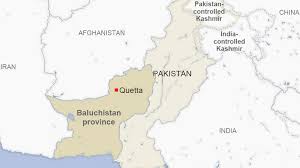
Balochistan is a historically and culturally distinct region that spans three countries – southwestern Pakistan, southeastern Iran, and southern Afghanistan. The province’s main ethnic group is the Balochs, followed by the Pashtuns. Despite the divisions, the Balochs share a common ethnic identity, language, and tribal traditions.
Balochistan is economically rich in natural resources, including natural gas, coal, copper, and gold. It also holds strategic importance due to its coastline along the Arabian Sea, particularly the port city of Gwadar. In terms of territory, the largest portion of this region is Pakistan’s Balochistan. However, it remains the least developed and most politically marginalised. This is because of persistent underdevelopment, with limited infrastructure, poor access to healthcare and education, and high poverty rates. The province’s governance has been marked by instability, weak institutions, and tensions between local leadership and the central government. These structural challenges have laid the foundation for long-standing conflict.
Historical Background: Evolution of Pakistan’s Balochistan Conflict
(1947 – 2010)
The roots of the Balochistan conflict trace back to the creation of Pakistan in 1947. The first insurgency resulted from the Baloch leadership’s opposition to the accession of the princely state of Kalat to Pakistan.
The key phases of the conflict include:
- 948 Insurgency: Shortly after Pakistan’s independence, Prince Abdul Karim led an armed resistance against the accession of Kalat. Though short-lived, it set the tone for future unrest.
- 1958 – 59 Conflict: Nawab Nauroz Khan led an uprising triggered by the arrest of the Khan of Kalat. The rebellion was suppressed, and several leaders were executed, deepening resentment.
- 1962 – 63 Insurgency: Marked by guerrilla warfare in the Marri and Bugti areas, this phase reflected growing dissatisfaction with central control and lack of autonomy.
- 1973 – 77 Insurgency: The most significant early conflict erupted after the dismissal of the provincial government by Prime Minister Zulfikar Ali Bhutto. Thousands of troops were deployed, and heavy fighting resulted in substantial casualties. This period entrenched militarisation and mistrust.
- Post-1977 Period: General Zia-ul-Haq’s regime adopted a relatively conciliatory approach, leading to a temporary decline in violence.
- 2004 – 2010 Insurgency: A conflict re-emerged during General Pervez Musharraf’s rule, driven by disputes over resource control and development projects. The killing of prominent Baloch leader Nawab Akbar Bugti in 2006 intensified the insurgency and galvanised nationalist sentiment.
Throughout these decades, the Balochs and the political leaders have committed innumerable atrocities against each other and against the civilians. From a struggle for Baloch autonomy, the situation has shifted into an enduring intra-state conflict in which neither party respects international law or human rights.
Recent Escalation: Coordinated Attacks by the Baloch Liberation Army (BLA)
The intensity of the conflict increased with the Baloch Liberation Army (BLA) conducting a series of 12 coordinated attacks between January 30 and 31, 2026. These attacks were conducted across multiple locations in Balochistan, including urban centres and strategic infrastructure points.
The operations targeted security installations, banks, police stations, prisons, and transport networks. According to reports, the attacks were highly synchronised, demonstrating improved communication, planning, and logistical capabilities. One of the attacks, a prison break, led to the freeing of around 30 inmates in the Mastung district.
The Baloch-led attacks haven’t suddenly increased in 2026. A January 2026 report released by the Pakistan Institute for Peace Studies (PIPS) highlighted Balochistan as one of the primary epicentres of ‘insecurity,’ witnessing at least 254 attacks and 1,026 casualties in 2025.
Additionally, as part of Operation Herof II, Jeeyand Baloch, BLA spokesperson, shared that the group is committed to intensifying the level of lethality. He called Operation Herof II as a “declaration of decisive resistance.”
Root Causes of the Pakistan Balochistan Conflict
Several interrelated factors can be cited as the reasons for the persistence of the Balochistan conflict:
Unstable Politics and Ethnicity
Political instability and tensions between the central government and Baloch nationalist leaders have been prominent causes of the conflict. Ethnic identity also plays a significant role. Many Baloch view themselves as distinct from the dominant political structures of the state.
Resources and Development Issues
Despite its resource wealth, Balochistan has not benefited proportionately from its natural assets. Revenue distribution remains a disputed issue, with local communities often excluded from decision-making processes and economic gains.
Human Rights Concerns
Allegations of enforced disappearances, extrajudicial actions, and restrictions on political expression have contributed to widespread distrust in Balochistan. These issues have not only fueled resentment but also hindered reconciliation efforts.
Terrorist Organisations and Islamic Extremism
The presence of extremist groups in the region adds complexity to the conflict. While Baloch nationalist groups are primarily secular, the overlap with other militant organisations creates a volatile security environment.
Education and Social Development
Low literacy rates and limited access to quality education have restricted opportunities for socio-economic mobility. This environment can contribute to alienation and make recruitment into militant groups more likely.
Future Repercussions of the Conflict
If the current trends continue and insurgency rises, the Balochistan conflict is likely to have the following future consequences:
Intensification of Violence
The increasing sophistication of insurgent tactics suggests that future attacks may become more frequent and more destructive.
Economic Disruption
Continued instability is a threat to key infrastructure and investment projects, particularly those linked to regional connectivity and trade.
Regional Instability
There are chances of conflict spilling into neighbouring regions due to rising cross-border ethnic ties and militant movements. This can complicate security dynamics.
Humanitarian Challenges
Prolonged conflict may lead to increased displacement, reduced access to essential services, and long-term social fragmentation.
Geopolitical Implications
The involvement of foreign governments could transform the conflict into a broader strategic issue, affecting regional alliances and power balances.
Final Thoughts
The Balochistan conflict is not only a security issue but a complex political and socio-economic challenge. While military responses have contained certain aspects of the insurgency, they have not resolved its underlying causes. A sustainable solution will require meaningful political dialogue, equitable resource distribution, institutional reforms, and investment in human development. Without addressing these core issues, the cycle of conflict is likely to persist, with consequences that extend beyond Balochistan to the wider region.
By Gayatri Sarin