

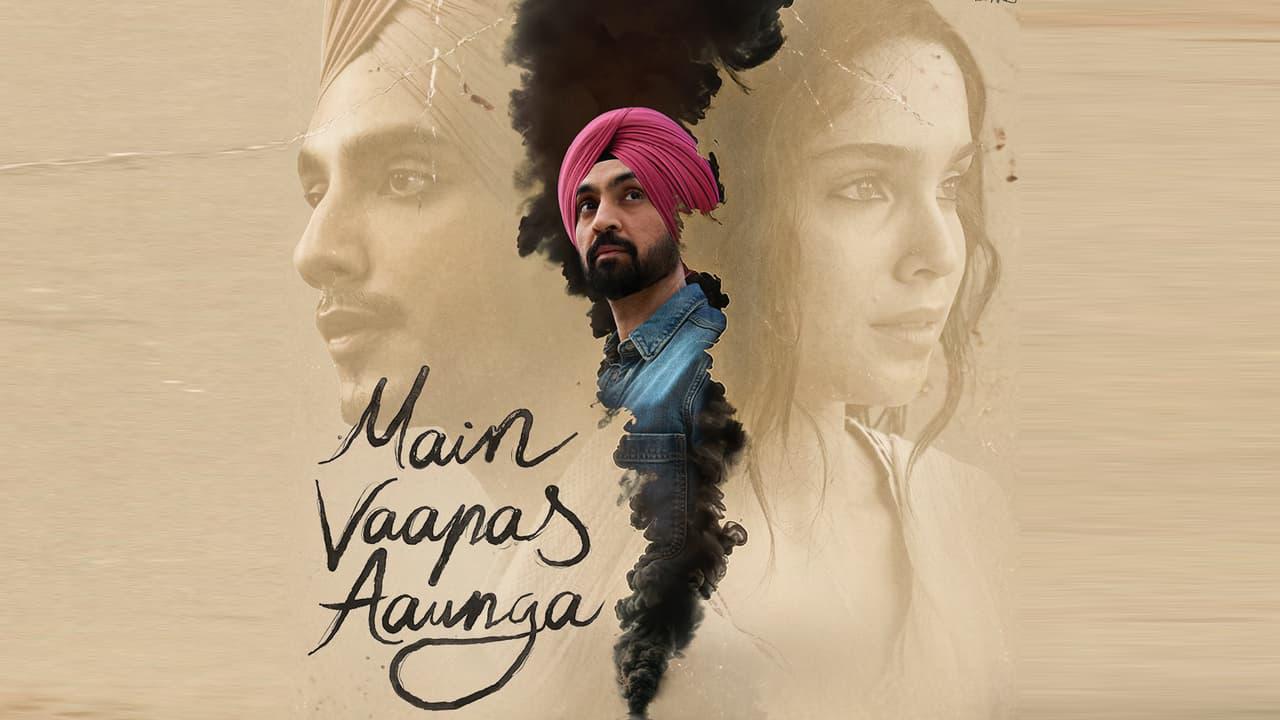
Discussions on Partition have often been framed and fabricated as well at times through numbers, political decisions, and by the frequent rigid method of redrawing the borders. The conversation centres around independence, nation-building, migration, and the drastic consequences of violence. Yet beneath these historical realities lies another often-overlooked repercussion: the loss of home. Partition did not merely divide territories; it gradually transformed the meaning of belonging for millions of people. More than seven decades later, its effects continue to resonate not only among those who have experienced it but also among generations that were succeeded by. This is what makes Imtiaz Ali’s Main Vaapas Aaunga particularly important. Unlike many narratives that focus solely on communal violence or political conflict, this particular film substantially explores the emotional afterlife of Partition. It raises a significant question that remains relevant even today: what happens when people continue preserving the weight of a place within themselves long after they have left it behind?
Partition And The Loss Of ‘Home’
Partition literature has wrestled with similar questions for decades. In Amrita Pritam’s Pinjar, the story unfolds through the life of Puro, a young Hindu woman abducted just before her marriage. While the novel is set against the backdrop of Partition, its central concern is identity and belonging. Puro is eventually given an opportunity to retrieve her earlier life, yet the circumstances surrounding her displacement have totally altered her understanding of the metaphor home forever. Through the experiences of a woman, Pritam illustrates that Partition should not be viewed merely as a political event. It was an emotional and personal rupture that further remoulded lives in enduring ways.
An entirely different perspective emerges in Khushwant Singh’s work; Train to Pakistan. Set in the village of Mano Majra ( present day Pakistan), the novel portrays a community where the Sikhs and Muslims live alongside one another peacefully until the arrival of Partition. The trains carrying the bodies of refugees become symbols of a world collapsing under the weight of political decisions. Here, the tragedy lies not only in violence but also in the sudden dismantling of recognizable worlds. Communities that once shared everyday life were suddenly forced apart by newly created geographical borders.
Both these novels reveal how Partition fractured the backbone of ordinary human existence. Yet the movie, Main Vaapas Aaunga moves beyond the immediate moment of separation. The film is not only interested in those who experienced Partition firsthand; it is equally interested in those who inherit its severe consequences.
This distinction is crucial to comprehend. The younger generation portrayed in the film has not witnessed the violence of 1947. They have not at all experienced what the term displacement means in the historical sense. Yet they continue to carry traces of an older loss. Diljit Dosanjh’s character, for instance, navigates a world shaped by migration and distance. His struggle is not identical to that of several Partition survivors, but it certainly echoes a similar sense of alienation. In this way, the film suggests that historical trauma rarely ends with the generation that experiences it. Memory keeps travelling like a river, without any endpoint. It moves through stories, families, and fragmented inherited emotions.
The significance of this observation extends far beyond the history of Partition. In today’s world, migration has become a defining feature of human life. Millions leave their countries in search of employment, education, security, or opportunity. Their journeys differ from those of Partition refugees, yet they often encounter the same comparable questions. What does it mean to belong somewhere? Can a person truly call two places home? Is home a physical location, or is it a feeling that survives within memory?
The experiences of diasporic communities reveal the complexity of these recurring questions. Writers across generations have explored the emotional consequences of living between cultures. Migration often produces a sense of duality. Individuals adapt to new environments while carrying along with themselves the memories of older ones. They participate in one society while remaining emotionally attached to another. To each and every outsider, this may simply appear as a prime source of imitation or cultural blending. Yet beneath this process lies a deeper search for self-recognition. The challenge is not merely adapting to a new place but understanding where one actually belongs to.
It is here that Main Vaapas Aaunga acquires a broader significance. The film’s promise of return is not limited to a geographical journey. It reflects a universal human desire to reconnect with something familiar, meaningful, and emotionally grounding. Sometimes that place exists physically. Sometimes it survives only through stories and memories passed across generations.
This is why the film resonates beyond the context of Partition. Its concerns are shared by migrants, refugees, expatriates, and diasporic communities across the world. Political borders may definitely separate territories, but they can rarely erase the emotional attachments. The longing for home persists even when return becomes just a mere metaphor which stands as a synonym to the word impossible.
In contemporary geopolitical discussions, borders are often understood as instruments of sovereignty and security. They define nations and regulate movement. Yet films, novels, and personal narratives remind us that borders also shape human lives in less visible ways. They strongly influence the existing memory, identity, and sense of belonging. Behind every geopolitical decision are individuals attempting to make sense of who they are and where they belong.
More than seventy-five years after Partition, South Asia continues to live with its consequences. The event remains a historical reality, but its emotional legacy extends far beyond history books. Pinjar explored this legacy through the experiences of an ordinary woman. The train to Pakistan examined this legacy through the destruction of a community. Main Vaapas Aaunga carries the conversation into the present by deciphering how the search for home continues long after political borders have been firmly established.
When Belonging Becomes Geopolitical
While Main Vaapas Aaunga also encourages a broader reflection on the growing significance of diaspora in contemporary geopolitics. Migration today is no longer considered as an isolated social phenomenon. Millions of people live, work, and build their lives beyond the countries of their birth, yet their connections to their homelands often remain intact.
This reality has transformed the relationship between the periphery of identity and politics. Earlier, political belonging was often understood within the boundaries of the nation-state. Today, however, identities frequently transcend territorial borders. A person may reside in London, Toronto, or Dubai, yet continue to engage with political developments in India, Pakistan, Bangladesh, or elsewhere. Opinions, loyalties, and perceptions are shaped not only by present circumstances but also by inherited memories and generational experiences.
From a critical geopolitical perspective, this has various profound implications. Diasporas are no longer viewed merely as migrant communities living abroad; they have concurrently emerged as influential actors in economic networks, cultural diplomacy, political advocacy, and international engagement. Their voices often deeply influence discussions on citizenship, identity, migration, and foreign policy. Consequently, the effects of historical events such as Partition cannot be simply confined to a single moment in time or a single geographical location. They eventually continue to reverberate across borders, shaping communities and political imaginations far beyond the territories where they originally occurred. The film reminds us that displacement is not simply about just crossing the respective borders; it is about the lingering search for belonging in a world where identities in growing measure move across nations.
In an era marked by migration, transnational connections, and diasporic communities, the question of home is no longer solely a personal concern. It has become deeply intertwined with the ways in which societies, states, and communities understand themselves and their place in the world. This is perhaps where Main Vaapas Aaunga acquires its contemporary relevance. The deepest wounds of Partition were not only territorial. They were human.
By Sruti Bhaumik