

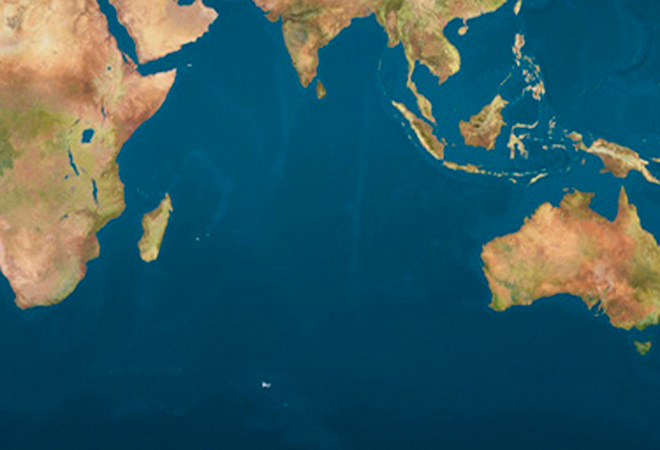
The seas around Southeast Asia are becoming more important in global politics. They help transport a large share of the world’s trade, connecting the Indian and Pacific Oceans. These seas are also some of the world’s busiest shipping routes.
However, as the geopolitical landscape shifts, these waters are becoming an area of growing competition between major powers.
In recent times, China has increased its military and maritime presence in the South China Sea and has made extensive territorial claims in the region. Meanwhile, India has been strengthening its ties with Southeast Asian countries through its Act East Policy, defence cooperation, naval exercises, and maritime partnerships.
This raises an interesting question: Is India using its Southeast Asia policy to counter China’s growing maritime influence?
The answer is partly yes.
India isn’t trying to openly challenge China or create an anti-China alliance. However, it is trying to build stronger relationships with Southeast Asian countries and support a regional order in which no single country controls the Indo-Pacific.
The Importance of Southeast Asia to India
Southeast Asia is a crucial geographical region between the Indian and Pacific Oceans. Many major shipping routes pass through the region, including the Malacca Strait. The South China Sea is also extremely vital for international trade. Every year, goods, oil, and other resources worth trillions of dollars pass through these waters.
This increases the importance of the region not only for the Southeast Asian countries but also for India, China, Japan, the United States, and other major economies.
The South China Sea is strategically and economically important to China. Beijing claims large parts of these waters and has built infrastructure on several disputed features. It has also increased the presence of its navy, coast guard, and other maritime forces in the region. Countries such as Vietnam and the Philippines have even raised concerns about China’s activities.
When it comes to India, there is no direct territorial dispute with China in the South China Sea. However, India has a clear interest in keeping these waters open, peaceful, and governed by international law.
How Did India’s Act East Policy Develop?
India has had a relationship with Southeast Asia for several decades.
The Look East Policy was introduced in the early 1990s. It focused mainly on improving economic and diplomatic ties with countries in East and Southeast Asia.
However, India’s interests in the region expanded over time. As a result, the policy was renamed the Act East Policy in 2014. It placed greater emphasis on economic cooperation, connectivity, defence, security, and strategic partnerships.
The Association of Southeast Asian Nations (ASEAN) became an essential part of this approach.
Today, India’s relationship is much stronger with several Southeast Asian countries, such as Singapore, Vietnam, Indonesia, Thailand, and the Philippines.
This change is vital because India increasingly considers Southeast Asia not just as an important trading region, but also as a vital part of its security and strategic interests.
Is India’s Policy a Counter to China at Sea?
One of the clearest signs indicating India’s changing approach is its growing maritime engagement with Southeast Asia.
India has promoted ideas such as Security and Growth for All in the Region (SAGAR) and the Indo-Pacific Oceans Initiative (IPOI). They both focus on a free, open, and inclusive maritime region.
India has also increased cooperation with Southeast Asian countries in areas such as maritime security, search and rescue, information sharing, disaster relief, counter-piracy operations, maritime training and capacity building, and combating illegal fishing, among others.
This can give Southeast Asian countries more options when dealing with growing Chinese influence.
India’s Navy is Becoming More Active
India’s naval activities in Southeast Asia have also increased.
Indian Navy ships regularly visit Southeast Asian countries for exercises, training, and professional exchanges. India also participates in multilateral naval exercises involving several countries.
For example, MILAN 2026, hosted by India, brought together naval forces from 74 countries, including several ASEAN countries.
These activities show that India has the ability and willingness to play a larger role in maintaining security across the Indo-Pacific. It also creates a strategic option for Southeast Asian countries at a time when China’s military and maritime presence is growing.
Connectivity is Also A Policy Strategy
Apart from defence activities, an integral part of the Southeast Asia policy is connectivity.
India has been working on projects such as the India-Myanmar-Thailand Trilateral Highway and the Kaladan Multi-Modal Transit Transport Project. These projects aim to improve transport and trade links between India and Southeast Asia.
When connectivity is better, Indian businesses can reach Southeast Asian markets while also strengthening India’s economic presence in the region.
This is relevant because China’s influence in Southeast Asia is not based only on its military strength. The country is also a major trading partner for most countries in the region and has invested heavily in infrastructure.
Therefore, India needs economic and connectivity partnerships if it wants to increase its long-term influence.
Is India Really Trying to Contain or Counter China?
This is the complicated aspect because describing the Southeast Asia policy as simply an attempt to contain China wouldn’t be correct.
Most Southeast Asian countries don’t want to choose between China, India, and the United States. They have important economic relationships with China but also want strong partnerships with other countries.
For many of them, the preferred approach is to maintain good relations with several major powers.
And India understands this.
Therefore, instead of asking ASEAN countries to take sides, India repeatedly supports ASEAN centrality. In simple terms, this means India wants Southeast Asian countries to have an important role in shaping the region’s future.
India is also discussing an open and inclusive Indo-Pacific, rather than creating a military grouping aimed at China.
This approach is important because Southeast Asian countries may be more comfortable working with India if they do not feel that they are being asked to join a competition against China.
Conclusion
So, is India’s Southeast Asia policy a counter to China’s maritime hegemony?
Yes, partially. But it would be more appropriate to recognise the strategy as an attempt to maintain balance rather than confront China.
India’s aim with the policy is to strengthen its relationships with Southeast Asian countries, expand maritime cooperation, and improve connectivity. Moreover, it supports freedom of navigation, international law, and ASEAN’s central role in the region.
While China’s growing maritime influence has definitely highlighted these efforts, India’s larger goal seems to be creating a region where no single power can dictate the rules.
In other words, India’s Act East Policy is not only about countering China. It is about giving India a larger role in the Indo-Pacific and giving Southeast Asian countries more strategic choices.