

In a move to strengthen the combat readiness of its mechanised forces, the Indian Army’s Western Command will bring together military users, defence manufacturers and academic institutions in December to explore how existing military platforms can be upgraded to meet the demands of future warfare. The Mechanisation Technology Seminar 2.0 (MTS 2.0), themed ‘CHAKRA – Transforming Existing Platforms for Future Combat’, will be held at Chandimandir Military Station on December 14–15, 2026. The initiative seeks to translate operational requirements into practical technological solutions, with a focus on modernisation, indigenous innovation and greater self-reliance in defence.
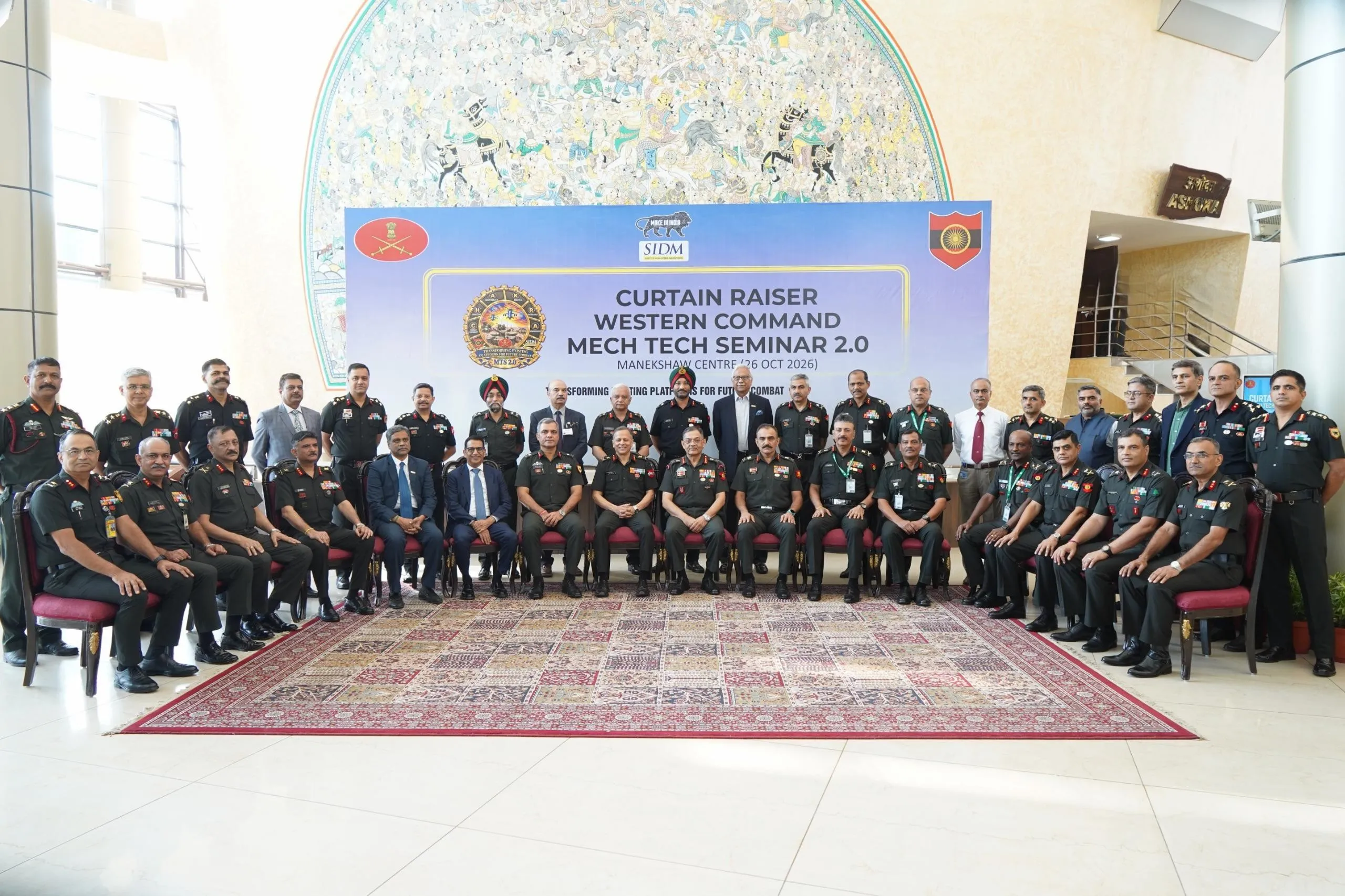
Lieutenant General Pushpendra Singh, General Officer Commanding-in-Chief of Western Command, inaugurated the seminar’s curtain raiser at the Manekshaw Centre in New Delhi on October 26. Organised by Western Command in collaboration with the Society of Indian Defence Manufacturers (SIDM), the event outlined the vision and key priorities for the forthcoming seminar. The initiative comes amid a wider shift in military modernisation, where technological upgrades, adaptability and the ability to sustain existing equipment are becoming important considerations alongside the induction of new platforms. For mechanised forces, the challenge is to ensure that equipment remains relevant as operational requirements and battlefield technologies evolve.
Rather than focusing solely on acquiring new systems, MTS 2.0 aims to explore ways of transforming existing military platforms into more capable and technologically advanced combat systems. The objective is to identify capability gaps faced by operational units and connect them with solutions that can be developed and implemented through collaboration between the Army, industry and academia. The seminar will focus on six broad themes: Combat Capability Enhancement, Harnessing Technology, Adaptability, Kinetics, Refurbishment and Atmanirbharta. A central element of the initiative will be the development of clearly defined Problem Definition Statements (PDS), translating the Army’s operational challenges into specific requirements that industry and research institutions can address.
This approach is intended to give technology developers a clearer understanding of the problems faced by military users, while enabling the Army to assess solutions against practical operational needs. It also creates scope for closer engagement between defence manufacturers, academic researchers and the personnel who understand the demands of operating military equipment in the field. The emphasis on refurbishment and capability enhancement reflects the importance of making existing platforms more effective through appropriate technological interventions. However, the challenge extends beyond upgrading hardware. Solutions must address identified operational requirements and be practical to integrate, maintain and use under demanding field conditions.
The focus on Atmanirbharta, or self-reliance, is another key aspect of the seminar. Greater participation by Indian manufacturers and technology developers can help expand the domestic defence industrial base and encourage indigenous solutions to military challenges. Collaboration with academia can further support the development of new technologies and the conversion of research into practical defence applications.
For the defence industry, the Problem Definition Statements could provide a more direct route to understanding the Army’s requirements and identifying areas where domestic capabilities can contribute. For the military, closer engagement with industry and academia can broaden the range of potential solutions available to improve operational effectiveness.
The curtain raiser provided a platform for military representatives, industry participants, academia and other stakeholders to discuss modernisation priorities, indigenous technological innovation and emerging operational requirements. The December seminar is expected to build on these interactions by bringing stakeholders together around specific capability challenges.
MTS 2.0 reflects Western Command’s effort to strengthen the link between operational experience and technological development. Its broader objective is to improve the effectiveness, resilience and combat readiness of mechanised forces by ensuring that innovation is directed towards clearly identified military needs.
The key test will be whether these discussions lead to implementable solutions that can be taken forward for evaluation and integration. As the Indian Army continues to pursue modernisation and defence self-reliance, initiatives such as CHAKRA seek to ensure that existing platforms can be assessed for further capability enhancement while indigenous technology receives a clearer pathway to address operational requirements