

Naval power is usually imagined in the form of aircraft carriers, destroyers, frigates and submarines. The vessels that attract the least attention, however, can sometimes tell us the most about how a navy intends to fight—and survive—in the underwater battlespace.
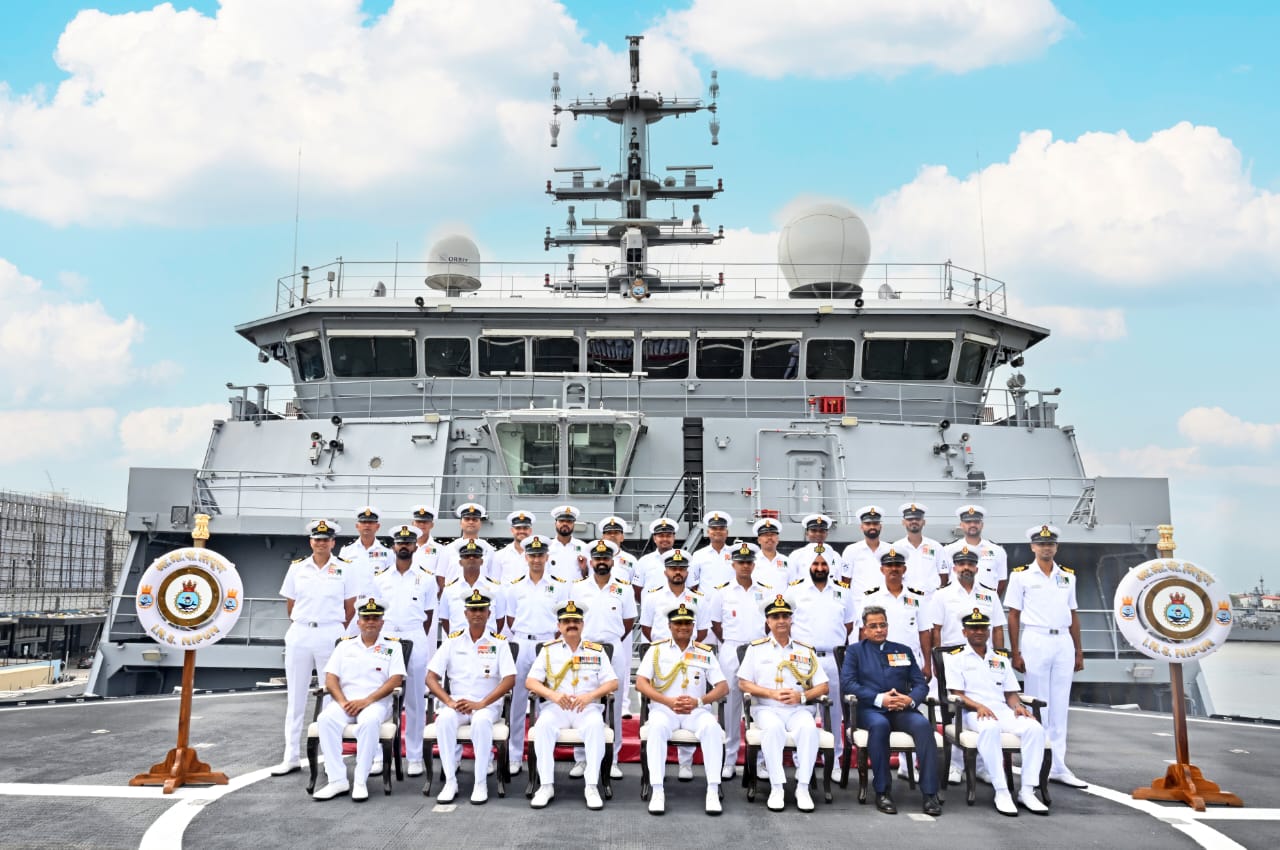
The commissioning of INS Nipun, the Indian Navy’s second Nistar-class Diving Support Vessel (DSV), at Naval Dockyard, Mumbai, on August 31, 2026, is one such moment. On the surface, Nipun is a specialist support ship. Beneath it lies a much bigger story: India’s growing ability to operate, intervene, rescue and recover in the deep sea at a time when the Indian Ocean is becoming an increasingly contested underwater space.
Built by Hindustan Shipyard Limited, Nipun is 119.4 metres long and has a displacement of about 10,500 tonnes. It can support diving operations to depths of around 300 metres and is designed for deep-sea diving, underwater intervention, salvage and submarine rescue. Its commissioning completes a capability that has been missing in a geographically balanced form: Nistar on the eastern seaboard and Nipun on the western seaboard.
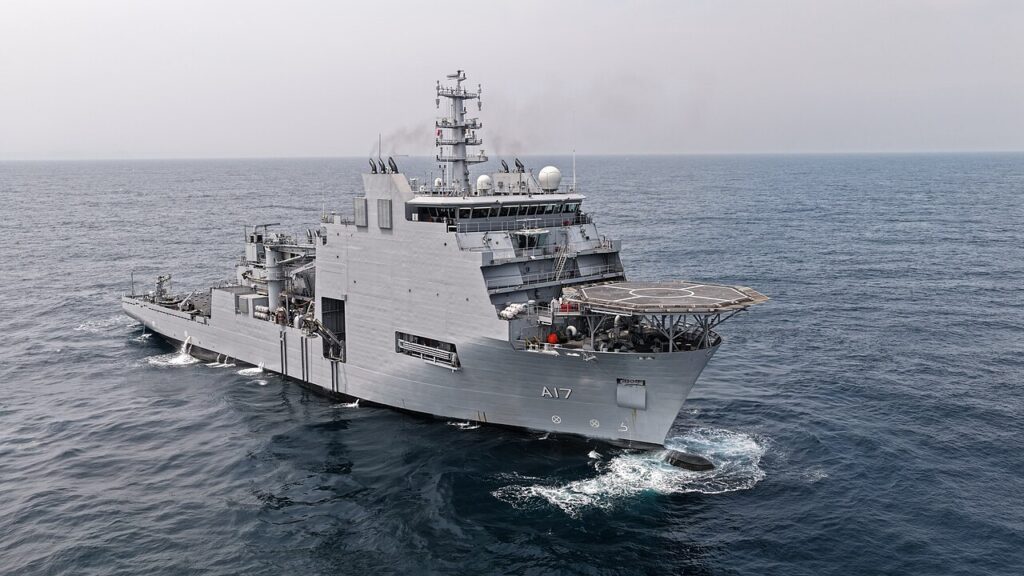
That two-coast arrangement matters. India’s submarine fleet does not operate from one corner of the country. Nuclear-powered submarines, conventional submarines and other underwater assets have to operate across a maritime geography stretching from the Arabian Sea to the Bay of Bengal and beyond. A submarine in distress is not a platform that can simply wait for help to arrive from the other side of the peninsula.
The history of India’s underwater rescue capability makes the significance of Nipun even clearer. Long before Nistar, the Navy relied on vessels such as INS Nireekshak, a specialised diving support and submarine rescue vessel that entered naval service decades ago. Nireekshak has undertaken deep-diving operations and holds India’s national deep-diving record of 257 metres. Its career illustrates how specialised vessels quietly became an essential part of India’s underwater capability.
There is an even older chapter. The earlier INS Nistar, acquired from the Soviet Union and commissioned in 1971, had submarine-rescue capabilities and served during the 1971 war. It was eventually decommissioned in 1989. The name has therefore returned to the fleet in a very different technological age.
The present Nistar-class represents the transition from dependence on individual legacy platforms to an indigenous, purpose-built underwater-support architecture. INS Nistar, the first vessel of the class, was commissioned at Visakhapatnam in July 2025. It was designed for complex deep-sea saturation diving and rescue operations and was described by the Navy as an important operational enabler.
Nipun now gives that capability a western counterpart. This is important because a DSV is not merely a floating workshop. Deep-sea diving is an extremely specialised activity. At significant depths, pressure, decompression, visibility, temperature, currents and human endurance become operational factors. Saturation diving allows trained divers to work at depth for extended periods while remaining in a controlled pressurised environment. A DSV essentially provides the specialised infrastructure from which such operations can be conducted.
For the Navy, that can mean underwater inspection, salvage, recovery, maintenance and intervention. In the event of a submarine emergency, it can become part of a much larger rescue architecture. And in peacetime, it provides something equally valuable: the ability to reach and understand what is happening below the surface.
That last point deserves greater attention in the Indian Ocean Region. The underwater domain is increasingly becoming a strategic arena. China has expanded its oceanographic and seabed-survey activity well beyond its immediate coastline. A 2026 Reuters investigation reported an extensive Chinese undersea mapping and monitoring effort across the Pacific, Indian and Arctic oceans, including areas around the Indian Ocean and the Malacca Strait. The data being collected—seabed topography, water temperature, salinity and currents—can have direct relevance to submarine operations and sonar performance.
This does not mean every Chinese research vessel in the Indian Ocean is conducting military espionage. Scientific and commercial research is legitimate. But the distinction between civilian oceanographic activity and strategic utility is becoming increasingly difficult to ignore, particularly in an era of civil-military fusion.
China’s broader research-vessel fleet is already enormous, and analysts have pointed to the dual-use potential of its oceanographic surveys.
The strategic reason is simple: the ocean floor is part of the battlespace. A submarine does not move through an empty blue volume. It moves through a three-dimensional environment shaped by depth, temperature, salinity, seabed contours and underwater acoustics. Knowing that environment can influence how effectively a submarine can hide—and how effectively another navy can find it.
This is why India’s expanding hydrographic, oceanographic, unmanned and deep-sea capabilities should be viewed together rather than as separate procurement stories.
India has been steadily investing in the ability to see beneath the surface. Its modern survey vessels employ sophisticated underwater sensors and autonomous systems. Its Deep Submergence Rescue Vehicles provide another layer of submarine-rescue capability. And now, with Nistar and Nipun, the Navy has two dedicated indigenous DSVs positioned across India’s maritime geography.
The symbolism of indigenous construction is also important. Nistar and Nipun were built by Hindustan Shipyard Limited, with the project representing a move towards domestic capability in a highly specialised area of naval engineering. The order for the two vessels was placed in 2018, their construction was affected by the pandemic, and both were eventually launched in September 2022. Nistar was delivered in July 2025, followed by Nipun in July 2026.
There is, therefore, another story beneath the story of Nipun: India is learning to build the infrastructure required to sustain its underwater force, not merely the platforms that constitute it.
That distinction will matter increasingly. A submarine is only as effective as the ecosystem around it—training, maintenance, rescue, surveillance, communications, logistics and specialised personnel. The same principle applies to naval aviation and surface warfare. But underwater operations are particularly unforgiving because the sea hides both the platform and the problem.
A submarine casualty several hundred metres below the surface is not simply a rescue challenge. It is a race against time, pressure, battery endurance, oxygen, flooding and the ability to locate the distressed platform.
Nipun does not eliminate those risks. What it does is improve India’s ability to respond. And that may ultimately be its most important contribution.
For decades, India’s maritime conversation has focused understandably on aircraft carriers, submarines and missile-armed surface combatants. But as competition in the Indian Ocean moves deeper—literally—the vessels supporting those combatants will become increasingly important.
The Indian Ocean is no longer simply a highway for global trade. It is also a repository of cables, sensors, seabed resources, acoustic data and submarine routes. China’s expanding underwater mapping activity makes that reality more visible. India’s answer cannot be surveillance alone. It needs the ability to understand, access, intervene and recover beneath the surface.
That is where INS Nipun fits. It may never dominate a naval parade. It may not carry the missiles that make headlines. But if something goes wrong hundreds of metres below the open waters, its value could suddenly become immeasurable.
The commissioning of Nipun, therefore, is not merely about adding another ship to the Navy’s inventory. It marks the consolidation of an Indian capability to operate in a part of the maritime domain that is becoming strategically important and increasingly contested.
The Navy is acquiring more than depth. It is acquiring confidence beneath the surface.