

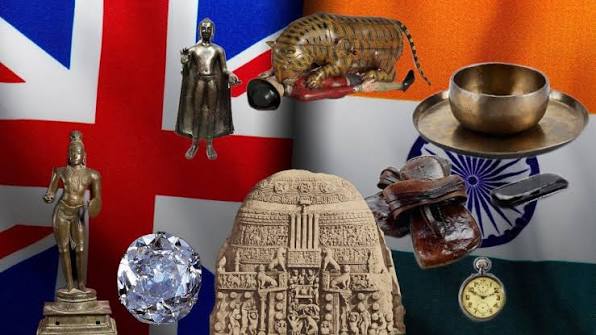
In June 2025, the Netherlands returned 119 Benin Bronzes to Nigeria, commemorating one of the largest recent reclamation of the colonial-era cultural objects. Around the same time, India has witnessed significant developments of its own. In May 2026, three sacred Chola-period bronzes; consisting of Shiva Nataraja, Somaskanda, and Saint Sundarar with Paravai, were repatriated from the Smithsonian’s National Museum of Asian Art in the United States. The United Kingdom also facilitated the return of several Indian sculptures, while Australia and the United States announced the repatriation of additional temple idols.
These repatriations in geopolitics were more than simply ceremonial handovers. They deeply reflected a profound transformation in the way nations generally comprehend the metaphor of cultural heritage. What was once ordinarily acknowledged as a matter of archaeology and museum collections has rapidly become a question of diplomacy, historical justice, national identity, and international relations. The debate is no longer confined to who possesses an object; it now specifically has serious concerns regarding who has the authority to preserve, interpret, and narrate the history attached to it.
This also raises an important question: Can art become a geopolitical language? Or is art already a geopolitical instrument?
When Heritage Becomes Diplomacy
A cultural artefact is far more important than an old object. It is a material which serves as the prime purpose of the expression of a civilisation’s history, religion, artistic traditions, and collective memory. Temple idols, bronze sculptures, manuscripts, ritual objects, coins, paintings, and archaeological sculptures all encapsulate the multiple stories of the societies that had crafted their identity and recognition. In many other different ways, an artefact functions as an essential and strategic evidence of a civilisation, preserving cultural continuity across generations. This understanding explains why repatriation has gained such prominence over the past few years. Repatriation refers to the return of cultural objects to their country or community of origin after they have been removed through colonial rule, illegal trafficking, theft, conflict, or other questionable circumstances.
For decades, many museums conceived these objects primarily as works of art or archaeological collections. Today, however, countries increasingly regard them as symbols of sovereignty, civilisational identity, and historical memory. The States are no longer merely petitioning for the return of sculptures or manuscripts; they are directly contending that these objects are inseparable from their cultural heritage.
Geopolitics has traditionally been associated within the periphery of territory, military capability, and strategic geography. Yet in the twenty-first century, culture has also emerged as a genesis of power. When India negotiates with the United States for the return of stolen temple idols, or Nigeria negotiates with European institutions over the Benin Bronzes, these are no longer museum matters alone; they become an embodiment of heavy workouts in diplomacy, foreign policy, and international relations. Governments, foreign ministries, museums, international conventions, law-enforcement agencies, and cultural institutions now work together in processes that amplify far beyond heritage stewardship.
India’s Cultural Reclamation
India has become one of the world’s most active countries in recovering the ownership of its stolen cultural heritage. Since 2014, hundreds of antiquities have been repatriated through diplomatic negotiations, legal proceedings, provenance research, and international cooperation.
The recent return of three Chola bronzes from the Smithsonian further underscores this eventual transformation. These sculptures were not created as museum exhibits; they were sacred icons commissioned between the tenth and twelfth centuries for active temple worship. Shiva Nataraja symbolises the cosmic dance of creation and destruction, Somaskanda represents the divine family of Shiva, Parvati, and Skanda, while Saint Sundarar with Paravai reflects the devotional traditions of Tamil Shaivism. Together, they symbolize some of the finest achievements of Chola bronze casting and form an intrinsic part of India’s civilisational heritage.
Their reinstatement followed extensive provenance research, which clearly ascertained that the bronzes had been illegally removed from temples in Tamil Nadu and trafficked through international smuggling networks. Such similar investigations involving the convicted antiquities dealer Subhash Kapoor enabled authorities to trace stolen idols using archival photographs, temple records, and trafficking documents.
These examples evince that repatriation is not an emotional appeal alone. It is a severe meticulous process involving several layers of historical research, legal documentation, international law, diplomatic negotiations, museum ethics, and cooperation between institutions such as the Archaeological Survey of India, the Ministry of Culture, the Ministry of External Affairs, foreign governments, museums, and law-enforcement agencies.
Who Owns History?
The global debate extends far beyond India.
Nigeria continues to reclaim the Benin Bronzes, royal artworks looted during the British Punitive Expedition of 1897. Greece has persistently sought the return of the Parthenon Marbles from the British Museum, arguing that they remain embedded from the Acropolis. Egypt has successively pressed for the return of iconic objects such as the Rosetta Stone, viewing them as symbols of Egyptian civilization rather than museum collections.
Each case differs legally and historically, yet they share a common question: Who has the right to preserve and interpret the past?
This debate is especially visible in the case of the Kohinoor. Unlike many stolen antiquities, there is a little bit of disagreement about its origin. The dispute concerns the circumstances under which it entered British possession following the Treaty of Lahore in 1849. Britain maintains the stance that the transfer of the Kohinoor was legally recognised under the treaty, whereas India constantly pushes towards the argument that it occurred within the unequal conditions of colonial domination. Consequently, the debate is not simply about ownership but about historical legitimacy itself, thus it remains unresolved till date.
Museums often defend their collections by presenting themselves as “universal museums,” emphasizing that cultural objects belong to humanity as a whole and remain accessible to global audiences. Source countries, however, contend that these artefacts derive their deepest meaning from the communities that created them. For them, the issue is not primarily where an object is displayed but where its history actually belongs to.
Beyond the Return of Objects
The growing movement for repatriation echoes some broader changes in international politics. The improved provenance research, increased public scrutiny of colonial-era collections, ethical reforms within museums, and international frameworks such as the 1970 UNESCO Convention have all directly stimulated the increased cooperation in addressing the illicit trafficking of cultural property. Although the Convention does not exclusively apply retroactively to many colonial acquisitions, it has regardless shaped and coherently moulded the contemporary expectations regarding the importance of cultural heritage.
At its core, repatriation in Geopolitics has come to the forefront as an instrument of cultural diplomacy and soft power. As political scientist Joseph Nye expressed the view that, influence is exercised not only through military or economic strength but also through culture, values, and heritage. Returning stolen cultural objects can significantly strengthen diplomatic goodwill, acknowledge historical injustices, and reinforce international trust.
The escalating relevance of heritage repatriation also mirrors the broader theoretical aspects of debates in international relations and postcolonial studies. Political scientist Joseph Nye argues that states increasingly exercise influence through soft power; the ability to shape preferences through culture, values, and institutions rather than military or economic intimidation. If we try to view from this lens or perspective, the return of cultural artefacts becomes more than an act of restitution; it assumes the role as a form of cultural diplomacy, strengthening bilateral trust while fortifying a nation’s civilisational identity. Through the significant lens of postcolonial critic, Homi K. Bhabha invites us to consider that colonialism did not merely occupy territories; it also reshaped cultural identities through processes such as mimicry and hybridity.
Contemporary repatriation debates move beyond these questions of identity formation to address a more underlying issue: who has the legitimate authority to preserve, contextualise, and articulate a civilisation’s history. Yet the return of an artefact cannot completely erase the imprints of colonialism. It cannot easily restore every loss or nullify centuries of exploitation. What it can revitalize is something equally significant: the identification that history is not only preserved in museums but also in the collective memory of the people who created it.
When all is said and done, the geopolitics of heritage is not just essentially about bronze, marble, or precious stones. It is more about memory, legitimacy, and the authority to tell one’s own story. In an age where several nations reach a point of understanding not only over borders but also over identity and historical narratives, the return of cultural heritage represents far more than the movement of objects. It strongly portrays an ongoing struggle to reclaim the past; and, with it, the right to define the future.
As Milan Kundera famously wrote; “The struggle of man against power is the struggle of memory against forgetting”.
Article by Sruti Bhaumik