

South Asia is one of the world’s most populous and strategically important regions. It has shared cultural traditions, enormous economic potential, and common developmental challenges. Yet despite geographical proximity, its countries have struggled to build a strong framework for regional cooperation.
The South Asian Association for Regional Cooperation (SAARC), comprising seven founding members: India, Pakistan, Bangladesh, Nepal, Sri Lanka, Bhutan, and Maldives, was established in 1985 to bridge this gap. Afghanistan joined in 2007, increasing the membership to eight countries.
Decades later, the organisation has become largely inactive politically. The last SAARC summit took place in Kathmandu in 2014. The next summit, scheduled for Islamabad in 2016, was postponed amid heightened regional tensions. No summit has been held since.
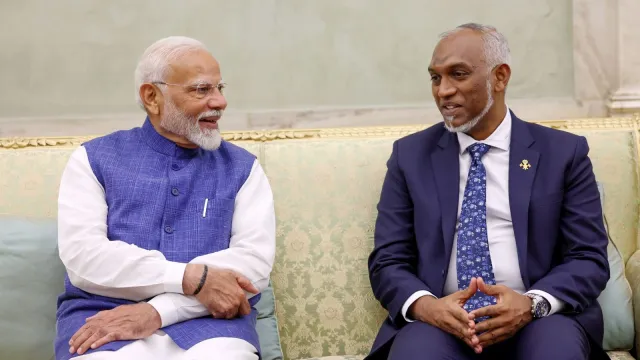
However, on July 26, while celebrating Maldives’ 61st Independence Day, its President Mohamed Muizzu called for SAARC members to return to the negotiating table. He urged them to set aside their differences for the sake of regional peace and cooperation and resume hosting summits.
This raises a pertinent question: Can SAARC be revived, or has it become a dead horse countries must finally stop trying to ride?
Before we explore the current scenario, it is crucial to understand why SAARC failed, its significance today, and the role of its members.
What Caused SAARC to Fail?
SAARC’s primary objectives were to promote economic growth, improve living standards, encourage collective self-reliance, and strengthen cooperation among South Asian nations. However, the organisation has struggled to translate this vision into meaningful regional integration due to the following reasons:
1. India-Pakistan tensions
A major obstacle to SAARC’s progress is the strained India-Pakistan relationship. Disagreements over Kashmir, cross-border terrorism, and security concerns have consistently affected regional engagement.
SAARC operates on the principle of unanimity, meaning decisions require agreement among all members. This does not include bilateral and contentious issues. However, disagreements between member states have continued to affect the organisation’s functioning.
2. Limited economic integration
South Asian countries have geographical proximity. However, they trade relatively little with one another compared with their potential. This constrained economic integration is due to complex customs procedures, trade barriers, inadequate connectivity, and limited market access.
In 2006, the South Asia Free Trade Area (SAFTA) came into force to increase trade among member states. However, its impact has been limited by exemptions, non-tariff barriers, and weak implementation.
A strong regional trade network could create jobs, support businesses, and improve market access. SAARC hasn’t realised these benefits yet on a significant scale.
3. Competing national interests
The economic priorities, security concerns, and foreign policy objectives of different South Asian countries vary. Smaller nations sometimes worry about becoming overly dependent on India because of its size and influence, while India must balance regional engagement with its own national interests.
China’s growing economic and strategic presence in South Asia adds another dimension to regional competition. Building a common agenda requires member states to recognise areas where their interests overlap, even when their broader priorities differ.
Why SAARC Still Matters?
SAARC may have struggled to deliver results, but the need for regional cooperation has not disappeared.
South Asian countries face common challenges, including climate change, floods, air pollution, public health emergencies, and food insecurity. These problems often cross national borders and require coordinated responses.
To create economic opportunities, states must focus on establishing better trade links, transport infrastructure, energy cooperation, and digital connectivity. Shared cultural and historical connections also offer scope for educational exchanges, tourism, and people-to-people contact.
SAARC has an established institutional framework. Therefore, reviving it could be more practical than creating an entirely new organisation. However, revival requires willingness and active participation from member states.
What is India’s Role in SAARC’s Future?
India is South Asia’s largest economy and a major regional power. It plays a central, defining role in shaping SAARC’s future. Regional stability, improved connectivity, and economic cooperation can support India’s developmental and security objectives.
However, India has increasingly prioritised alternative regional platforms and bilateral partnerships. One example is the Bay of Bengal Initiative for Multi-Sectoral Technical and Economic Cooperation (BIMSTEC), which includes Bangladesh, Bhutan, India, Myanmar, Nepal, Sri Lanka, and Thailand, but not Pakistan.
These platforms let India advance cooperation in areas where progress is possible. Nevertheless, they cannot completely replace SAARC, which brings all eight South Asian countries together.
India therefore needs to balance its security concerns with the long-term benefits of maintaining a regional forum. At the same time, India is not solely responsible for reviving SAARC. All members must contribute to making regional cooperation productive.
Are Countries Ready to Revive SAARC? – Recent Developments
In February 2026, when Tarique Rahman took over as Bangladesh’s prime minister, he reaffirmed his commitment to revitalising SAARC and expressed readiness to take proactive steps towards strengthening regional cooperation. Interestingly, Rahman’s father, former prime minister Ziaur Rahman, played a pivotal role in launching SAARC 41 years ago.
In July 2026, the Maldives, too, called for renewed regional engagement. President Mohamed Muizzu stated that he is ready to work closely with all SAARC member states to create the right conditions for holding the next summit at the earliest opportunity. During his visit to Pakistan on 21 October, he reiterated the Maldives’ willingness to act as a mediator to help break the long-standing diplomatic and political deadlock within the bloc.
Nepal, which has chaired SAARC since 2014 and is home to its Secretariat in Kathmandu, has consistently supported the continuation of the regional process. In February 2026, Nepal’s Foreign Secretary called for a gradual, practical approach to reviving pending meetings.
Sri Lanka has also shown its support in renewing regional engagement. In June 2026, a strategic dialogue held in Colombo examined SAARC’s achievements, challenges, and future. The discussions emphasised informal diplomacy, cooperation in areas such as climate action and disaster response, and the need to keep regional engagement going despite political difficulties.
These developments show that the idea of SAARC is far from abandoned. However, support for revival does not automatically translate into a functioning organisation. The challenge is to turn these statements into sustained engagement, practical agreements, and a willingness to work across differences.
Can SAARC be revived?
SAARC can be revived, but it will require a gradual and practical approach rather than grand declarations.
To begin with, there is a need to address the most significant obstacle: India-Pakistan relations, particularly India’s concerns about cross-border terrorism.
India has consistently maintained that normalising relations with Pakistan is only possible in an environment free from terrorism, hostility, and violence. However, if there is no credible and sustained action by Pakistan to address India’s security concerns, SAARC’s revival is unlikely to make significant progress.
This does not mean that every disagreement between India and Pakistan will need a resolution before other South Asian countries can cooperate. Member states can engage in informal dialogue and cooperation on shared priorities, such as disaster management, public health, climate resilience, agriculture, and education, to build regional goodwill. Sri Lanka’s relations with both countries could offer an opening for such engagement, while Nepal’s position as host of the SAARC Secretariat gives it an institutional role in keeping discussions alive.
Ultimately, SAARC’s revival will require effort from all its members. However, the responsibility is not equally distributed across every issue. India must remain open to regional cooperation, while Pakistan must address the security concerns that have become a central obstacle to India’s participation in the organisation. Without credible progress on cross-border terrorism, calls for summits and declarations of solidarity are unlikely to be enough.
SAARC can begin rebuilding its relevance through practical cooperation, but its full revival will depend on restoring the trust necessary for India and Pakistan to function within the same regional framework.
Conclusion: A Dead Horse or an Unfinished Project?
SAARC is not formally dead, but its inability to hold a summit since 2014 reflects a serious failure of regional cooperation. Its institutions remain in place, yet it has fallen short of its original promise. In other words, it is not a dead horse, but maybe an unfinished regional project.
SAARC’s future depends on whether member states can move beyond summit diplomacy and build practical cooperation from the ground up. If they can cultivate shared regional interests, maintain honest dialogue, and secure goodwill across the region, SAARC may yet find a useful role. Its revival may not begin with a grand summit, but with smaller steps that make regional cooperation worthwhile for every member.