

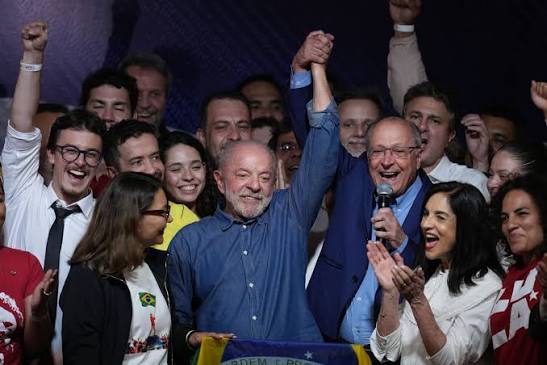
Brazil’s intensely competitive presidential election is more than a simple story of political survival. Lula’s return raises several significant questions about welfare, working-class credibility, judicial legitimacy and the ability of political movements to rebuild electoral coalitions. For India, the comparison is not about finding another leader like Lula, but clearly understanding how political power is acquired, lost and reclaimed.
When Luiz Inácio Lula da Silva secured a mandate from Brazil’s presidential runoff on October 25, 2026, the result conferred more than another chapter in an extraordinary political career. It outlined a question that extends beyond Brazil: what allows a political leader to return to power after imprisonment, electoral defeats and years away from the presidency? Lula secured 51.79 per cent of valid votes against 48.21 per cent for Flávio Bolsonaro, son of former president Jair Bolsonaro. The margin was narrow, but the circumstances of the victory were profound. Lula had finished second in the first round, behind Bolsonaro, before reversing the result three weeks later. Brazil’s electoral authority confirmed his fourth, after an intervening term presidential mandate, with his new term due to begin on January 5, 2027.
To gain insight into the implications of this return, however, it is necessary to understand the man before delving into the politician.
From the factory floor to political power
Born on October 27, 1945, in Garanhuns, in Brazil’s northeastern state of Pernambuco, Lula grew up living in conditions of material deprivation. In December 1952, his mother, Eurídice Ferreira de Melo, commonly known as Dona Lindu, took her children on a thirteen-day journey by truck to São Paulo in pursuit of better opportunities. The family initially took up temporary residence in Guarujá before moving to the city of São Paulo in 1956. The displacement connected Lula’s childhood to two dramatically different Brazilian realities: the poverty and limited opportunities associated with parts of the northeast, and the industrial economy of the southeast, where engagement in processing offered work but often exposed labourers to arduous conditions.
Lula entered employment at an early age. He worked in a dry-cleaning establishment, shined shoes and performed office work before becoming a metalworker. In 1964, aged eighteen, he lost the little finger of his left hand in an industrial accident associated with a mechanical press. The injury preceded his rise to prominence as a trade union leader. It is not the missing finger that explains his left-wing politics; rather, it became a tangible part of the biography of a man whose political identity was henceforth built around industrial labour and workers’ rights. His lived experiences also raises a distinction of merit worth retaining throughout any assessment of his career: a working-class background can certainly forge a connection with voters, but it cannot, by itself, prove that a politician’s policies will improve their lives. Lula rose through the Metalworkers’ Union of São Bernardo do Campo and Diadema. Elected its president in 1975 with 92 per cent of the vote, he represented roughly 100,000 workers. In March 1979, a major strike involved around 170,000 metalworkers in the industrial ABC region of São Paulo. When the authorities intervened in the union during a subsequent strike in 1980, Lula was immediately arrested under the National Security Law and spent 31 days in prison. The familiarity of orchestrating workers also further exposed the limitations of individual bargaining. A factory worker negotiating alone could be ignored by an employer; thousands organising collectively could make their demands difficult to bypass. The political salience of trade unionism lay in this conversion of individual grievances into organised entreaties.
On February 10, 1980, Lula helped establish the Partido dos Trabalhadores (PT), or Workers’ Party, alongside trade unionists, intellectuals, activists and representatives of social movements. The party emerged from the democratic opening and sought to give organised labour and marginalised communities a stronger political voice. Lula subsequently participated in the campaign for direct presidential elections and was elected to Brazil’s Constituent Assembly in 1986.
Yet the transition from labour activism to electoral politics was neither immediate nor inevitable. Lula contested the presidency in 1989, 1994 and 1998, losing all three elections. He reached the second round in 1989 but lost to Fernando Collor de Mello; in 1994 and 1998, he was defeated by Fernando Henrique Cardoso.
His eventual victory in 2002 required a broader political approach. Lula reassured voters and businesses concerned about the economic aftermath of a left-wing government, committed himself to economic stability and built a wider political alliance. His running mate was businessman and politician José Alencar. The political transformation exemplified a recurring tension in democratic politics: a movement may become evident from a particular ideological tradition, but governing a heterogeneous voting population often requires political maneuvering beyond its original constituency.
Welfare, economic stability and the question of credibility
Lula took office in January 2003 as Brazil’s first president to emerge from a metalworking and trade union background. His leadership did not merely attempt to abolish the currently operative market economy. Instead, it retained important elements of economic equilibrium while still extending the reach of several other social programmes.
One of the most pivotal initiatives was Bolsa Família, a contingent cash-transfer programme that bolstered earlier social assistance schemes. It offered monetary aid to eligible low-income households, with conditions linked to children’s school attendance and health requirements. The programme aimed not simply to provide financial assistance, but also to reduce immediate economic vulnerability while encouraging access to education and healthcare . Lula’s governments also pursued minimum-wage increases and expanded social assistance. Economic growth, rising employment, favourable international demand for Brazilian exports and existing policy initiatives contributed to improvements in living standards during his first two terms. The International Monetary Fund has ascertained the contribution of social transfers to combating poverty, while also documenting their fiscal costs. The findings cannot be assigned to a single programme or political decision.
Lula’s first two presidencies, from 2003 to 2010, were also marked by extensive corruption controversies. The Mensalão scandal, which emerged in 2005, involved charges that politicians were paid to secure sanatorium support for government measures. Several prominent political figures were investigated and convicted. Lula vehemently denied unethical conduct. The scandal tarnished the Workers’ Party’s reputation and elevated questions about the methods through which political coalitions were adhered to.
His political history therefore cannot be reduced to a straightforward account of simple poverty alleviation. It does contain both social-policy achievements and some serious questions about governance and public trust. Lula’s own political future changed remarkably during the Operation Car Wash investigation, known in Portuguese as Lava Jato. The investigation, which began in 2014, uncovered a major network of bribery and illicit payments involving business executives, politicians and the state-controlled oil company Petrobras. Lula was also convicted in a case involving a seaside apartment and imprisoned in April 2018. He spent approximately 580 days in custody, preventing him from contesting that year’s presidential election. All these subsequent judicial developments require accuracy. In 2021, Brazil’s Supreme Federal Court upheld the annulment of the relevant convictions because the court in Curitiba lacked jurisdiction to hear the cases. The court also upheld a finding of judicial partiality concerning former judge Sérgio Moro in one of the legal proceedings. These decisions brought back Lula’s political rights.
Lula’s Return to Prominence: from 2022 to the 2026 run-off election
In 2022, Lula vigorously challenged the presidency against Jair Bolsonaro and won one of Brazil’s closest presidential elections. He secured approximately 50.9 per cent of valid votes in the runoff against Bolsonaro’s 49.1 per cent.
The result was not a unanimous rejection of Bolsonaro. Voters had discrete reasons for endorsing Lula: economic pressures, concerns about food and fuel prices, memories of employment and social assistance during his earlier governments, condemnation of Bolsonaro’s managing effectively of COVID-19 and environmental policy, and anxieties about democratic public institutions. Lula also built a coalition that granted beyond voters who pinpointed the political left.
The 2026 election made the limits of electoral support particularly visible. On October 4, Flávio Bolsonaro received 47.03 per cent of valid votes in the first round, while Lula received 45.16 per cent. Neither of them exceeded the threshold required to win outright, sending the election to a runoff on October 25. The two candidates were therefore given another opportunity to campaign. During the three weeks between the rounds, both could organise rallies, articulate through social media and reach voters who had supported eliminated candidates. Lula’s campaign further intensified its digital outreach and grassroots mobilisation. An unconventional WhatsApp network known as “Lula’s Army“, associated with Congressman André Janones, reportedly grew to more than ten million followers. Lula also used informal videos to communicate directly with voters. The campaign’s second-round strategy was not limited to digital platforms. Street mobilisation, voter turnout, economic concerns and the prospect of preserving social benefits all formed part of the political contest. Brazil’s public news agency reported that the campaign gained momentum through both online participation and demonstrations. These developments help explain the changing electoral landscape, although the scale of a digital network alone cannot demonstrate that it caused the result.
The final figures were 51.79 per cent for Lula and 48.21 per cent for Flávio Bolsonaro. Lula’s vote increased from nearly 53.9 million in the first round to 64.3 million in the runoff. Flávio’s also surged, from approximately 56.1 million to 59.8 million. The reversal therefore cannot be explained simply as Bolsonaro voters revising blocs. It also involved the mobilisation of supporters, votes from candidates did away with in the first round and changes in turnout.
The repercussion was groundbreaking: for the first time since Brazil’s return to direct presidential elections, a candidate who finished second in the first round overturned the lead in the runoff. Yet the slim margin also matters. Almost half of valid votes went to Lula’s electoral challenger.
The election did not dissipate Brazil’s political divisions; it confirmed that they remain substantial.
What does Lula’s return mean for India?
The correspondence with India should begin with a qualification, Brazil and India have different constitutional arrangements, electoral systems, social hierarchies and party structures. Lula’s victory does not simply predict an Indian electoral outcome. It does, however, offer a useful framework for examining how political leaders build support, lose power and attempt to recover it.
The first question concerns regular social benefits and everyday economic experience. Lula’s partisan affiliation remains very closely associated with Bolsa Família, minimum-wage increases and social inclusion. India has its own extensive welfare architecture, including food assistance, employment programmes and direct benefit transfers. The relevant question is not whether welfare alone can determine the result of the elections. It is how voters assess the material outcomes of public policy alongside employment, inflation, household debt and access to essential services. For a party seeking to regain power in India, including the Congress, the challenge is not simply to promise a return to earlier programmes. It must also establish which initiatives generated statistically significant benefits, which failed to reach targeted beneficiaries and what voters now consider as socioeconomically urgent requirements.
The second question challenges the relationship between social background and political credibility. Lula’s journey from factory worker to president became a powerful part of his public identity. India’s political linguistic repertoire has also attached significance to the genre of personal biography. Narendra Modi’s iterative reference to his background as a tea seller ( chai wala), for instance, has become part of his political self-presentation. Rahul Gandhi, by contrast, has had to negotiate the public perception associated with his family’s political legacy. These are different political trajectories, and neither background alone explains their respective electoral success. The more relevant question is how voters interpret a leader’s personal history and whether they find it consistent with the leader’s public claims and governing record.
The missing finger on Lula’s left hand offers a small but disclosing illustration. It is a physical reminder of his pathetic years in industrial employment, not a mere proof of political ideology or an automatic guarantee of solidarity with workers. Similarly, a leader’s humble origins cannot ordinarily substitute for an assessment of policies, institutions and outcomes.
The third question touches upon the political legitimacy after legal controversy. Lula’s imprisonment and the subsequent annulment of his convictions show how judicial proceedings can reshape electoral competition. India has its own public discourse over criminal cases involving politicians, the timing of investigations, judicial accountability and public perceptions of institutional neutrality. Lalu Prasad Yadav, for example, was convicted in multiple fodder-scam cases and served prison sentences before receiving bail. His legal history is definitely not equivalent to that of Lula’s, the cases, judicial findings and legal outcomes differ. The comparison is useful only in examining how a leader’s political base may persist despite legal setbacks, and how voters generally distinguish allegations, convictions, appeals and adjudicatory reversals.
The fourth question is about the possibility of political return. Brazil’s constitution permits a president to serve two consecutive terms and, after leaving office, potentially campaign again. But India’s parliamentary system has no corresponding personal term limit for a prime minister. A prime minister’s tenure depends on retaining the confidence of the Lok Sabha and the outcome of parliamentary elections. India therefore does not lack a mechanism for voters to reconsider a government; the mechanism is different. Electoral continuity or change is mediated through parties, parliamentary majorities and confederation arrangements.
Antonio Gramsci’s idea of hegemony offers an insightful way to comprehend this process. Political power is neither maintained nor exercised through formal authority alone; it also depends on the ability to build consent among different social groups. Lula’s transition from a labour movement leader to a candidate capable of attracting a broader coalition illustrates this challenge. Max Weber’s distinction between charismatic and legal-rational authority can add yet another unique dimension to it: a leader’s personal story may generate identification, but governing legitimacy also entirely depends on institutions and the exercise of public office. Neither framework directly suggests that personal appeal can indefinitely overcome economic or institutional constraints.
Beyond the electoral result: India, Brazil and BRICS
Lula’s re-election also matters way beyond the arena of domestic politics. Brazil has sought to strengthen its international position through BRICS, the grouping originally comprising Brazil, Russia, India, China and South Africa, which has since expanded. Its members cooperate on development finance, trade and reform of international institutions, but they do not always share identical interests or positions. Brazil’s relationship with China illustrates why this matters. Because China has always been Brazil’s largest trading partner since 2009. In 2025, Brazilian exports to China were approximately $100 billion, compared with around $38 billion to the United States. Chinese investment has expanded across sectors including electricity, infrastructure, manufacturing and mining. The presence of Chinese electric-vehicle manufacturers such as BYD and Great Wall Motor in Brazil also reflects the changing industrial relationship. This does not mean Brazil’s foreign policy is simply anti-American. Its government has sought to maintain relationships with different global powers while advancing its own economic and diplomatic interests. Cooperation with China or participation in BRICS does not by default imply friction with Washington.
For India, the implications are way more practical. Critical minerals and rare earth elements are increasingly important for electric vehicles, wind turbines, electronics and advanced manufacturing. Brazil’s mineral resources and India’s need to diversify supply chains create opportunities for cooperation. The two countries have also strengthened their bilateral agenda through agreements on critical minerals and rare earths. The economic relationship is already expanding. According to India’s Ministry of External Affairs, bilateral trade reached approximately $15.21 billion in 2025, up from $12.20 billion in 2024. During Lula’s February 2026 state visit to India, the two countries reaffirmed an ambition to increase bilateral trade to $30 billion by 2030.
Power, however, is seldom something political actors relinquish without a struggle. Once acquired, it can become difficult to abandon; its attraction survives electoral rejections, institutional setbacks and even periods of political exclusion. Lula’s return suggests that the struggle is not simply about recovering what was lost, but about carefully understanding how power is rebuilt, where its support must be cultivated and which political forces can be brought into its fold. Franz Kafka once wrote, “I am a cage, in search of a bird.” Perhaps politics offers its own interpretation of that paradox. The question is not merely who gets to occupy the cage, but who controls it, what it seeks to seize and how long it can hold what it has drawn inside. The Bengali song Shuk Pakhi evokes the longing to hold on once the elusive bird has been caught. Yet political power is more complicated than mastery: the ability to capture it does not guarantee the ability to retain it. Lula’s journey, therefore, leaves behind an uncertainty that extends well beyond Brazil: when power slips away, does a political leader merely wait for another opportunity to return, or learn how to rebuild the conditions that will bring it back?
// সেধারাধরবিযদিশুকপাখি
একবারধরতেপেলে, ধরতেপেলে
ধরতেপারলেমনবেড়ি
কিকরিএমননিয়া, এমনবেড়ি
এমনটেকেনাবিরহী
শুকপাখি //