

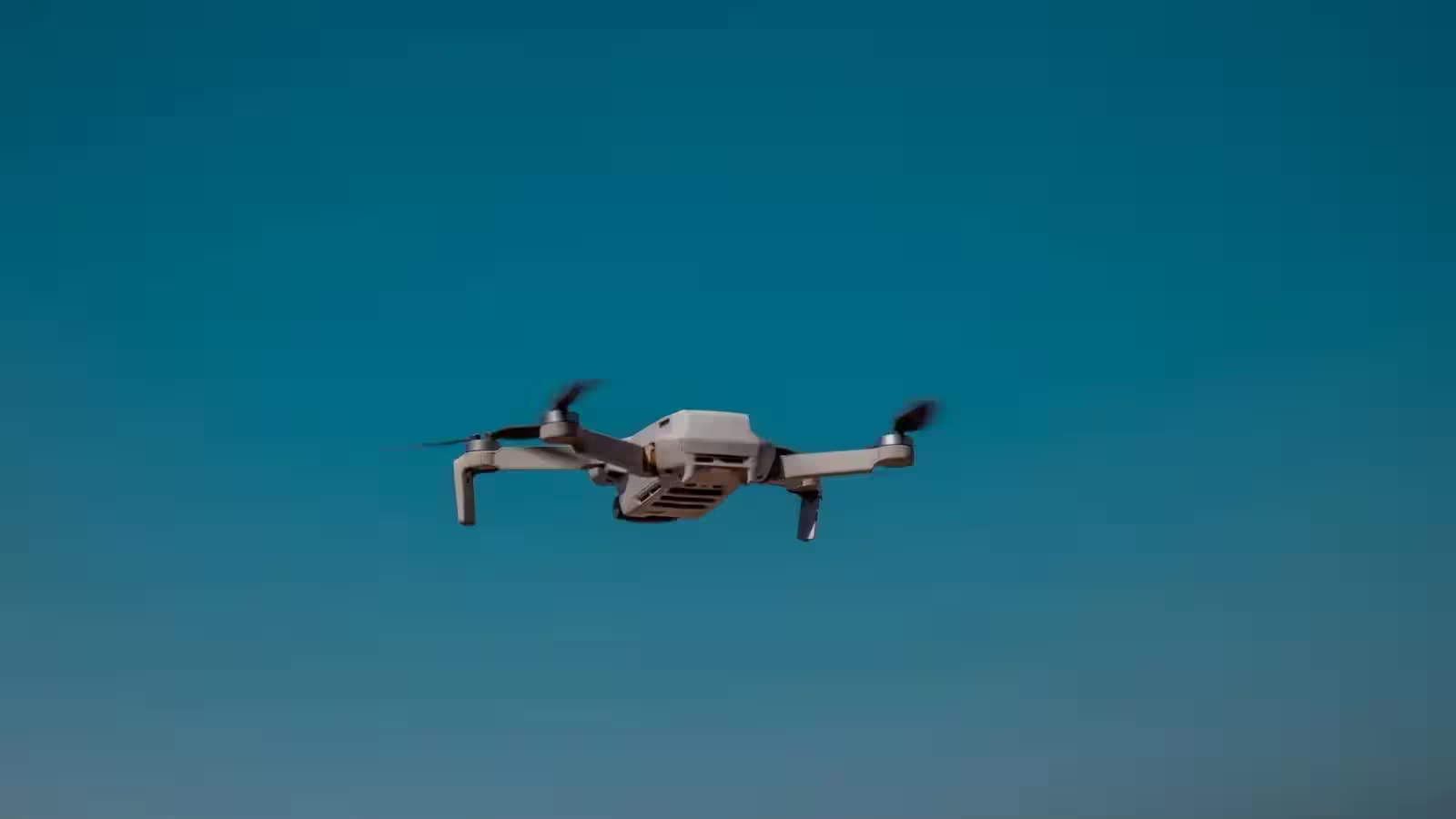
Modern warfare is changing faster than many defence establishments can adapt. A weapon that once required an aircraft, a trained crew and substantial financial investment can now be delivered by a relatively inexpensive unmanned platform. Drones have become instruments of surveillance, precision attack, disruption and psychological pressure. The next challenge is no longer simply how to deploy them, but how to stop them in large numbers without exhausting the resources meant to defend a country’s skies.
This is where interceptor drones are emerging as an important new layer of air defence. Designed to pursue and neutralize hostile unmanned aerial vehicles, they offer a potentially more affordable response to threats that conventional missile systems were not designed to handle economically at scale. They will not replace surface-to-air missiles, guns or electronic warfare. Their significance lies in giving defenders another option in an increasingly crowded and contested airspace.
The wars in Ukraine and the Middle East have exposed the problem. Russia’s repeated use of Shahed-type attack drones against Ukrainian cities and infrastructure has forced Kyiv to combine traditional air defence with mobile firing teams, electronic warfare and increasingly specialized interceptor drones. In March 2026, Ukraine’s Ministry of Defence announced the operational authorization of its domestically developed JEDI Shahed Hunter system. In April, the country’s defence procurement agency announced an order for 8,000 Octopus interceptors, reflecting the urgency of scaling up affordable counter-drone capabilities. These developments point to a central lesson: an interceptor is useful not merely when it works, but when it can be produced, deployed and replenished in sufficient numbers.
The economic equation is equally important. Using a sophisticated missile against a low-cost drone may be necessary when the threat demands it, but doing so repeatedly can drain expensive inventories. An interceptor drone could offer a more proportionate response against suitable targets. Yet the answer is not as simple as comparing the price of two weapons. Detection, identification, communications, launch infrastructure, training, maintenance and the risk of a missed interception all carry costs. Faster, jet-powered drones also present a different challenge from slower propeller-driven systems. No single interceptor can be expected to defeat every aerial threat.
As far as India in concerned, these lessons are particularly relevant. The country faces a complex security environment, including the use of unmanned systems for surveillance, cross-border attacks and attempts to disrupt military installations. The experience of Operation Sindoor in May 2025 reinforced the importance of integrated air defence, electronic warfare, surveillance and rapid adaptation. The wider concern is not only an individual drone, but a coordinated attack involving multiple platforms approaching from different directions and placing pressure on a defender’s ability to detect, classify and respond.
India has begun addressing parts of this challenge. In July 2026, the Defence Acquisition Council accorded in-principle approval to the Army’s AKASH TARANG anti-unmanned aerial vehicle electronic warfare system, alongside other defence acquisitions. This is a significant part of the broader counter-drone effort, but electronic warfare alone cannot be treated as a universal answer. Some drones may resist jamming, navigate through alternative means or operate in conditions where disrupting their communications is insufficient. India therefore needs a layered system that combines electronic warfare, guns, missiles, directed-energy options where practical, and interceptor drones matched to the threat.
The Indian industry already has a foundation on which to build. Chennai-based Zuppa Geo Navigation Technologies has supplied Ajeet-series drones to the Indian Army and developed capabilities in secure drone autonomy and swarm operations. Its founder and managing director, Pattabiram, says the company is now exploring the adaptation of existing platforms for interception.
“We are already prepared from a technology standpoint. Our company has previously supplied swarm drones to the Indian Army, and we are currently in discussions about adapting these platforms into interceptor drones as the conversation around counter-drone systems gains momentum. While we have not secured any international orders yet, we already have the technology and drone platforms ready to be deployed,” expressed Sai Pattabiram, Founder and Managing Director, Zuppa Geo Navigation Technologies.
His comments underline an important distinction in defence innovation, possessing a platform is not the same as having a proven operational interceptor. The conversion from a surveillance or swarm drone to an effective interceptor requires rigorous trials, reliable target acquisition, secure communications, resilience against electronic attack and demonstrated performance under realistic conditions. Industry readiness must be matched by transparent evaluation, military feedback and a procurement system capable of moving successful technologies from trials to operational use.
India must also avoid treating the interceptor as a stand-alone gadget. Its effectiveness depends on a complete chain: sensors that detect a threat, command systems that distinguish hostile drones from friendly aircraft, operators who can make timely decisions, and weapons that can engage without creating unacceptable risks to civilians or friendly forces. As autonomy increases, accountability and human oversight will remain critical. A system that is affordable but unreliable, vulnerable to cyber interference or unable to distinguish a genuine threat is not a dependable shield.
The production question matters just as much. Drone warfare rewards speed, adaptation and volume. India must enable domestic companies to test new designs, learn from field experience and improve systems without becoming trapped in procurement cycles designed exclusively for large, traditional platforms. Standardised interfaces, secure indigenous software, realistic evaluation and the capacity to manufacture at scale should be central to this effort. International partnerships can help, but strategic dependence on foreign components or software can create vulnerabilities during a prolonged conflict.
Interceptor drones will not make the sky invulnerable. Adversaries will respond with faster platforms, decoys, electronic countermeasures and more complex attack patterns. The contest will therefore be continuous: detection against concealment, autonomy against jamming, and affordable defence against mass-produced threats.
India must not wait for a large-scale drone attack to recognise this reality. For Indian defence, the call to action is clear: build the systems that will defend India’s skies in the drone age. The objective is not to replace every existing air-defence weapon, but to ensure that the right threat can be met with the right response at the right cost. In the next phase of warfare, the strength of a country’s air defence may depend as much on how efficiently it can stop a swarm as on how powerfully it can strike back.