

What has the New Delhi Declaration actually changed?
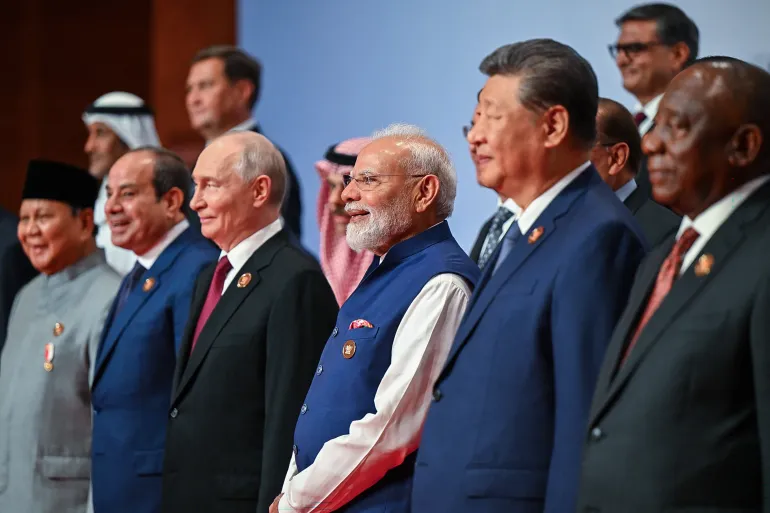
The most straightforward way to assess whether BRICS is becoming more than a diplomatic forum is to look at what its members actually agreed to in New Delhi on 12-13th September, 2026.
The 140-paragraph New Delhi Declaration, endorsed unanimously at the 18th BRICS Summit on September 12, was not directly a statement of geopolitical intent. It covered the three established pillars of BRICS cooperation, political and security affairs, economic and financial cooperation, and cultural and people-to-people exchanges, and brought together an extraordinarily wide range of commitments. More than 350 meetings and diplomatic interactions had been held across 30 Indian cities during India’s year-long chairship, giving the summit a much broader institutional base than the leaders’ meeting itself suggested.
At the political level, the declaration reiterated BRICS’ commitment to a more representative and multipolar international system and called for a reform of global governance. It emphatically favoured greater visibility for developing countries in international institutions, including the United Nations Security Council, while emphasizing sovereignty, international law and the principles of the UN Charter.
This is where the political challenge to the existing order becomes significantly visible. BRICS is not seeking to abolish the United Nations or replace every Western-led institution. Instead, it is strongly arguing that institutions constructed under a very different distribution of global power should more precisely reflect the world of today.
The declaration also decisively criticised unilateral coercive measures, economic sanctions not authorized by the UN Security Council, protectionism and unilateral tariffs. It called for reform of the World Trade Organization and restoration of its dispute-settlement mechanism. In other words, BRICS is increasingly contesting not only individual policies but the rules through which economic power is exercised.
The economic section is even more consequential.
BRICS members endorsed continued work on cross-border payment mechanisms, interoperability between payment and messaging systems and greater use of national currencies for trade and investment. Importantly, this does not amount to the creation of a BRICS currency. The priority is more pragmatic: to make it easier for member states to conduct transactions without every transaction necessarily passing through the same dollar-centred financial infrastructure.
That distinction matters because the future of BRICS’ financial challenge to the West may not lie in replacing the dollar. It may lie in reducing the dollar’s exclusivity.
The same logic can be seen in the New Development Bank. The declaration reaffirmed the importance of the NDB, supported expansion of its membership and encouraged greater use of local-currency financing. The Contingent Reserve Arrangement was also retained as an important component of BRICS financial cooperation. These institutions demonstrate that BRICS has already moved beyond declarations into building its own financial mechanisms.
Yet the constraints remain. Different currencies, capital controls, exchange-rate regimes and trade imbalances make financial integration intricate. Creating an alternative payment channel is not the same as creating an alternative monetary system. BRICS therefore remains far from a unified financial bloc. The summit’s economic agenda has expanded well beyond finance. The declaration addressed critical minerals, energy, agriculture, food security, climate change, industrial cooperation, MSMEs, digitalisation and supply chains. This matters because the strategic competition of the coming decades will not be fought only through military alliances or currencies. It will also involve who controls the resources, technologies, infrastructure and supply chains required for economic resilience.
Critical minerals are particularly important in this context. They sit at the point of convergence of clean energy, batteries, advanced manufacturing, electronics and strategic technology. BRICS’ call for resilient and diversified critical-mineral supply chains therefore has implications far beyond the mining sector.
Energy cooperation also follows a similar logic. The declaration immediately recognizes the continuing importance of fossil fuels for emerging and developing economies while also supporting renewable energy, nuclear power, hydrogen, energy storage and smart grids. Rather than accepting a single model of energy transition, BRICS is endeavouring to create space for different development pathways.
Agriculture and food security also received considerable attention. India pushed initiatives involving agroecology, regenerative agriculture and digital farming, while BRICS continued discussions on grain and agricultural cooperation. The objective is not simply greater agricultural trade but greater resilience against disruptions in food, fertilizer and supply chains.
The technology dimension may become even more important under China’s 2027 chairship. The summit championed cooperation in artificial intelligence, digital technologies, smart manufacturing and innovation. China has proposed multiple initiatives including a BRICS AI Open Source Zone, deeper digital cooperation, smart manufacturing and a Special Economic Zone partnership. This suggests that BRICS is beginning to treat technological capacity as part of geopolitical power.
That is a very significant evolution.The declaration also revealed the limits of BRICS, yet the most revealing aspect of the New Delhi Declaration may be what it took to produce it.
BRICS members have essentially different strategic interests. The grouping includes India and China, whose relationship remains marked by strategic competition; Iran and the UAE, which have sharply different regional interests; Russia, whose confrontation with the West is far deeper than that of most other members; and countries such as India and the UAE that continue to maintain extensive relations with the United States and Europe.
The foreign ministers’ failure earlier in the year to produce a joint statement demonstrated how difficult consensus can be. The leaders eventually succeeded in adopting the New Delhi Declaration, but much of its language was carefully constructed to accommodate divergent positions.
This was particularly visible in West Asia.
The declaration called for maximum restraint, dialogue and diplomacy, protection of civilians and respect for sovereignty and territorial integrity. It expressed concern over attacks on civilian infrastructure and peaceful nuclear facilities under IAEA safeguards. On Gaza, it supported a ceasefire, humanitarian access, Palestinian self-determination and a two-state solution, while also addressing Lebanon, Syria and Sudan.
At the same time, the declaration bypassed turning every conflict into a single BRICS position. Ukraine, for example, did not receive a dedicated section. That omission is considerably significant because it clearly demonstrates the boundary between broad political consensus and genuine strategic unity.
The Iran-UAE engagement on the sidelines of the summit offered another illustration of this contradiction. Iranian President Masoud Pezeshkian and UAE Crown Prince Sheikh Khaled bin Mohamed bin Zayed held a high-level meeting during the summit, while India attempted to maintain a diplomatic bridge between countries with sharply different regional interests.
The significance of this episode becomes more explicit when viewed through the idea of “strategic essentialism”, a term associated with Gayatri Chakravorty Spivak. Strategic essentialism describes a situation in which groups with substantial internal differences temporarily foreground a shared identity, interest or political objective in order to act collectively. It does not imply that those differences have completely disappeared. Rather, it suggests that, at a particular political moment, certain common interests can be made more important than internal disagreements for the purpose of achieving a concrete outcome.
The New Delhi Declaration reflects a similar logic. Iran and the UAE did not need to resolve their deep-seated strategic differences for BRICS to produce a common position on West Asia. Nor did India attempt to manufacture an artificial consensus by eliminating those major differences. Instead, the negotiations narrowed the area of agreement to principles that both sides could easily accept: maximum restraint, dialogue and diplomacy, protection of civilians, respect for sovereignty and territorial integrity, and the protection of trade, energy flows and maritime security. The final language deliberately avoided naming individual countries or assigning direct responsibility for the conflict. That ambiguity was not merely a sign of weakness of the declaration; it was also the mechanism through which consensus became possible.
This is where India’s role becomes particularly pivotal. The achievement of the New Delhi summit was not that India persuaded Iran and the UAE to abandon their respective positions. It was that Indian diplomacy helped to identify the narrow political space in which their interests could temporarily converge. The negotiations reportedly continued for several days, with Indian diplomats working through competing formulations before the members finally agreed on language acceptable to all. The eventual adoption of the declaration therefore depicted a diplomatic achievement not because the disagreement had disappeared, but because disagreement had been navigated well enough to prevent it from destroying the collective outcome.
In this sense, the New Delhi Declaration demonstrates one of the more practical forms of power that BRICS can exercise. Its members do not have to become a unified geopolitical bloc before they can act collectively. They can instead identify what is strategically essential at a particular moment, temporarily privilege those areas of convergence and leave more divisive questions unresolved. This does not make BRICS a conflict-resolution mechanism, nor does it erase the contradictions within the grouping. It does, however, portray that diplomatic flexibility can itself become a source of institutional resilience as well.
The Iran–UAE episode therefore captures the central paradox of the New Delhi Declaration: its consensus was possible precisely because it did not demand complete unity. India’s diplomatic role was to make room for that limited consensus without pretending that the underlying divisions no longer existed.
This does not mean BRICS has suddenly become a conflict-resolution mechanism. It does show that the grouping can provide strategic flexibility precisely because it is not a rigid military or ideological alliance. The declaration also directly addressed India’s security concerns by expressing opposition to the April 2025 Pahalgam terrorist attack and calling for stronger international action against terrorism, including cross-border movement, financing and safe havens.
The result is a document that is simultaneously ambitious and cautious. It is ambitious in the range of issues it covers. It is cautious in the areas where its members’ interests fundamentally diverge. That may be the distinctive feature of BRICS itself.
BRICS New Delhi Declaration 2026: From a summit to an ecosystem
The real significance of New Delhi, therefore, may not be any single initiative. It is the growing density of cooperation around BRICS.
Alongside the NDB and the Contingent Reserve Arrangement, the grouping now has sectoral working groups, financial mechanisms, scientific and technological cooperation, education networks, business forums and initiatives covering agriculture, health, energy, logistics and digital infrastructure.
India’s chairship also unveiled or advanced initiatives such as a Digital Agriculture Network, an Integrated Early Warning System for infectious diseases, an Energy Storage Centre of Excellence, a Seafarers’ Emergency Support Network, logistics cooperation and greater coordination among startups and MSMEs. The declaration also welcomed the BRICS-NDB Knowledge Portal and further development of BRICS’ institutional archives and continuity mechanisms.
Not every initiative will become groundbreaking. That is precisely why the criticism that BRICS sometimes produces more proposals than implementation retains its relevance.
But merely addressing the fact that BRICS has achieved nothing is no longer accurate. The more serious question is whether this expanding network of institutions and initiatives can acquire enough persistence to survive changes in national priorities and annual presidencies.
The New Delhi Declaration itself recognised this challenge. Its final section called for enhanced coordination, continuity and long-term institutional development, acknowledging that BRICS’ institutional development remains a dynamic process. That may ultimately be the most important outcome of India’s chairship.
India did not transform BRICS into a unified geopolitical bloc.
It did something more modest, and potentially more viable.
It attempted to make BRICS more practical.
The question now passes to China.
With Beijing taking the chair in 2027, BRICS may move from India’s emphasis on consolidation and putting into practice towards a more ambitious agenda centred on AI, digital infrastructure, industrial cooperation and deeper economic integration. China’s proposals for a “Greater BRICS” suggests that the next phase could place technology and industrial capacity much closer to the centre of the grouping’s strategic ambitions.
As Prime Minister Narendra Modi put it at the summit, “BRICS is not merely a grouping of Nations but an ecosystem of Solutions.” The onus for Beijing, therefore, will be to assess whether that ecosystem can evolve into durable cooperation without losing the flexibility that has allowed such a heterogeneous grouping to reach consensus.