

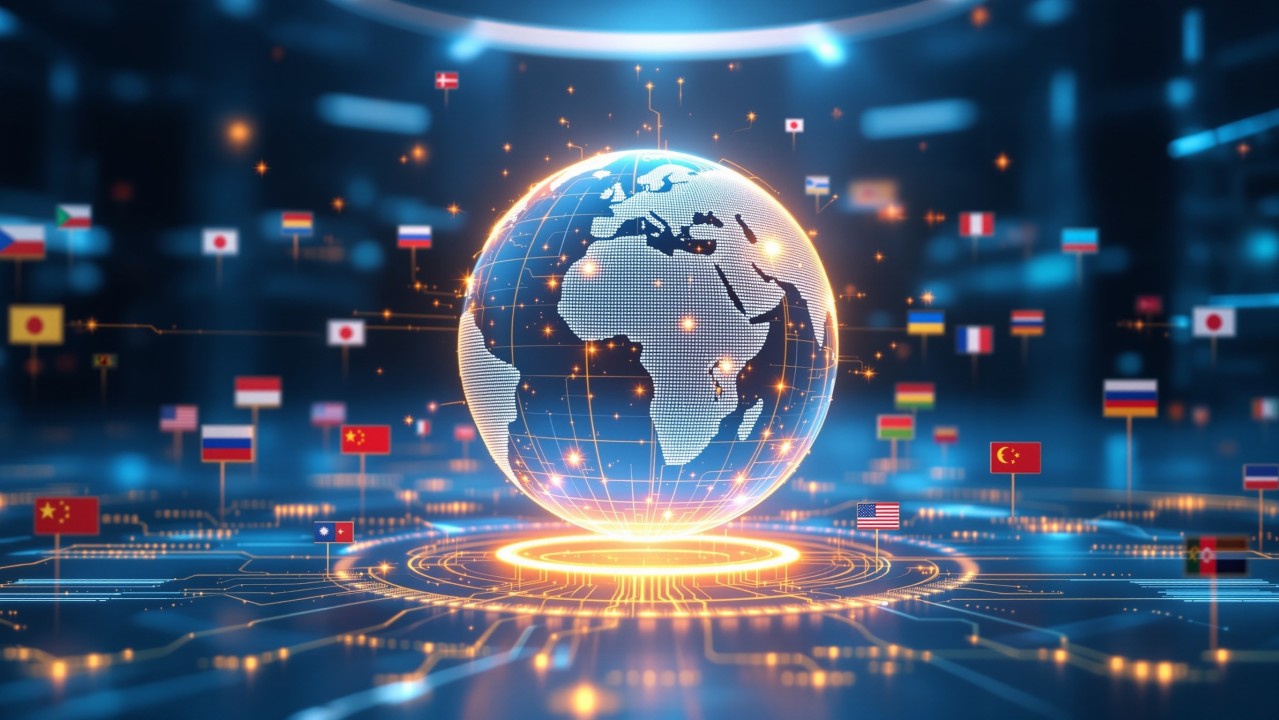
The States held sovereignty, legitimacy, and the ultimate authority within their own respective boundaries. Power was clearly located within the periphery of national borders. However, in today’s world, this structure is slowly evolving. Power is no longer confined only within territorial boundaries, and in many ways, it is moving beyond them.
Traditionally, sovereignty meant that a state had complete control over its territory, resources, and people. But in the present scenario, this idea is no longer absolute. One of the most visible changes can be seen during moments of utter crisis.
Today, one of the first actions often taken by governments is to curb or shut down the internet and social media. This itself shows how central these digital platforms have become. Even if restrictions are imposed within a country, the information does not remain confined within borders anymore. It continues to permeate globally, shaping most of the perceptions beyond the control of the state.
This can also be understood through certain real situations. In cases of political unrest, such as those seen in Bangladesh, several attempts were made in order to control internal communication or restrict the digital platforms immediately. However, information does not remain confined within national borders. Even if access is limited within a country, global platforms continue to circulate narratives, updates, and interpretations. This shows that sovereignty, which once ensured that what happens within a country remains within it, is no longer Absolute or Comprehensive.
Rise of Borderless Digital Power
With the rise of global technology companies, this alteration has become more apparent. Platforms that operate across various countries influence communication,economies, and even political processes in ways that go beyond the authority of individual nations. As a result of this, sovereignty is no longer a fixed or absolute concept; it is being overhauled in a world where digital systems operate across borders.
Sovereignty today is not only about controlling land or physical territory; it also involves command over data, digital spaces, and the flow of information. In the contemporary context, power is not only about how much land a country occupies, but also about how much influence it holds within the digital environment.
Control of Data and Digital Spaces
Platforms such as social media, search engines, and communication applications underscore this shift clearly. While individuals may feel that they are opting for what to engage with, the larger structure of visibility is shaped by algorithms.
What appears first, what is repeated, and what becomes important is no longer fully within individual or governmental control.
These platforms often carry out operations across several countries and collect data on a huge global scale. A company may be based in one country, yet its services are used across continents. This creates a situation where the data flows beyond borders, and control is no longer entirely within national limits. Governments are therefore no longer the only actors influencing what happens inside their societies.
Influence Without Direct Control
At the same time, these systems do not directly impose control; instead, they shape the central element; ‘behaviour’. Search engines arrange visibility, deciding what kind of information becomes important and what remains in the background. Messaging platforms enable rapid and borderless communication, where information spreads faster than regulatory mechanisms. App ecosystems determine which services remain accessible, impacting digital economies. In this sense, technology companies do not govern territories, yet they influence populations across them.
Tension Between States and Big Tech
This restructuring has led to growing tension between governments and some of the Big Tech companies. The States attempt to regulate platforms, control narratives, and maintain stability, while platforms operate globally and often resist strict national control.This creates a constant urge for negotiation. Sovereignty is no longer absolute; it is continuously being challenged and redefined.
This tension becomes more visible during elections and various other political movements. Today, campaigns, opinions, and narratives circulate at a rapid pace through digital platforms. While governments attempt to manage political communication, platforms amplify multiple frames of understanding all at once. This turns politics not only into a contest of policies, but also into a contest of narratives shaped through digital visibility.
Changing Nature of Authority
A more nuanced shift that must be understood is that authority itself is changing. Earlier, authority came from governments because they controlled the territories. Now, a large part of everyday life takes place within digital ecosystems engineered by the Tech companies. Governments still make laws, but platforms shape how people communicate, what they see, and how ideas spread. Authority, therefore, is becoming shared.
This shift can be understood through a familiar idea from Nineteen Eighty-Four and its concept of “Big Brother.” Earlier, monitoring and control were imagined as functions of the state. Today, however, this role is no longer limited to governments alone. Digital platforms continuously track behaviour, preferences, and interactions, creating a new form of observation that operates through technology rather than directly including political authority.
Global Power Dynamics: United States and China
At the global level, the transformation of sovereignty is most visible in the contrasting approaches of major powers, particularly the United States and China. The United States largely operates through a corporate-driven model, where private technology companies such as Google, Meta, and YouTube shape global digital spaces. These platforms influence how information flows across countries, making the United States highly influential in the digital order, not only through political or military power but also through the sphere of technological dominance.
In contrast, China is guided by a state-driven model of digital control. It maintains strict regulation over platforms within its borders and develops its own alternatives,ensuring strictly that the digital power remains in alignment with the state authority. This allows China to retain stronger internal control over information, communication, and data.
These two models reflect different policy paradigms to sovereignty in the digital age. While the American model extends influence globally through corporate platforms, the Chinese model emphasizes internal control and regulated digital environments.
Between these two, many developing countries find themselves in a dependent position. They trigger large amounts of user data but have limited control over the platforms they rely on. This creates an imbalance where digital influence is concentrated in a few powerful systems, while many countries remain users rather than being part of the bigger chain of controllers.
Opportunities and Challenges
This shift brings both opportunities and concerns. On one hand, digital platforms provide global connectivity, access to information, and new economic opportunities. They allow issues from one part of the world to gain attention globally. On the other hand, they raise questions about control, institutional responsibility, and fairness. If information spreads widely and shapes public opinion, even incorrect narratives can have lasting effects, making it difficult to ascertain regulatory duty.
Future of Digital Sovereignty
Looking ahead, this tension between governments and technology companies is likely to continue. Countries will attempt to introduce stronger data laws and regulations to reclaim control. At the same time, companies will continue expanding across borders. Artificial intelligence will further strengthen these systems, shaping not only content but also decisions and governance processes. There is also a possibility that the digital world may become more decentralized , with different regions developing their own rules and platforms.
Conclusion: Big Tech is Redefining Sovereignty
Fundamentally, power today is no longer geographically limited within borders. It flows through digital networks, data systems, and platforms that function across countries. Sovereignty is no longer defined only by territorial control, but by influence over digital environments.
The question is no longer simply who governs a territory, but who controls the systems that shape how people think, communicate, and act.