

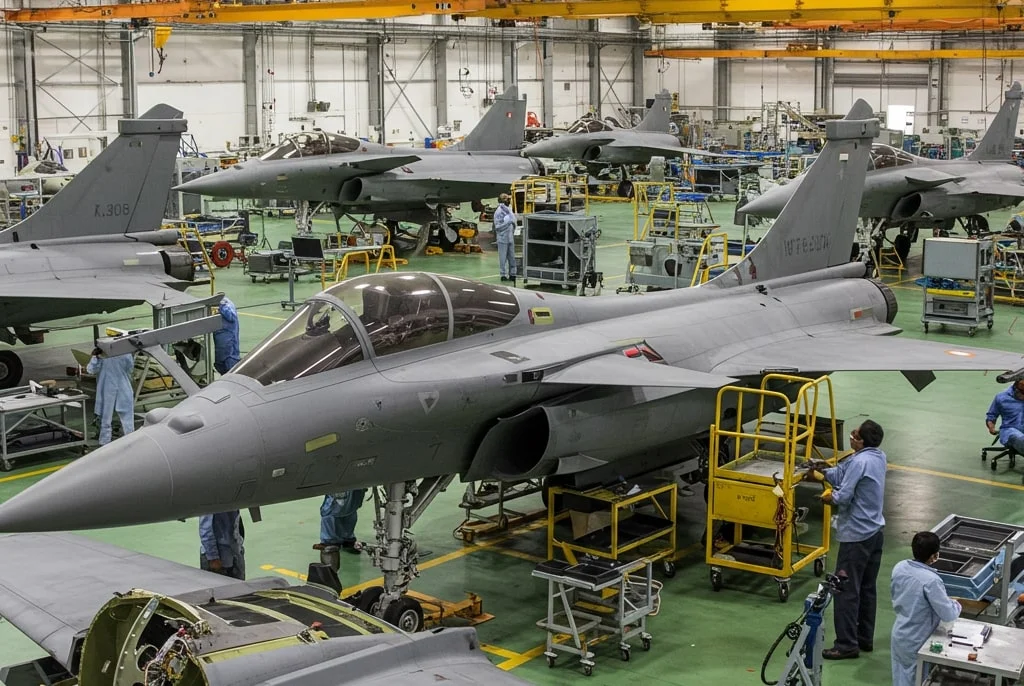
India’s proposed acquisition of 114 additional Rafale fighter aircraft from France is shaping up to be about more than expanding the Indian Air Force’s combat fleet. New Delhi is seeking greater operational freedom, control over weapons integration and the ability to operate the aircraft within India’s own defence ecosystem. At the centre of its position is a clear demand: the next generation of Rafales acquired by India must be capable of integrating indigenous weapons without restrictions.
Among the key conditions being placed by India is unrestricted integration of domestically developed weapons, particularly the Astra Beyond Visual Range Air-to-Air Missile (BVRAAM). The requirement reflects the Indian Air Force’s interest in ensuring that its combat aircraft are not limited to a predetermined set of foreign weapons. Instead, the IAF wants the freedom to equip the Rafale with Indian-developed systems as they become available, allowing the aircraft to benefit from the country’s growing indigenous missile and defence technology capabilities.
This is an important shift in how India approaches major defence acquisitions. Buying an advanced fighter is only one part of building combat capability. The ability to integrate different weapons, communicate securely with other platforms, access mission data and independently test and maintain critical systems determines how effectively that aircraft can be employed. India is therefore seeking to ensure that the Rafale does not remain dependent on the original manufacturer for every major upgrade or weapons-related requirement.
The Astra missile is particularly important in this context. Developed by India’s Defence Research and Development Organisation (DRDO), it represents the country’s effort to build an indigenous beyond-visual-range air combat capability. Integrating Astra with the Rafale would allow the IAF to combine a French-origin combat platform with an Indian-developed air-to-air weapon. It would also strengthen the connection between India’s fighter fleet and its domestic defence research and production ecosystem. However, such integration would require technical cooperation, access to relevant aircraft interfaces and certification arrangements with the aircraft manufacturer and concerned authorities.
India is also seeking greater freedom in communications. The IAF wants its Rafales to communicate securely and seamlessly with Indian military networks and other aircraft. This requirement has considerable operational importance. Modern air combat increasingly depends on the rapid exchange of information between fighter aircraft, airborne surveillance platforms, ground-based command centres and other military assets. A fighter’s effectiveness is no longer determined solely by its radar, weapons or flying performance; it also depends on how well it operates as part of a wider network.
For India, the ability to connect the Rafale with its own communication and command systems is essential to ensuring that the aircraft functions as part of the country’s integrated air-defence architecture. It would also reduce the risk of operational dependence on external communication arrangements and allow the IAF to exercise greater control over how information is shared across its platforms.
Another important requirement concerns access to specialised ground support equipment, including weapons test benches. These facilities are used to test, inspect and calibrate weapon systems and associated equipment. The IAF wants the ability to carry out such activities independently rather than depend entirely on foreign support. This is not merely a maintenance issue. It concerns the ability to verify equipment readiness, troubleshoot problems and sustain operational availability without unnecessary delays.
Taken together, these demands point towards a broader strategic objective: India wants greater control over the complete life cycle of its combat aircraft. This includes not only operating the platform but also integrating weapons, managing communications, testing equipment and supporting future upgrades. Such control becomes particularly important during periods of heightened military tension, when the ability to maintain and sustain combat readiness without external dependencies can have direct operational consequences.
The proposed 114-aircraft acquisition also needs to be viewed against the Indian Air Force’s wider modernisation requirements. With the IAF seeking to strengthen its fighter strength and replace ageing platforms, additional Rafales could provide a significant boost to its combat capabilities. But the long-term value of the acquisition will depend on more than the number of aircraft delivered. It will also depend on how effectively they can be integrated with India’s indigenous weapons, communications architecture and maintenance infrastructure.
The negotiations therefore carry significance beyond the immediate India-France defence relationship. They reflect a growing Indian expectation that major foreign defence acquisitions should support the country’s larger objective of technological self-reliance. Indigenous weapons should not remain confined to platforms designed and manufactured in India; they should also be capable of being integrated with imported aircraft and other advanced military systems, subject to technical and safety requirements.
For France and the aircraft manufacturer, this presents an important technical and commercial challenge. Weapons integration, secure communications and access to specialised support equipment involve questions of intellectual property, software access, certification, interoperability and long-term technical support. Reaching an agreement on these issues will be central to determining the scope of India’s proposed acquisition.
Ultimately, the proposed Rafale deal could become a test of how far India can move from being a buyer of advanced military platforms to becoming a more independent operator and integrator of defence technology. The IAF is not simply seeking more fighter aircraft. It wants the freedom to arm them with Indian weapons, connect them to Indian networks and sustain them through greater domestic capability. For New Delhi, the larger objective is clear: a sophisticated foreign-origin fighter must strengthen India’s combat power without limiting its ability to make independent operational and technological choices.