

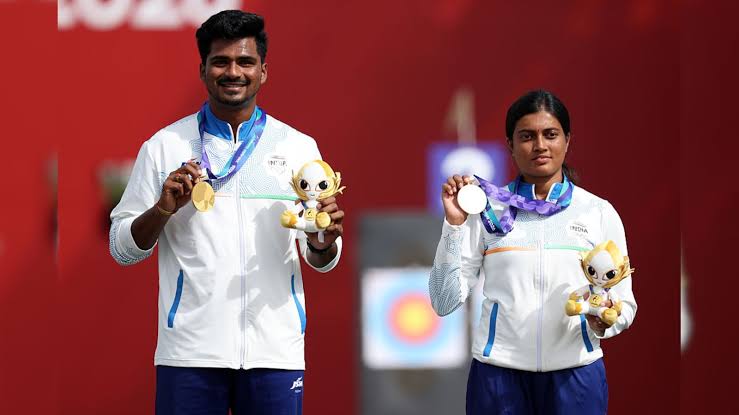
The Asian Games are one of the world’s biggest multi-sport events. They bring together athletes from across the continent to compete in disciplines ranging from athletics and shooting to cricket, hockey, squash, and kabaddi. The Games’ 20th edition is ongoing in Aichi-Nagoya, Japan. It started on September 19 and will continue till October 4, 2026. The programme features 43 sports, 71 disciplines, and 469 medal events.
During the previous edition of the 2022 Asian Games, held in Hangzhou, India showcased a record performance. It won 107 medals, including 28 gold, 38 silver, and 41 bronze, crossing the 100-medal mark for the first time.
While the 2026 Games are still underway, India has already produced several notable performances. However, matching the Hangzhou haul will require a strong second half.
India’s Medal Progress So Far
As of September 29, the 11th day of the Games, India had won 52 medals, including six gold, 21 silver, and 25 bronze. It has moved into the top 10 of the overall medal table. But the Games aren’t over yet, so this is an interim tally and not India’s final performance.
India has earned four gold medals from women’s cricket, men’s kabaddi, women’s kabaddi, and shooting.
The women’s cricket team won India’s first gold of the Games, defeating Sri Lanka by 147 runs in the T20 final. The result also meant that India successfully defended the women’s cricket title won at Hangzhou.
The men’s and women’s kabaddi teams won two more gold medals, both defeating Iran in their respective finals. As a result, India retained both kabaddi titles from the previous Games.
Furthermore, Kamaljeet and Suruchi Singh won gold in shooting in the 10 metre air pistol mixed team event. Shooting also produced a substantial number of silver and bronze medals, making it one of India’s largest medal contributors.
Athletics: A Major Medal Contributor
Athletics has emerged as one of India’s strongest contributors in Aichi-Nagoya. By September 29, Indian athletes had collected 19 athletic medals – 9 silver and 10 bronze.
The results worth noting are Sawan Barwal’s silver in the men’s marathon, Tajinder Pal Singh Toor’s silver in shot put, Ancy Sojan’s silver in the women’s long jump, and Sarvesh Kushare’s silver in the men’s high jump.
Tejaswin Shankar won the bronze in the decathlon, while Harita Bhadra and Parul Chuadhary also secured bronze medals in the 200 metre and 3000 metre steeplechase, respectively. Parul then added another bronze in the women’s 5000m, clocking 15:14.61. This gave her two medals at the Games, following her steeplechase bronze and national-record performance.
On September 29, the women’s 4x400m relay team won gold, producing a landmark result. Gulveer Singh added a bronze in the men’s 5000m, taking his personal medal tally at these Games to three, while Pooja Singh won bronze in the women’s high jump. India’s progress in boxing has also been notable, with Ankush Panghal and Parveen Hooda reaching their respective finals, helping India secure its strongest boxing medal haul in several years.
In 2023, Indian athletes won 29 medals, including six golds, 16 silvers, and nine bronzes. At this moment, the overall medal output in athletics doesn’t match the Hangzhou performance. However, the comparison isn’t complete because the 2026 athletics programme is still underway. Several events continue through September 29, meaning India’s final athletics tally could still change significantly.
Shooting Shows Promising Results
Shooting has again played a central role in India’s campaign. As of September 28, India had won 11 shooting medals, including one gold, six silver, and four bronze.
Indian shooters have risen to the podium in air rifle, air pistol, skeet, and 50m rifle events. The results include individual and team medals, reflecting the strength of India’s shooting contingent.
However, the comparison with Hangzhou remains interesting. In 2023, shooting produced 22 medals, including seven golds. So, while the sport remains one of India’s biggest medal sources in Japan, its final 2026 tally will need to grow considerably to match its previous overall numbers.
India is Achieving New Milestones
Medals aren’t the only measure for comparing India’s 2026 campaign with Hangzhou.
This year, India achieved a significant milestone in weightlifting. Mirabai Chanu won silver in the women’s 49kg category, securing her first Asian Games medal after previous attempts in 2014 and 2018. Her medal also ended a long wait for India in Asian Games weightlifting. It was the country’s first medal in the sport since Karnam Malleswari’s silver in 1998.
India also entered new territory in soft tennis. Jay Meena won bronze in the men’s individual event, becoming India’s first-ever Asian Games medallist in soft tennis. This is a new medal-producing sport for the country rather than an improvement in an existing medal tally.
Squash has also delivered historic individual results. Anahat Singh became the first Indian woman to reach an Asian Games squash singles final, while Abhay Singh won India’s second men’s singles medal in the sport. Both took silver. Saurav Ghosal had previously won India’s first men’s singles medal at Hangzhou.
What Lies Ahead for India?
The final days of the Asian Games will be important. India still has medal opportunities in athletics, shooting, archery, boxing, hockey, cricket, squash, and other disciplines. The country already has 52 medals and several memorable achievements, but the final assessment will depend on what happens between now and October 4.
The story for India in Japan is not simply about chasing another 100-medal milestone. It is also about whether established strengths such as shooting, athletics, cricket, and kabaddi can continue to deliver, and whether newer medal-producing disciplines can become part of India’s long-term Asian Games success.