

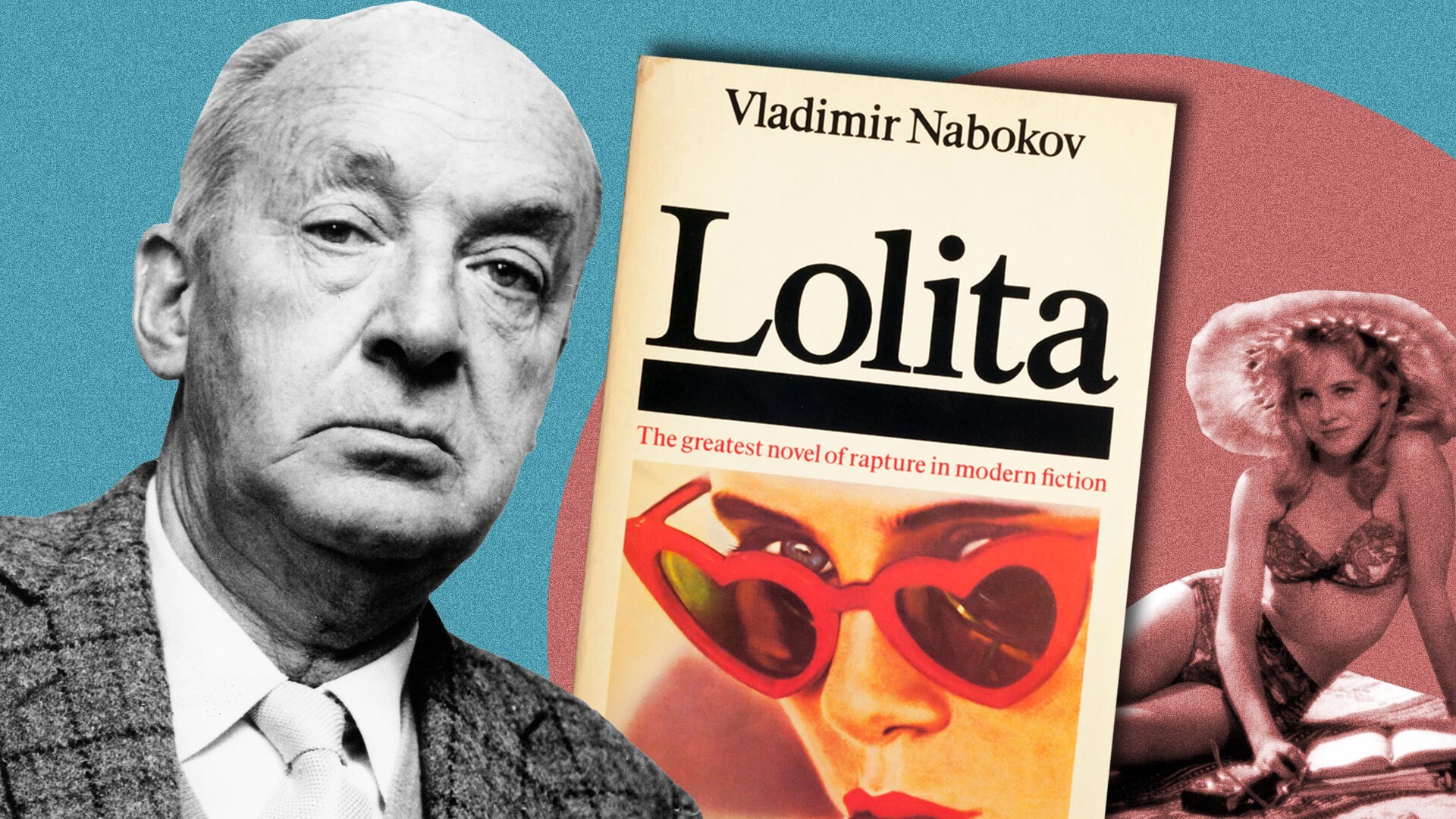
There is something deeply uncomfortable about being intrigued by the language of a man one knows not to trust. Humbert Humbert is intelligent, witty, cultured and extraordinarily articulate. He tells his story with singular literary confidence. His sentences can seem to be beautiful, his observations can be funny, and his descriptions can be strangely captivating. Yet the reality beneath that language is quite disturbing: he is an adult who is extremely obsessed with a child, Dolores Haze, whom he repeatedly reframes into the figure he deliberatedly calls “Lolita.”
That discomfort is not a problem to be solved before reading Vladimir Nabokov’s Lolita. It is the literary problem the novel asks us to confront. The most crucial question in Lolita, therefore, may not be what happened between Humbert and Dolores. It is: how does Humbert tell us what happened, and what is he trying to make us believe? Her name is Dolores Haze. “Lolita” is the name Humbert gives her. Dolores is a person; ‘Lolita’ is the identity Humbert constructs around her, shaped by his desire and obsession. He repeatedly alters a child into an imagined figure that fits his vivid fantasy, and the name becomes a pivotal part of that transformation. This is why the title itself deserves reasonable attention. Why Lolita rather than Dolores Haze? Because the novel is deeply concerned with the disparity between the person and the identity imposed upon her. Dolores exists beyond Humbert’s imagination; “Lolita” exists inside it. The distinction is consequently larger than merely just a name. It becomes a tension between personhood and objectification, reality and fantasy, experience and narration, female subjectivity and the gaze imposed upon it.
The novel’s narrative structure makes this problem more complex. The story reaches us through several layers: Nabokov’s framing, John Ray’s Jr’s editorial note, and Humbert’s manuscript. This distance absolutely matters because Humbert is not Nabokov, and his belief is not automatically the author’s. Humbert is an unreliable narrator, but he is also an intelligent and persuasive character. The danger therefore lies precisely there: a brilliant narrator can make the reader participate in his version of reality.
When he arrives in America, he rents a room from Charlotte Haze, Dolores’s mother. Charlotte becomes drawn to him and wants a relationship with him. Humbert, however, is interested in her daughter. His eventual marriage to Charlotte is therefore built upon duplicity. Charlotte later comes across Humbert’s writing and eventually realises the nature of his obsession. Thus, she decides to leave him, but unfortunately dies in an accident before she can fully confront him.
Her sudden death alters the balance of power. Humbert becomes Dolores’s guardian and takes her across America. And the journey over here is very important not merely because it moves the plot forward. America itself becomes part of Humbert’s literary creativity. Lolita consequently becomes partly a road novel and partly a portrait of American popular culture. But even America is never rendered objectively. And we are certainly forced to see it through the lens of Humbert only. That matters because Humbert has a weird habit of turning experience into aesthetic material. He can easily make a landscape beautiful while the circumstances surrounding him remain pretty disturbing.
Yet Dolores is not simply a passive figure within this landscape.
One of the dangers of reading Lolita entirely through Humbert is admitting his version of Dolores as complete. She is not. She has anger, intelligence, humour, desires, frustrations and ambitions. She wants friends, social freedom and an ordinary adolescent life. She increasingly wants to escape Humbert’s control.
This problem becomes even more evident through Clare Quilty, the playwright who becomes Humbert’s rival. Quilty resembles Humbert in many unsettling ways. Both are intelligent, theatrical, manipulative and sexually predatory. And both of them are interested in Dolores.
The question is not simply why Humbert hates Quilty. It is how distinct Humbert really is from the man he condemns.
When Dolores eventually disappears and Humbert searches for her, the story moves toward the moment when fantasy encounters the brutal reality. Years later, he finds Dolores alive. She is now an adult woman, married to Richard F. Schiller and pregnant. She does not want to return to Humbert. She has endeavoured to construct a life beyond him. She tells him what happened to her. Her life has been difficult. She is an adult woman trying to survive. The encounter is genuinely traumatic because Humbert is forced to confront Dolores as a person rather than as his fantasy. His beautiful narrative cannot simply erase her chaotic experiences.
Humbert eventually tracks Quilty down and kills him, but the murder cannot be comprehended as heroic justice neither does it qualify under the label of poetic justice. Humbert himself is an embodiment of violence and abuse. Killing Quilty does not make him morally superior. Instead, the confrontation completes the doubling between both the men. Humbert is eventually imprisoned and writes his narrative from prison. This retrospective position is very essential to interpret because he is not simply remembering his life; he is constructing an account of himself.
Dolores eventually dies in childbirth at seventeen. But Humbert survives her. That produces perhaps the most disturbing narrative irony of the novel: the person who harmed Dolores is also the person who survives to tell the readers her story!
She does not control the narrative. But he certainly does.
This is where Lolita becomes a novel about narrative power.
Humbert does not merely manipulate the people around him. He wants “Lolita” to swap Dolores in the reader’s imagination as well. And so the reader also becomes a part of the experiment. The intended question is no longer simply, “What is Humbert telling me?” It becomes: What is Humbert trying to make me believe?
Samuel Taylor Coleridge famously described the reader’s entry into fiction as a “willing suspension of disbelief”. Lolita further complicates that process. Humbert doesn’t simply ask us to enter his world; but he asks us to accept his version of reality. The novel therefore makes us question where literary immersion ends and critical judgement begins.
The challenge is therefore not to deny the brilliance of the prose. It is to admit that brilliance without abandoning moral judgement. This creates one of the novel’s deepest aesthetic questions: Can aesthetic pleasure coexist with moral disgust?
Elegant language does not make an ugly act beautiful. But aesthetically pleasing language can completely influence one’s perception. Humbert describes, the reader imagines, and the reader becomes engrossed. Then the reader has to step back and inquire : why was I persuaded by his voice? That is the intellectual trap of Lolita.
Humbert does not simply look at Dolores. He typically fabricates her through his gaze. Decades later, feminist film theory would provide a vocabulary for probing how visual culture orchestrates looking and illustration. Laura Mulvey’s 1975 essay “Visual Pleasure and Narrative Cinema” became a foundational intervention in feminist film theory, analysing the intricate relationship between cinematic pleasure, looking and sexual difference.
It would be historically imprecise to claim that Nabokov was writing according to Mulvey’s theory. Mulvey’s essay came later. But Lolita provides a phenomenal literary case for speculating about a related problem: how a male narrator constructs a female subject through desire.
And cinema has its own mechanisms of control too. A novelist can absolutely determine what we see through narration, vocabulary, description and omission. A filmmaker can also influence perception through framing, camera position, editing, close-ups, music, lighting and performance. The question, therefore, is not simply what happens when Lolita is tailored for the screen. It is:
What happens when Humbert’s literary gaze becomes a cinematic gaze?
Stanley Kubrick’s 1962 Lolita becomes the obvious place to begin. The film had to negotiate the censorship conditions of its period and therefore could not replicate the novel’s treatment of its material bluntly. On the page, Humbert can persuade us through words. On screen, perspective is distributed among the director, actor, camera, editing and performance.
The medium changes, but the problem remains: who manipulates the way we see?
That question can travel beyond Kubrick and into Indian cinema. Suppose if we consider Devdas. Sanjay Leela Bhansali’s film is not comparable to Lolita because Devdas is Humbert, nor because their actions are equivalent. The more useful correspondence is aestheticisation. Destructive emotional behaviour can be easily reconstructed through music, spectacle, beauty and tragedy into an intensely romantic cinematic experience. A similar kind of problem surfaces in the debates surrounding films such as Kabir Singh and Arjun Reddy. Again, Kabir is not Humbert. The comparison lies elsewhere: what happens when cinema gives immense emotional and visual space to a dictating male perspective?
Raanjhanaa offers yet another variation. Kundan’s feelings for Zoya may be experienced by him as love, but the desire does not automatically give someone the right to determine another person’s personal choices. The thought provoking question is not whether the desire is sincere. It is whether sincerity can become a justification for entitlement. These examples do not make Indian cinema a single tradition of male domination. They communicate something more complicated: cinema repeatedly negotiates the relationship between desire, sympathy, control and autonomy, and audiences do not always respond to those relationships in the same way.
Contemporary cinema is also making space for a different question: what happens when women are embodied not merely as objects of desire but as subjects with desires of their own?
The recently released Lust Stories 3, for instance, brings together four filmmakers to explore sex, relationships, desire and love, with an ensemble including Aditi Rao Hydari, Siddharth, Konkona Sensharma and Radhika Apte. Its implication for this discussion is not that it illustrates some final victory over the gaze. It is that contemporary Indian cinema increasingly provides space for stories in which female desire, intimacy and emotional complexity can become subjects of narration rather than merely objects within someone else’s story. That evolution definitely matters because the fundamental question of Lolita is at its core a serious question about representation.
Who gets to name whom? Who gets to describe whom? Who gets to desire whom? Who gets to tell whose story?
The problem has not faded simply because the technology has changed. Humbert uses literary language. Cinema uses cameras. Contemporary culture has social media, advertising and digital images. The mediums change, but the struggle over representation remains. This is also why Dolores’s name matters so much.
Humbert wants the reader to see “Lolita.”
But the reader must learn to see Dolores.
The challenge of reading Lolita is therefore not simply to disapprove Humbert’s desire. It is to hold out against his vocabulary. The novel asks us to critically observe how easily a person can become a character, how a character can become an object, and how an object can become an image shaped by someone else’s desire. Perhaps the most haunting thing about Lolita is not that Humbert tells us his story. It is that, for a while, he makes us see the world through his eyes.The accountability of the reader, and increasingly, the viewer, begins when we learn to look again.