

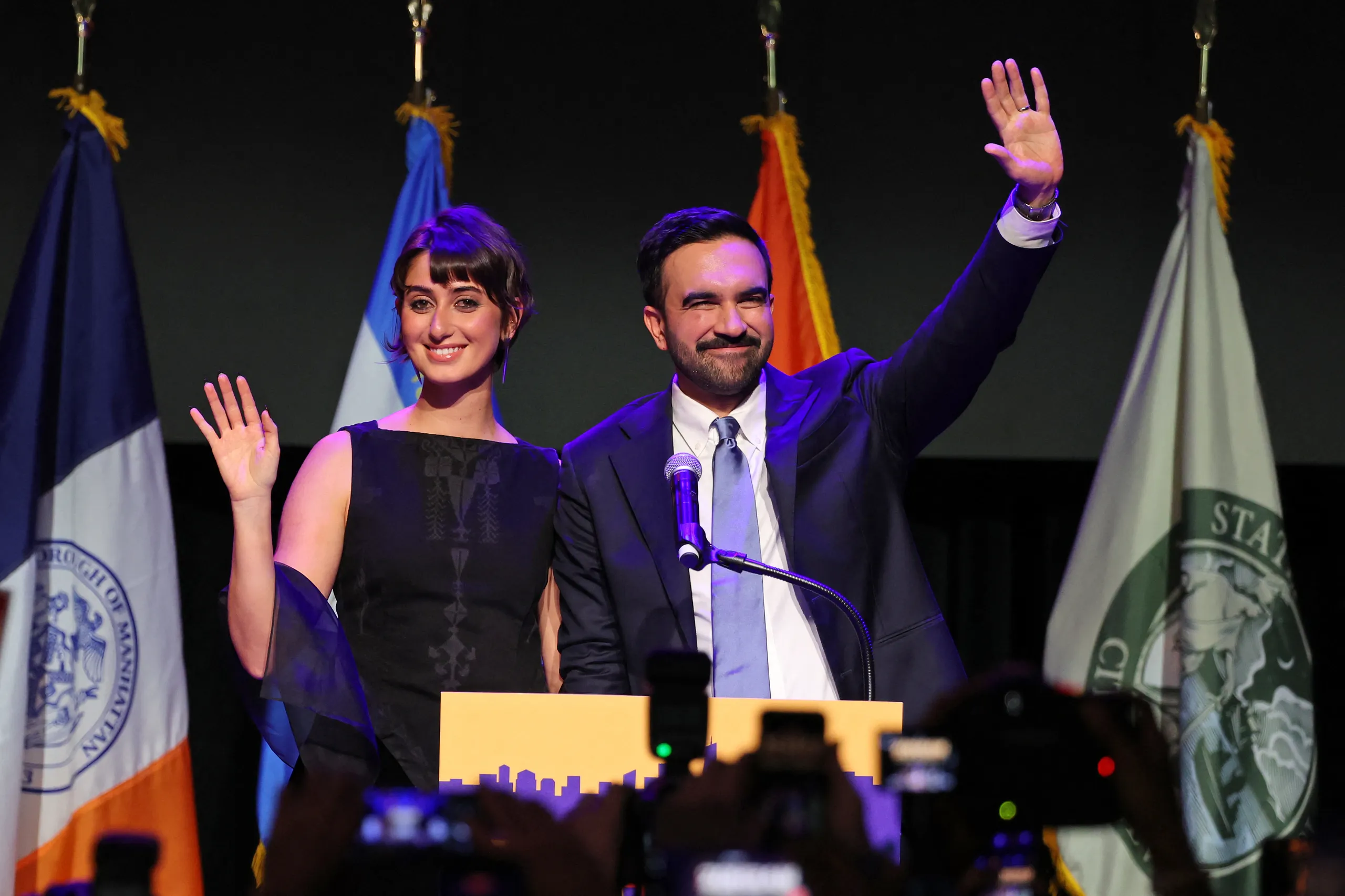
Who is Zohran Mamdani? Zohran Kwame Mamdani is a young politician who first won election in 2020 to the New York State Assembly from Queens. A native of Uganda raised in the Bronx, he represents Astoria and identifies as a Democratic Socialist. Mamdani is backed by the Democratic Socialists of America (DSA) and the Working Families Party, and he won the Democratic primary and general election in 2025 to become New York City’s mayor-elect.
He will be the city’s first Muslim and first Indian–Ugandan mayor. In his rise from a relatively obscure Assembly seat to leading a major city, Mamdani has loudly championed progressive, socialist-leaning ideas on housing, taxes, and public services. His background as a DSA-endorsed candidate and his activist, grassroots style have energized many young voters – but have left business leaders, middle-class families, and fiscal conservatives alarmed at what his agenda might mean for the city.
Zohran Mamdani’s Key Policy Proposals
Mamdani’s platform centers on aggressive progressive goals. He advocates a massive expansion of public housing and rent control, higher taxes on the rich and big corporations, and the redeployment of city resources toward social programs (such as free college and childcare).
- For housing, he proposes a new “Social Housing Development Agency” modeled on Vienna’s system, aiming to build 200,000 new affordable, rent-stabilized apartments over 10 years and to renovate NYCHA public housing at twice the current rate. He wants to freeze or heavily cap rents for millions of tenants, a signature pledge that would stop rent increases entirely for four years.
- On taxes, Mamdani would hike New York’s corporate rate from 7.25% to 11.5% and add a 2% surtax on individual incomes above $1 million. These revenues would fund social services and free public transit. He also supports increasing the minimum wage to $30 an hour by 2030, further bolstering labor through union-only public contracts.
- On policing, Mamdani has long argued for a community-based approach, he initially supported “defund the police” rhetoric in 2020, and proposed a new civilian Department of Community Safety to handle non-violent 911 calls (mental-health crises, homeless outreach, etc.).
By 2025 he clarified he would not remove all funding from the NYPD, saying he would “work with the police” on violent crime while investing more in social programs. On transit, he champions a permanent elimination of New York City bus fares and a fare freeze on subways, following an MTA pilot in which ridership rose ~30% on buses made free.
Potential Economic Impacts and Criticisms
Critics of Mamdani’s “welfare-state” agenda warn it could strain New York’s finances, drive away jobs, and undermine services in unexpected ways. For example, the public housing expansion would be extremely costly. New York’s Housing Authority (NYCHA) already faces a crippling maintenance backlog, a recent audit found $78 billion needed for repairs on existing projects. With tenants paying only half their operating costs and many buildings in disrepair, skeptics ask where the city would find the money to build 200,000 more units. Housing economist Christopher Whalen notes that funding giant new apartment projects is “the most expensive way to provide housing” and that NYC taxpayers already subsidize 50% of NYCHA’s cost. In short, a huge housing expansion could balloon the city debt or force cuts to other services.
Likewise, tax hikes on the wealthy risk hollowing out the tax base. High earners already pay an outsized share of New York’s revenue, the top 1% of filers account for over 40% of city and state income taxes. But many of those millionaires are leaving the state. Recent data show 150,000 New Yorkers moved to Florida from 2018 – 2022, taking about $14 billion in annual income with them. Florida’s lack of state income tax has made it a popular destination. Analysts warn that any new “millionaire’s tax” could accelerate this exodus. As one tax group notes, a high-earner “doesn’t need to give up the convenience of the city, they just need to move outside the five boroughs” to avoid the levy. Already, developers report a surge in interest from wealthy NYC residents buying Florida homes after Mamdani’s victory. Losing high-income households would shrink the city’s revenue so dramatically that even small cuts in their numbers could destabilize public finances. In effect, the very programs Mamdani funds might be jeopardized by the tax increases themselves.
Similarly, plans to freeze or cap rents have stirred strong opposition from landlords. The New York State Apartment Association warns that a city-enforced rent freeze would be “a death sentence for many of these buildings”. Maintenance and insurance costs are rising fast, they argue, so landlords fear they won’t be able to cover expenses if rents are frozen. Policy analysts echo this concern, a four-year rent freeze could save tenants $6.8 billion, but at the same time cost landlords $6.8 billion. This loss of income could “unravel the city’s already strained housing market,” since owners rely on rent revenues to pay for taxes, repairs, and debt. In fact, studies of NYC’s 2019 housing law show that strict rent regulation has already led to tens of thousands of apartments taken off the market because renovations and refinancing became unprofitable. If more rent-control rules are layered on, critics fear landlords will sell out or simply neglect their buildings, worsening housing quality and even reducing the available rental stock over time.
Transit, Public Safety, and Services
Mamdani’s calls to defund the police and to make mass transit free also come with potential trade-offs. On policing, opponents argue that cutting police budgets or morale could undermine public safety. Some cities that trimmed police funding in 2020 later saw big crime spikes. In Portland, for example, city officials cut $16 million from the police budget in June 2020. Over the following year, Portland’s homicide rate more than tripled (up ~255%) and shootings surged. Critics link this to reduced police presence. Portland’s mayor ultimately moved to partially restore funding and launch new gun-violence programs as shootings mounted. (Some experts note many factors drove the 2020 crime wave and caution against a simple “defund” narrative, but the example alarmed many business and neighborhood leaders.) In New York, where Manhattan Institute experts credit robust policing with lower crime in recent decades, some worry that aggressive cuts or hostile rhetoric toward the NYPD could jeopardize the city’s safety.
Likewise, fare-free transit has mixed reviews elsewhere. Mamdani estimates making all NYC buses free would cost about $650 million per year. While ridership jumps when buses go free, studies show much of the gain comes from people who already ride or who would have walked. In practice, free transit can strain budgets and even safety. After a three-year experiment in Tucson, Arizona, city bus drivers reported a sharp rise in assaults and disorder when fares were eliminated. A national review found that some fare-free systems were “overwhelmed” by new passengers or disruptive behavior. Portland, Oregon’s famous “Fareless Square” transit zone (downtown free rides) was ended in 2012 amid rising crime and budget gaps. The Los Angeles Metro, even with fare collection, still faces persistent safety issues on subways. Critics say that without fare revenue, transit agencies lose money they might otherwise spend on better service, so a free-ride policy can backfire if not fully funded by taxes.
Businesses and taxpayers worry these policies could push New York toward a “doom loop,” where higher taxes and regulations drive away employers and incomes. For example, New York already has thousands of empty office buildings and a fragile real estate market since the pandemic. If corporate taxes jump and tenant costs (via rent freezes and higher sales taxes) rise further, critics argue companies might relocate jobs to lower-cost cities. New York has seen an outflow of capital in recent years one analysis notes the city lost $14 billion of income tax revenue as the wealthy departed in 2019-20. Mamdani’s proposals, his detractors say, risk accelerating that trend. A shrinking tax base would force deeper service cuts or still-higher taxes, potentially confirming the “spiral” feared by some city economists.
Conclusion
Zohran Mamdani’s message is that New York should deliver more social goods to the many, financed by the wealthy few. This vision resonates with voters feeling left behind. But turning it into reality will be a delicate balancing act. Economists and urban planners caution that sweeping socialist-style policies come with economic trade-offs. Funding huge housing and transit programs requires either steep taxes or debt; limiting landlords’ returns could deter investment in upkeep; reducing police budgets risks public safety; and chasing away rich payers could hollow out the economy.
As one longtime analyst puts it, “governing is the art of the possible.” New York’s unique status as a global financial capital means any shift toward a “welfare state” must be measured against market realities. The city’s future may depend on whether leaders like Mamdani can temper idealism with pragmatism – ensuring that hopes for social justice do not inadvertently undermine the very prosperity and stability that sustain them.
Article by Shaloo Singh