
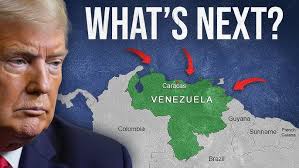
At the very first glance, the question sounds logical, and even tempting as well. The United States is facing a staggering national debt of nearly $38 trillion. Venezuela, on the other hand, holds the largest proven oil reserves in the world. When the US launched a major military operation against Venezuela, captured its president, and began overseeing its oil output, a natural question arises: is ‘America trying to use Venezuelan oil to pay off its own debt?’ Is it a rumour or some random speculation revolving around the vast sphere of Geopolitics.
This assumption has gained huge traction across social media and global commentary. But in order to comprehend whether this idea holds any real weight, one must move beyond these past headlines and untangle the deeper political, economic, and historical context which deeply connects the United States and Venezuela.
Why Is the United States in Debt at All?
The most common question which often people inquire is, how can a country as powerful as the United States can be so deeply in debt? Power, however, does not mean the absence of borrowing. The US runs a large modern government, and like most large governments, it spends more money each year than it collects through taxes. There’s a huge difference between paying a debt and being a nation which is bankrupt, and the US clearly doesn’t fall in the trap of being a bankrupt ‘State’.
The American government funds its operations by issuing bonds; essentially borrowing money from the investors with a promise to repay it later with a good amount of interest. Over the decades, this borrowing has accumulated a lot. The debt did not appear overnight; it grew gradually as the US continued to fund military spending, social security, healthcare, infrastructure, education, public services, and interest payments on earlier loans.
The key point over here is this: the United States services its debt, but it does not eliminate it. Interest payments continue, and when spending exceeds the existing revenue, the total debt grows further. This is why the debt figure appears alarming in the headlines. Still, being in debt is not the same as being bankrupt. A bankrupt entity cannot meet its obligations at all, no matter what the condition is. The United States, despite its debt, continues to pay interest, borrow at low rates, and sustain global confidence in its economy. In simple terms, it is like a top-performing student scoring slightly lower in one subject; which certainly seems to be a matter of deep concern, but not catastrophic.
Then From Where Does Venezuela Enter This Picture?
Venezuela’s relevance stems from the pursuit of supplying “oil”. It is a South American country that once supplied large amounts of crude oil to the United States. Today, it holds roughly 303 billion barrels of proven oil reserves; one of the largest in the world.
Many people assume that oil-rich countries are automatically wealthy. But in Venezuela’s case, this assumption has collapsed long ago. Several years of poor maintenance, the ageing infrastructure, extreme level of mismanagement, and political interference have completely weakened its oil industry. The nationalisation of the oil sector and the dismissal of the experienced technical staff has caused production to fall sharply, and unfortunately there’s currently no way through which Venezuela could retain its old position.
Sanctions imposed by the US and its allies further restricted who Venezuela could sell oil to, thereby forcing it to operate under limited markets and heavy discounts. As the oil production declined, government revenue shrank, and the economy drastically deteriorated.
Venezuela’s state oil company also accumulated a massive debt, borrowing money with the expectation that future oil sales would cover repayments. When the production fell, those obligations became unpayable. This debt crisis, however, belonged to Venezuela and does not remain as an important issue to the United States.
So Why Did the US Intervene Militarily?
Historically speaking, military actions have never emerged suddenly. They follow patterns of pressure, escalation, and clear justification. In the months leading up to the intervention, US naval forces increased activity in the Caribbean, seized
Venezuelan-linked oil tankers, and carried out strikes on vessels accused of drug trafficking.
In early January 2026, the United States launched a major military operation in Venezuela, hereby capturing President Nicolás Maduro and transferring him to US custody to face criminal charges. Washington justified the action on grounds of narco-terrorism, drug trafficking, and national security threats.This official reasoning forms one layer of explanation. Another prominent section lies in the periphery of geopolitics. Venezuela had earlier strengthened its ties with China, Russia, and Cuba; the countries which are often viewed by the US as strategic rivals.
From Washington’s perspective, a rival-aligned government controlling massive oil reserves in its regional sphere of influence was unacceptable. Oil here is not just about quick cash. It is about leverage, long-term energy security, and denying strategic assets to adversaries.
Can Venezuelan Oil Really Pay America’s Debt?
This is where the most popular narrative collapses. Even if Venezuela’s oil industry were fully functional; which technically is not, its revenues would be insignificant compared to America’s $38 trillion debt. Rebuilding oil infrastructure would take a span of several years. Most revenue would go towards stabilising Venezuela’s economy, paying operational costs, and restoring basic services.
No serious policymaker believes Venezuelan oil could meaningfully reduce US debt. The idea persists only because it is dramatic, not because it is realistic.
The United States is not panicking about its debt because it honestly does not need to. Its strategy prioritises maintaining power and influence while managing debt over time, not liquidating foreign resources to clear it overnight.
Why Were Many Venezuelans Unhappy Under Maduro?
For years, daily life activities and domestic chores in Venezuela deteriorated. Food shortages became very common. Medicines partially disappeared from the contemporary market. Electricity cuts were quite frequent. Hyperinflation destroyed savings and made salaries almost worthless. A primary school teacher’s income could no longer cover his basic groceries, and families were starving and suffering. Elections were widely viewed as a phenomena of manipulation. The opposition leaders were banned or arrested, and the media remained under state control, hence they were voiceless. Many Venezuelans felt that voting no longer could bring any kind of change.
Oil wealth failed to reach the ordinary citizens. Corruption, mismanagement, and sanctions ensured that the national resources significantly failed to translate into public welfare.As a result, millions left the country. This mass migration became one of the clearest signs of dissatisfaction.
Why Did Some Celebrate Maduro’s Removal, And Others Not?
Reactions were further divided into two categories. Many Venezuelans abroad celebrated Maduro’s removal, expressing hope that conditions might finally improve after a long period of resentment. These voices were loud and clearly visible.
Inside Venezuela, the reactions were far more cautious. A large section of the population remains fearful and uncertain, unsure whether the political turmoil will end or simply take a new form and suffering would remain neverending. They choose neither celebration nor protest, because they are exhausted by years of instability.
The entire country is not unified in support of the US intervention. But the public sentiment is deeply fragmented.
The Nobel Peace Prize Controversy and Its Symbolism
The controversy surrounding the Nobel Peace Prize has added another layer to the existing crisis. María Corina Machado received the prize for her non-violent struggle for democracy and firmly opposing corruption. Shortly before the US military operation, she symbolically handed her Nobel medal to the US President Donald Trump.
Legally, the Nobel title cannot be transferred, this statement was made crystal clear by the Nobel Committee. The gesture was symbolic, but not official, and this gave rise to an unsettling controversy regarding implicit Power and Politics.
Yet symbolically, it unsettled many of them. A peace award suddenly appeared linked to a military intervention. For some Venezuelans, the prize represented recognition of their struggle. Meanwhile for others, involving a foreign leader blurred the line between peaceful resistance and geopolitical power plays.
Who Is Actually Governing Venezuela Now?
Maduro remains in US custody, but he keeps on claiming his innocence. In Caracas, Vice President Delcy Rodríguez has been sworn in as the interim president.Venezuela has been politically fragmented, and this gives rise to a serious question; what lies for Venezuela in the future ?
The US has stated it will oversee the transition while oil revenues are redirected towards the decent lens of stabilisation and reconstruction. This claim has drawn global criticism, raising deep concerns about sovereignty and legality. One country cannot legally take over another. Yet enforcement depends less on legal principles and more on power dynamics. International pressure, diplomacy, and internal resistance remain Venezuela’s only real counterweights, which not a single political leader could ever deny.
What Are the Long-Term Possibilities?
Several outcomes remain possible; a political transition leading to elections under the strict international monitoring system, there might also be a partial opening without full democratic reform, the continued influence of old power structures, terrific prolonged instability and internal power struggles, the Humanitarian relief, economic recovery, and the release of political prisoners remain urgent regardless of which path emerges first.
So What Is the Real Answer?
Will the United States use Venezuelan oil to pay off its debt? No, certainly Not. Realistically, this is not possible. But power, influence, and strategic dominance are different matters, they can’t be illustrated without the lens of a diplomat. Maps, symbols, and gestures may look trivial to those who wield power, even if they carry deep emotional weight for ordinary people. This uncertainty deepened when a digitally altered image circulated online showing Canada, Greenland, and Venezuela shaded as U.S. territories; an unofficial, AI-generated map with no legal standing, yet one that amplified global anxieties about expansionism and unrestrained authority. Recent world events show how statements by powerful leaders can spark fear even without real intent. For example, U.S. comments about Greenland’s security; saying only America can guarantee it and hinting force would be “unstoppable”; this statement alarmed Europeans and raised some serious questions about dominant power projection. Similarly, many Venezuelans worry that if a dominant power opts for control, it might act impulsively or without clear checks, feeding the ample amount of uncertainty about their prolonged future.
The crisis raises a final question: will Venezuela emerge with greater stability and representation, or will intervention deepen its suffering? The answer still remains uncertain. What is clear is that this conflict is not about debtrepayment, but it is about power; who holds it, who loses it, and who pays the price in the process.
For many Venezuelans still inside the country, this moment does not feel like liberation. It feels like a familiar story repeating itself. Once caged, then told they were free; “Panchhi se chhudaakar uska ghar Tum apne ghar par le aaye” once stripped of wings, now watching them torn again. While those who left the country celebrate from afar, but those who remain are left asking where they truly stand. For them, this is not a story of victory or rescue, but of trauma layered upon trauma; a quiet fear that every promise of freedom only changes the hand holding the cage, but not the ones living inside the cage.
Article by Sruti Bhaumik