

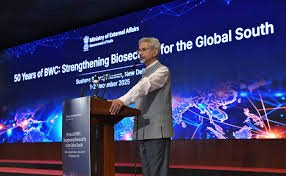
In an age defined by rapid global travel, climate change, and accelerating technological innovation, biological threats have become quite popular. Whether arising naturally, as in the case of emerging infectious diseases, or from accidents and deliberate misuse, biological hazards are a cause of profound public health, economic, and security risks. The COVID-19 pandemic demonstrated how vulnerabilities in one part of the world can rapidly become the world’s problem, revealing deep inequities in preparedness and response capacity.
The Global South comprises much of Africa, Latin America, and parts of Asia. Their persistent gaps in health infrastructure, scientific capacity, and governance create vulnerabilities. These not only affect local populations but also have global implications. Consequently, strengthening bio-security in these regions is essential for a safer, more resilient world.
What is Bio-Security?
Bio-security consists of systems, policies, and practices designed to prevent, detect, and respond to biological threats. These threats can be natural, accidental, or deliberate. It covers three broad areas:
- Surveillance and outbreak detection: early identification of emerging diseases.
- Laboratory safety and governance: ensuring that biological research does not itself create new risks.
- Prevention of misuse: guarding against deliberate biological attacks and unsafe scientific practices.
These components must work together in a comprehensive defence network that includes
public health systems, research institutions, and regulatory frameworks.
Unique Bio-Security Challenges in the Global South
1. Weak Surveillance and Early Detection Systems – Effective disease surveillance hinges on data collection, rapid reporting, and integrated analysis across sectors. Many countries in the Global South lack robust systems capable of real-time detection or cross-sector integration. This is particularly critical for detecting zoonotic diseases, which jump from animals to humans and may spread undetected in underserved regions.
2. Insufficient Laboratory Biosafety and Bio-security Capacity – The safe handling of dangerous pathogens requires high-containment laboratories (Biosafety Levels 3 and 4) and strong biosafety cultures. Yet many Global South countries lack essential infrastructure and trained personnel to operate such facilities safely. Without rigorous protocols, even well-intended research can pose risks.
3. Limited Access to Advanced Technologies and Data Sharing– Genomic sequencing and digital surveillance tools revolutionise outbreak detection and tracking, but are often out of reach for many Low- and Middle-Income Countries (LMICs) due to cost, infrastructure, and expertise barriers. Moreover, inequities in data access and concerns about sovereignty and benefit sharing can slow global cooperation.
4. Policy and Governance Gaps – Bio-security requires robust legal and policy frameworks that govern research, data sharing, and laboratory practices. While international standards exist, implementation varies widely. Many Global South countries still work to develop comprehensive policies, integration across sectors, and enforcement mechanisms that ensure compliance and accountability.
Why Strengthening Bio-Security in the Global South Benefits Everyone?
Biological threats don’t know borders. A disease that emerges in one region can travel the globe within days. Thus, the reasons to improve bio-security in the Global South are as follows:
- Reduces the risk of global outbreaks: Faster detection and response limit the spread beyond borders.
- Enhances global data and shared knowledge: Inclusive surveillance strengthens global early-warning systems.
- Builds scientific partnerships: Shared research accelerates understanding of diverse pathogens.
- Supports equity and resilience: Strong public health systems improve overall community well-being.
In this way, investments in local capacity yield global returns, protecting human life and economic stability worldwide.
Bio-Security in India
India represents one of the most consequential bio-security contexts in the Global South due to its large population, high biodiversity, dense human–animal interfaces, and advanced biotechnology ecosystem. The country has established important public health mechanisms such as the Integrated Disease Surveillance Programme (IDSP), a nationwide laboratory network under the Indian Council of Medical Research (ICMR), and growing genomic surveillance capacity. However, challenges remain in real-time data integration across states, uneven laboratory biosafety standards, and fragmented governance across multiple ministries.
India currently lacks a single, unified national bio-security framework. It relies instead on a patchwork of public health, agricultural, and environmental laws, many of which predate modern biotechnological risks. Strengthening bio-security in India will require better inter-ministerial coordination, modernisation of legal frameworks, expanded biosafety training, and deeper adoption of the One Health approach. Given India’s regional connectivity and global scientific footprint, improvements in its bio-security capacity would yield significant national, regional, and global benefits.
How Can the Global South Strengthen Bio-Security?
The strategic approaches to strengthen bio-security are:
1. Building Sustainable Surveillance Systems – Effective surveillance integrates human, animal, and environmental health — a concept known as One Health. For the Global South, this means community-based reporting systems that link rural and urban clinics to national networks, real-time digital platforms that facilitate rapid data sharing, and training local health workers in outbreak identification and notification.
2. Expanding Laboratory Capacity and Biosafety – There is a pressing need to strengthen laboratory systems, which requires investing in biosafety infrastructure, including BSL-2 and BSL-3 labs adapted to local needs. Developing training programs in biosafety and bio-security for scientists and technicians is also crucial. Authorities must establish national laboratory networks that standardise practices and facilitate quality assurance.
3. Enhancing Policy and Regulatory Frameworks – Bio-security requires clear legal frameworks that govern research, pathogen handling, and emergency responses. There is a need to update and harmonise biosafety and bio-securityregulations with international standards. Enforceable penalties for noncompliance balanced with incentives for safe practices must also be created.
4. Fostering Workforce Development and Scientific Capacity – A skilled workforce is the backbone of any bio-security system. Investments should target formal education programs in epidemiology, microbiology, and bio-informatics and hands-on training through regional centres of excellence.
5. Promoting Equitable Access to Technologies – Genomic sequencing has transformed pathogen tracking, yet barriers remain. The technology can be democratised with subsidised regional sequencing hubs that serve multiple countries and open-source bioinformatics tools and training materials. Shared data platforms that protect privacy while enabling global collaboration can also help.
Final Thoughts
Strengthening bio-security in the Global South is a moral and strategic imperative. As the world faces the ongoing threat of emerging pathogens, antimicrobial resistance, and the accelerating pace of biotechnology, a fragmented global defence is inadequate.
The future of global health security depends not on isolated excellence but on a network of capable, connected, and supported nations. Strengthening the bio-security of the Global South is investing in a safer, healthier, and more stable world.
Article by Gayatri Sarin