
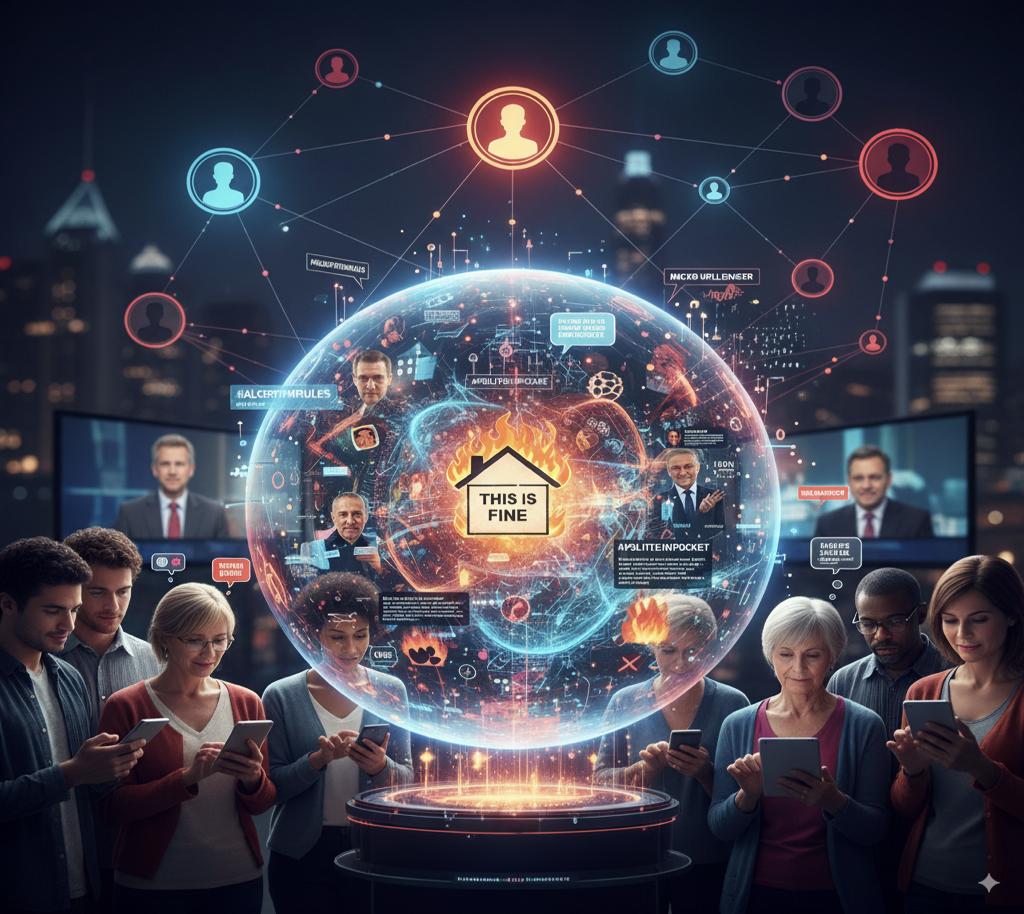
Op-eds and primetime shows have been abandoned in political debates. They are now unravelled on timelines, pieced together into memes, reels, and hashtags. A short clip may produce more response than an hour-long speech. What once was limited to press conferences is now being acted out on a large scale, in real time, and before a crowd of millions.
This shift rewires everything: how leaders speak, citizens argue, and communities understand events. The question isn’t whether social media matters. It’s who drives these narratives, how reliable they are, and what risks emerge when politics runs at the speed of a swipe.
Algorithms Rule the Town Square
Social platforms pretend to be digital marketplaces of ideas. In reality, algorithms act as gatekeepers. They decide which posts surface, which sink, and which explode.
The pattern is clear: content that provokes anger, humour, or outrage wins. Measured debate? Usually buried. That design tends to tilt political discussion toward extremes. Viral emotion outpaces nuance; the loudest voices set the tone in the blink of an eye.
Campaigns know this. Billions are funnelled into platform-specific strategies: a TikTok joke, a Twitter trend, a Facebook carousel. The goal isn’t to persuade with depth but to dominate the feed before the opponent reaches television.
How People Say They’re Influenced?
Surveys show that users themselves recognise this influence.
| Platform | % of Users Reporting Influence on Views |
| 62% | |
| Twitter/X | 58% |
| TikTok | 47% |
| 43% | |
| YouTube | 39% |
Politics has migrated into daily scrolling. Instead of waiting for the nightly news, people absorb talking points mid-commute, mid-lunch, and mid-binge. Campaigns are designed around this new rhythm, so the scroll has become the political stage.
Political Stories Don’t Just Appear, They’re Built
Every viral moment has an architect. Campaign staff, influencers, activists, and even coordinated troll networks build narratives deliberately.
- Hashtags work as rally banners.
- Short clips turn policy into snackable bites.
- Memes convert arguments into cultural shorthand.
The 2020 U.S. elections made this impossible to ignore. Candidates didn’t rely on 30-second TV spots. They pushed reels, livestreams, tweets, and viral-ready soundbites. A few seconds of video could set the day’s agenda more effectively than a rally of thousands.
The upside is that more voices enter the debate. The downside is depth, complex problems get flattened into slogans. Platforms reward drama. Outrage, satire, and viral clashes pull more clicks than steady policy talk. As a result, politics often plays out like a reality show: rivalries, clapbacks, and memes take center stage. The danger is that public life shifts from problem-solving to spectacle. The issues remain, but the performance overshadows the substance.
The Misinformation Problem
Speed is social media’s strength, but it’s also its weakness. False claims outpace corrections. A study on election content showed misinformation spreads nearly twice as fast as verified reports.
The consequences are tangible:
- False rules about voting dates or locations can suppress turnout.
- Cherry-picked statistics distort debates.
- Coordinated propaganda campaigns harden divides.
Fact-checking helps, but it’s reactive. When a correction arrives, the original post may have gone viral. The challenge isn’t individual mistakes; it’s structural.
Social Media and Politics: Three Cases
- 2016 U.S. Election: Foreign actors used Facebook ads to amplify division, showing how outside players can weaponize feeds.
- Black Lives Matter (2020): A hashtag scaled into a global campaign, proving digital activism can mobilize millions within days.
- Recent U.S. Midterms: TikTok’s satire and commentary outperformed traditional coverage among young voters, shifting turnout conversations.
The Lesson: social media can strengthen democracy by mobilizing participation or weaken it by distorting truth. Both outcomes unfold simultaneously.
Why Do People Trust Posts More Than News Anchors?
Here’s the paradox. Even with misinformation everywhere, users often trust posts more than news anchors.
Why? Relatability. A friend’s post or a micro-influencer’s breakdown feels closer and more personal. A newsroom anchor seems corporate, distant, and scripted.
| Source of Users Expressing Trust | % of Users |
| Posts from Friends | 54% |
| Independent Journalists Online | 49% |
| National News Outlets | 41% |
| Cable News Channels | 38% |
| Blogs & Alternative Media | 32% |
Authority is shifting from institutions to networks of peers. Social media narratives gain strength precisely as traditional gatekeepers weaken.
How to Push Back Against False Narratives
Stopping misinformation doesn’t rest only on platforms. Users have power, too. Four habits make a difference:
- Check the source. Who published it? Where did it first appear?
- Verify. Quick searches on fact-check sites like Snopes or PolitiFact expose many claims instantly.
- Pause before reacting. Posts engineered to trigger outrage usually deserve scrutiny.
- Diversify your feed. Following different perspectives prevents echo chambers.
At scale, these habits protect individuals and lift the quality of the political conversation.
AI Joins the Conversation
Artificial intelligence is no longer just a backend tool. It’s shaping political communication directly.
- Chatbots field voter questions.
- Predictive analytics micro-target ads.
- Algorithms decide which political posts rise, which vanish.
The problem is opacity. Users rarely know why they’re seeing a post. Was it popular? Paid? Or boosted by the platform’s design? This lack of transparency blurs the line between organic conversation and engineered influence.
Regulation and Responsibility: What’s Next
Politics and social media will only grow more entangled. Expect livestreamed town halls, AI-driven personalisation, and campaigns prioritizing digital-first strategies.
Governments and watchdogs are already pressing for change:
- Stricter rules against election misinformation.
- Transparency on how personal data fuels targeting.
- Accountability for algorithmic choices that amplify division.
The outcome of these debates matters. It will decide whether digital platforms strengthen democracy or erode it from within.
The Future Battleground: Encrypted Apps
While much attention is paid to public platforms like Twitter/X and TikTok, encrypted apps like WhatsApp, Signal, and Telegram are becoming major battlegrounds. Narratives spread rapidly in private groups where fact-checking is harder and accountability is nearly nonexistent. These “dark social” channels are the next frontier for mobilization and misinformation.
Democracy Demands Active Users
Here’s the bottom line: social media doesn’t simply mirror public opinion, it shapes it. The stories told online influence turnout, public trust, and policy direction.
Citizens can’t afford to scroll passively. Critical engagement is now part of democratic duty. That means questioning posts, checking sources, and resisting the urge to share before verifying.
The future of democracy isn’t confined to parliaments or polling booths. It’s shaped by millions of micro-decisions: every like, every share, every repost.
Final Word
Political narratives are inevitable. The test is how citizens handle them. When treated with scepticism and responsibility, social media can expand democratic participation. When treated carelessly, it risks turning feeds into factories of distortion.
The choice isn’t only in the hands of platforms or politicians. It rests with the people holding the phones. Stay alert. Stay critical. Stay active.
Article by Apurva