

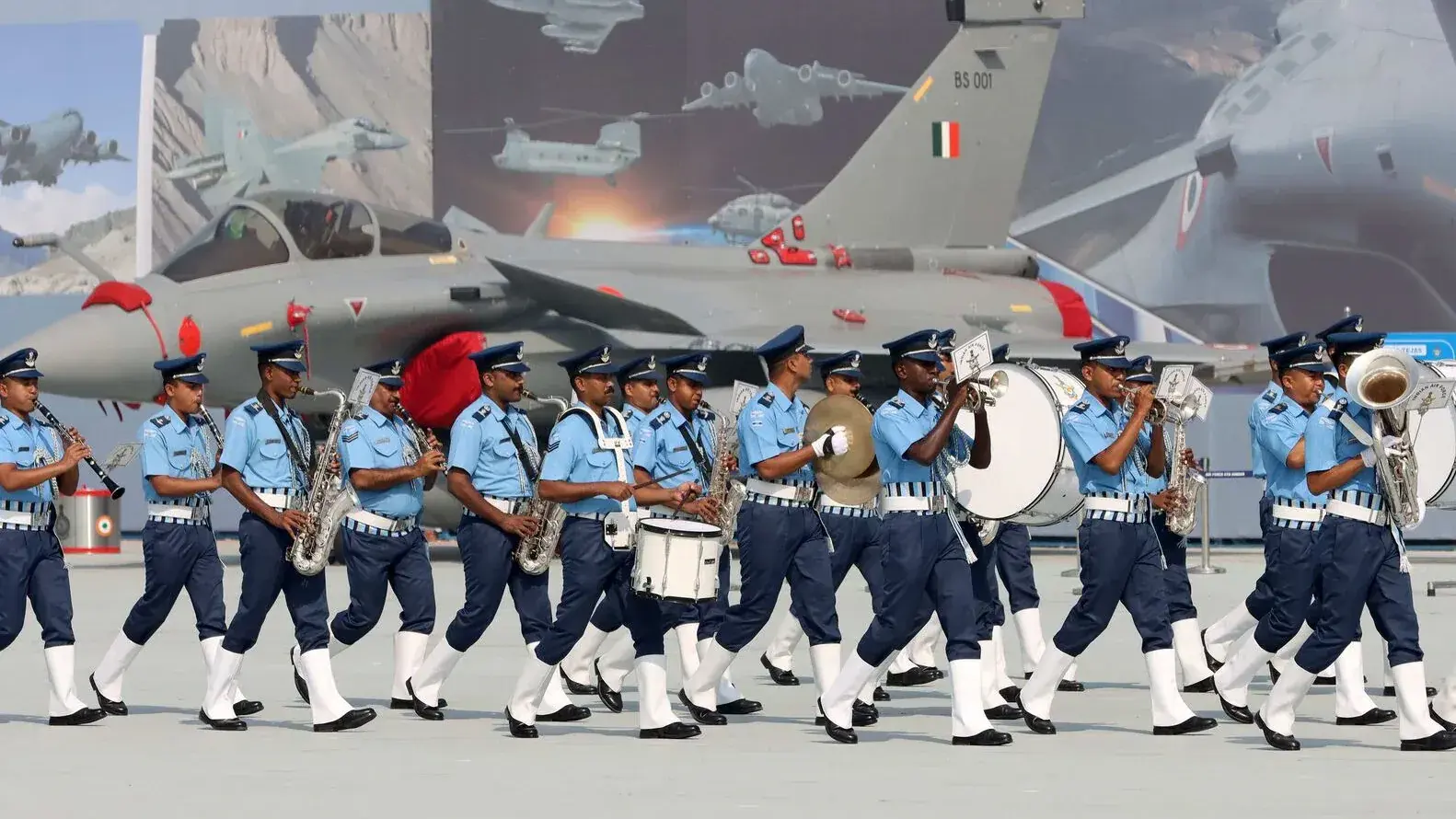
India and Pakistan inherited parts of the Royal Indian Air Force in 1947 and have since fought four major wars. Aerial battles were decisive in the 1965 and 1971 wars, when India’s much larger Air Force helped gain air superiority. In 1971, for example, India’s aircraft outmatched the PAF, leading to a decisive victory. Skirmishes continued – in Kargil (1999) the IAF flew support missions after Pakistani intruders were found, and in 2019 India even struck terrorist targets across the Line of Control (LoC) for the first time since 1971.
Ever since the 1990s, India’s Air Force has pursued qualitative supremacy. It steadily constructs a larger strength to equate Pakistan’s, retains a robust defensive orientation, and invests in proactive solutions. Its rival, Pakistan’s Air Force (PAF), has a thin purse with focus on asymmetric warfare. Islamabad has lately pursued Chinese planes (JF‑17 Thunder and new J‑10Cs) and missiles (e.g. HQ-9 SAM, PL-15 air-to-air missiles) to counter India’s edge.
Key IAF Strategies to Maintain the Edge
To counter the PAF, the IAF employs several key strategies:
Precision Standoff Attacks
Indian fighters carry air-to-surface weapons like Israel’s Spice or Turkey’s SOM (and India’s own Rudram/Prahasta missiles) that can be launched from tens or hundreds of kilometers away. Doctrine emphasizes staying outside the envelope of man-portable air-defense missiles. In recent conflicts analysts noted that Indian jets “consistently penetrated Pakistani air defences with air-launched standoff munitions” to hit their targets. DRDO’s plans for even longer-range cruise missiles (up to 300 km) will extend this edge.
Integrated Air Defense Network
India’s new IACCS (Integrated Air Command and Control System) ties together all sensors and shooters into a network. Ground radars, AWACS planes, UAVs, and even civilian ATC radars all feed data into a common Recognized Air Situation Picture. Commanders at Air Command HQs can watch the entire airspace in real time and vector fighters or SAM batteries instantly. In the recent 2025 “Operation Sindoor” scenario, for example, the IACCS was credited with detecting and tracking Pakistani drones, missiles, and aircraft simultaneously. It enabled rapid hand-off of targets to the appropriate layer (long-range S-400, medium Akash missiles, short-range guns) with no duplication. In short, India fights as a tightly‐linked network, while Pakistan’s systems are less fully integrated.
Electronic Warfare and Stealth Detection
The IAF is upgrading its EW capabilities. New radars like the Surya VHF 3D radar (delivered 2025) can spot even stealthy aircraft by using long wavelengths. Surya can detect targets with small radar cross-sections (like drones or fifth-generation fighters) at ranges up to 360 km. This complements shorter-range mobile radars (like BEL’s Ashwini radar) for a layered surveillance cover. The combination of AWACS, ground radars, and airborne electronic warfare pods helps the IAF track Pakistani jets even in clutter.
Superior Training and Tactics
The IAF places heavy emphasis on pilot training. Elite schools like TACDE (the fighter weapons school) and vigorous simulator programs keep pilots combat-ready. Indian crews regularly face challenging scenarios in exercises. For example, IAF Rafale fighters took part in the U.S. Red Flag 2024 exercise in Alaska – the first time Rafales flew alongside U.S. F‑16s and F‑15s. The IAF also conducts large domestic drills (like “Garuda Shakti” and “Tarang Shakti”) and sends teams abroad. In 2024 the IAF hosted a multilateral exercise with 11 countries’ air forces. These joint drills build experience against varied tactics and enhance pilot skill. By comparison, the PAF has fewer chances to practice against non-regional forces, giving India an edge in operational flexibility.
Technological Advantages and Recent Upgrades
Over the last decade the IAF has rapidly modernized its technology to stay ahead:
New Fighter Jets
India inducted 36 Rafale fighters (4.5-generation, with AESA radar and Meteor BVR missiles) starting in 2020. It continues upgrading its backbone Su-30MKI fleet with new radar systems (DRDO’s Virupaksha AESA radar) and weapons. The light combat aircraft Tejas Mk1A is entering service, gradually replacing old MiGs. Future plans include the indigenous AMCA stealth fighter and more Rafales.
Airborne Radar & Sensors
IAF’s fleet of AWACS planes includes 3 Israeli Phalcon on IL‑76 (equipped with S‑band AESA radars) and 3 indigenously-built Netra AWACS (on Embraer jet) for 360° coverage. On the ground, India fields a variety of advanced radars: 2D and 3D systems, and now anti-stealth VHF radars like Surya. These ensure long-range detection of incoming threats, complementing the airborne platforms.
Missiles & Weapons
The IAF is equipping Sukhois and MiGs with Astra (an Indian BVR missile) and Python-5 IR AAMs from Israel. Rafales are being equipped with Meteor long-range missiles. Air-to-surface weapons are precision glide bombs (Paveway, Spice-2000) and under-development cruise missiles (such as Nirbhay). Notably, India’s SAM inventory is being renewed: long-range S‑400 batteries, medium-range Akash MK‑2, Quick-Reaction SAMs (QRSAM), and new anti-drone weapons.
Infrastructure and Partnerships
Beyond hardware, the IAF’s edge comes from its people and networks:
Strong Infrastructure
India possesses more than 60 air bases across all geographic locations, including island and high-altitude bases. The IAF keeps runways and revetments on the western front constantly improved. For instance, mobile systems such as the Rohini were recently positioned in Lakshadweep to provide air defense. The IAF’s strategic airlift (C-17, IL-76) and aerial-refueling capabilities (IL-78 tankers) enable its fighters to target distant points – as proven by the Rafale trans-Atlantic ferry to Red Flag. At the same time, India is establishing new airstrips along the China and Pakistan borders to make it difficult for any opponent to plan.
International Partnerships
The IAF benefits from a wide network of global ties. India is a Major Defense Partner of the U.S., giving access to advanced tech and joint drills. It sources equipment from Russia (Su-30, radars, missiles), France (Rafale, MICA missiles), Israel (spy satellites, Litening pods, Python/Derby missiles), and Britain (Hawk trainers, MBDA missiles). Regular bilateral exercises with the UAE, France, Singapore, and others improve interoperability. All this “imports know-how” to neutralize threats from Pakistan’s and even China’s. Pakistan, on the other hand, is heavily dependent on China (cooperative Shaheen missile exercises) and has more restricted American assistance (e.g. F-16 upgrades via MNNA status).
In summary, the IAF answers the PAF with a combination of superiority, advanced aircraft and missile technology, combined air defenses, and intense training. It never stops updating – new radars (surya, Uttam AESA), missiles (Astra, Meteor), and fighter upgrades – to keep one step ahead of Pakistan’s developments. Through the use of a strong defense budget and global partnerships, India has an air deterrent advantage. Although Pakistan operates effective J-10/JF-17 fighters and Chinese-long-range arms, the depth of IAF resources, situational awareness (networked C4I systems), and strike capabilities give it superiority in the air battle.
Article by Shaloo Singh