

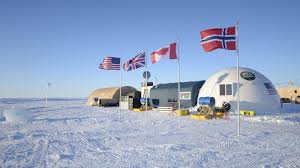
The Arctic area is the region around the North Pole that encompasses the coldest and most distant section of Earth. Countries throughout the world have increasingly become very concerned with this region in recent years. It is all because of climate change. With the increase in temperature on earth, the ice in the arctic which is very thick, is melting. This is creating big changes. New shipping lines are being opened and ships can take less time to travel between Asia and Europe.
Concurrently, the melting ice is exposing massive reserves of natural resources such as oil, gas, and minerals that were long buried in ice. Due to such useful assets and new sea routes, numerous nations desire to govern some areas of the Arctic. They are currently attempting to occupy other regions and assert themselves there. This has contributed to increased competition and political frictions among the most powerful countries across the globe.
Strategic Importance of the Arctic
Natural Resources
Arctic is thought to possess abundant oil, natural gas and minerals. According to the United States Geological Survey, the arctic contains approximately 13 percent of the undiscovered oil in the world, and 30 percent of the undiscovered natural gas in the world. These resources are of great significance as people worldwide require increased energy on a daily basis.
Lots of nations are eager to obtain these resources in order to enable them to produce electricity, operate machines, and sustain their enterprises. With the melting of ice in the arctic, access to these areas is simplified. This is why an increasing number of nations are attempting to explore the Arctic and acquire these precious items.
New Shipping Routes
The melting ice in the Arctic has made new shipping paths, previously impossible. The Northern Sea Route passing along the coast of Russia is one of them and the Northwest Passage through Arctic Islands of Canada is another route. These new routes enable ships to go between Europe and Asia at a very high speed compared to the old route via the Suez Canal.
This saves shipping companies a lot of time and money. Due to that, numerous companies are willing to employ such routes to transport cargo faster. As the ice continues to melt, an increasing number of ships can make it through such routes each year. This makes Arctic shipping routes more popular and important for world trade.
Strategic Military Significance
The Arctic is near to some of the strongest countries in the world and here the Arctic is of military interest. Arctic dominance can offer great benefits to the country with the likes of defense against the missiles, monitoring of large areas and also possibility of deploying troops at high speed when the situation arises. To monitor the region, most countries are building military bases, icebreaker ships, and radar stations in the Arctic. This helps them in protecting their land and resources. Because of the importance of the Arctic, countries are eager to be mighty in such direction to keep their might and to stay safe.
Key Players and Their Interests
Russia
Russia considers the Arctic a crucial aspect of its national policy. The nation has also prioritized the establishment of its Arctic infrastructure, ports, and icebreakers to help extract and ship resources. The military presence of Russia in the region has also grown, creating new bases and modernizing old ones. This growth has concerned the rest of the Arctic countries that the region will be militarized.
United States
The U.S. is also greatly concerned about the Arctic due to its significance in security and access to natural resources. The United States is not a party to the United Nations regulations regarding sea areas (also referred to as UNCLOS) but it is also aware that the Arctic is a significant part of world politics. The U.S. has conducted military drills in the Arctic to be ready and demonstrate its strength. It also negotiates with other nations to ensure that its interests are safeguarded. U.S. wants to have a powerful role in the Arctic as various countries attempt to win over this significant region.
Canada
Canada claims that the Northwest Passage belongs to its own waters, but other nations do not share this opinion. Canada is constructing additional military bases and enhancing roads, ports and icebreaker ships to protect its rights in the Arctic. The nation is interested in preserving the Arctic and ensuring that its territory remains secure. Meanwhile, Canada is attempting to take good care of the environment whilst using what the Arctic has to offer in a clever manner. This assists the nation in expanding the economy without damaging nature.
Norway
In the Arctic, and particularly in the Svalbard islands, Norway has long been a participant. The nation feels it is highly essential that every nation should collaborate peacefully in the Arctic. Norway prefers to find solutions through a dialogue rather than through a fight and advocates using Arctic resources in a manner that is not destructive to nature. Their regulations are directional towards ensuring the Arctic is safe and clean. Norway would like to keep the arctic a place where nations would co-exist and not conflict, hence, it remains peaceful to all.
Denmark (Greenland)
Greenland belongs to Denmark, although it has a self-government in most aspects. It holds a lot of minerals and a strategic position hence it is very important in the Arctic. These resources capture the interest of many countries in Greenland. Denmark supports the idea of Greenland having more control over its affairs. In the meantime, Denmark works toward keeping the Arctic a safe and peaceful environment. They want countries to cooperate and to follow the rules so that the Arctic is peaceful and does not turn into a conflict zone.
China
China is not a country in the Arctic, but it has a great interest in the Arctic. It desires to utilize the new shipping routes and receive natural resources in the area. China is also investing in Arctic research to understand the region better. It is also participating in negotiations regarding the future of the Arctic use. Due to the increasing engagement of China in the Arctic, certain Arctic nations are concerned. They fear that this would lead to issues regarding rules and safety within the area.
Territorial Disputes and Legal Rules
The Arctic has many territorial disputes because different countries want control over the same areas. The United Nations Convention on the Law of the Sea (UNCLOS) helps countries solve these problems. It allows countries to ask for more area if they can show their land continues under the sea.
Several nations have requested the Commission on the Limits of the Continental Shelf (CLCS) to allow nations to expand their jurisdiction. As an illustration, there was the Lomonosov Ridge which is an Arctic Ocean mountain that Russia claimed. But Canada and Denmark also want this area. The CLCS has not decided yet.
There are also arguments about the Northwest Passage and Northern Sea Route. Canada says the Northwest Passage is part of its own waters, but other countries think it is an international path where everyone can pass. Russia says the Northern Sea Route belongs to them, but others disagree. These disputes make the Arctic’s future uncertain.
Environmental Concerns and Indigenous Rights
The Arctic’s environment is very fragile and is now in danger because of more human activities. These include getting oil and gas, more ships passing through, and military operations. The problem is becoming more severe due to the climate change as the ice melts off, the temperatures are rising and animals and plants lose their habitats. The indigenous people of the Arctic worry about what effects these changes will have on their lives. They are generations old and they rely on nature to hunt, fish and their culture. They desire to contribute to the decision-making process concerning the Arctic in order to secure their rights and land.
They demand regulations that ensure that their home is safe and prevent the exploitation of the environment by large corporations or nations. According to the indigenous people, they want to be heard in order to preserve the Arctic in good health so that the future generations can enjoy their future.
Future Outlook
Within the coming years, the Arctic scenario will probably continue to evolve. Previously, nations collaborated harmoniously in the Arctic. However, today, most nations are beginning to fight over possession of the region. The reason is that they desire to access valuable resources, exploit key shipping routes, and possess military advantages. Meanwhile, they should also consider environmental protection. The unity of countries in tackling these issues is still very important.
Such organizations as the Arctic Council assist Arctic nations and indigenous people to discuss and make decisions collectively. However, non-Arctic nations, such as China, are also becoming interested, as do increasing numbers of military units being deployed to the region. This makes it harder to keep the Arctic safe and peaceful.
The Arctic is now at an important point. What countries decide today will decide if the Arctic stays a peaceful place or becomes full of arguments and fights.
Article by Rachna