

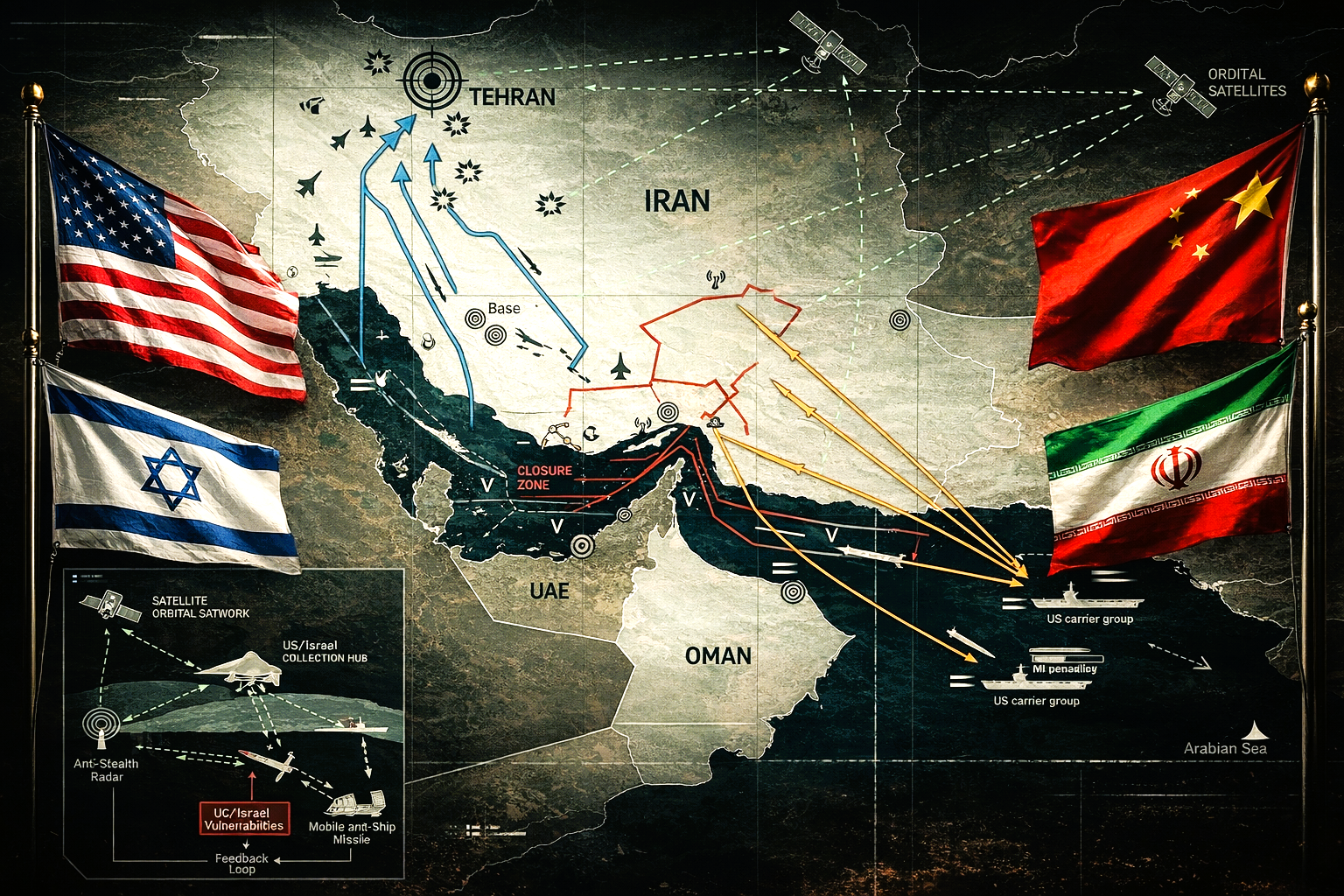
The confrontation involving Israel, Iran, and the United States is no longer confined to the Middle East, it is escalating rapidly threatening energy security to global food supply chains. Disruption of the Strait of Hormuz, which carries 20 percent of the world’s oil supply, has the potential to destabilise global energy markets and trigger significant rise in oil prices, affecting economies across Asia, Europe, and beyond.
In this array of growing tensions caused by the war, several countries have called for restraint and de-escalation, but among them, most vocal has been the People’s Republic of China. Beijing has repeatedly urged all parties to resolve differences through dialogue and diplomacy to cease hostilities. On 8 March 2026, speaking on the sidelines of China’s annual parliamentary and political gatherings known as the Two Sessions (两会 lianghui), China’s Foreign Minister Wang Yi elaborated on China’s position regarding the situation in Iran. He stated that “the war should have never happened,” and emphasised that “the law of the jungle must not return and rule the world” and that the wilful use of force does not demonstrate strength. As Iran’s largest trading partner The conflict presents both risks and opportunities for Beijing: while instability threatens Beijing’s energy security and trade routes, it also allows China to project its preferred model of diplomacy centred on mediation, development partnerships, and opposition to military intervention. China purchased over 80% of Iran’s total oil shipments, this trade relations often translates as alliance. China depends heavily on Middle East stability for its energy security, yet it prefers diplomatic mediation over military entanglement in distant conflicts highlighting a fundamental dilemma for Beijing. China’s decision to not intervene in the war militarily has led China to be critiqued and dubbed as “unreliable partner” stating it did not support its “allies”- Venezuela and Iran when under attack like the other powers would do. However, China’s position on the matter has been clear, it often states that for China its domestic priorities comes first. China remains deeply occupied with internal modernisation: reviving demand, creating jobs, managing debt, coping with demographic pressure, sustaining technological upgrading, and preserving social stability.
China’s Expanding Global Partnerships
From Isolation to Global Engagement For China, diplomacy is one of the central pillars of its foreign policy which is closely tied to the principles articulated in Xi Jinping Thought on Diplomacy, emphasising on multilateralism, global cooperation, and the peaceful resolution of disputes- Rooted in historical experience and contemporary strategic thinking, Chinese diplomacy works alongside economic and military capabilities to expand influence, protect national interests, and shape global governance structures. In the late 1800’s China was often dubbed as the “sick man of Asia” and a closed country. China transformed itself as the world’s second-largest economy in less than eight decades and also became a permanent member of the United Nations Security Council and founding member of various significant multilateral platforms like BRICS and SCO. In this capacity, Beijing seeks to participate in global affairs and shape international institutions and norms as equal partners; advocating for a multipolar world. China has repeatedly rejected the idea of a G2 with the United States. In 2023, China successfully positioned itself as a diplomatic mediator in the Middle East, as it brokered a historic rapprochement between Saudi Arabia and Iran, after seven years of severed diplomatic relations between the two nations. The agreement was widely viewed as a diplomatic win and signalled China’s role in regional conflict mediation. China also hosted reconciliation talks between Palestinian factions Fatah and Hamas in 2024, reinstating its aspiration to present itself as a responsible diplomatic stakeholder in the Middle East. Security alliance like North Atlantic Treaty Organisations (NATO) influence thirtyfour countries, therefore, China has increasingly sought to expand its influence among the non-NATO and developing nations by presenting itself not as a partner and enabler of economic growth and infrastructure development- through initiatives such as the Belt and Road Initiative (BRI), Global Development Initiative (GDI), aimed at poverty reduction, food security, public health, digital economy, and sustainable development, Global Security Initiative (GSI) aimed at promoting a vision of “common, comprehensive, cooperative, and sustainable security, and Global Civilization Initiative (GCI) promoting cultural exchange, mutual learning among civilisations, and respect for diverse political systems, China seeks to promote principles of win-win cooperation, mutual benefit, mutual-respect, non-interference, and South-South cooperation.
War as a Last Resort: The Chinese Strategic Perspective
Diplomacy as China’s Strategic Tool Attacks on Riyadh allegedly by Tehran, however, complicated this diplomatic narrative and raised questions about the durability of China’s mediation efforts. Such developments may seem to undermine China’s diplomatic influence but they do not necessarily represent a fundamental setback for Beijing’s broader diplomatic strategy, as several scholars, including John Mearsheimer have characterised the current conflict as an “unwanted war”, undermined diplomacy of those who waged the war but praised China for its continued pursuit for peace and diplomacy. Professor Victor Gao of Soochow University, argues that according to the Chinese strategic thinking and philosophical traditions, war should remain a last resort and dialogue, negotiation, and diplomacy should remain the primary tools for resolving international disputes. As China advocates for de-escalation and promotes dialogue over war, China posits itself as a stabilising force in the world. China’s response to the conflict reflects its broader diplomatic philosophy: however, China’s foreign policy is unique and it refuses to act like other countries and follow the footsteps of other countries making it seem like an unreliable partner, therefore, the ongoing China-Israel and Iran conflict represents both a challenge and an opportunity for China to demonstrate its model of diplomacy which centres on negotiation and development cooperation, mutual benefit and mutual respect. China’s historical memory also shapes its strategic tradition. China’s national humiliation or the century of humiliation beginning from the first Opium War in 1839, when it experienced humiliation at the hands of strong countries, China is less likely to romanticise the idea that strong states should reorder weaker ones by force. Wang Zichen, founder of Pekingology mentions that this is often dismissed as propaganda, but it’s the message that Beijing has been propagating for decades. Whether China can sustain its image as a neutral mediator will depend not only on its diplomatic rhetoric but also on its ability to manage competing relationships with Iran, Israel, and the Gulf states. The escalating conflict in the Middle East, provides an opportunity to Beijing to practice its diplomacy that centres around non-interference and development partnerships and it also challenges China’s model of diplomacy as the world watches whether non-intervention can translate into real influence in an increasingly volatile world.
Article by Sheetal