

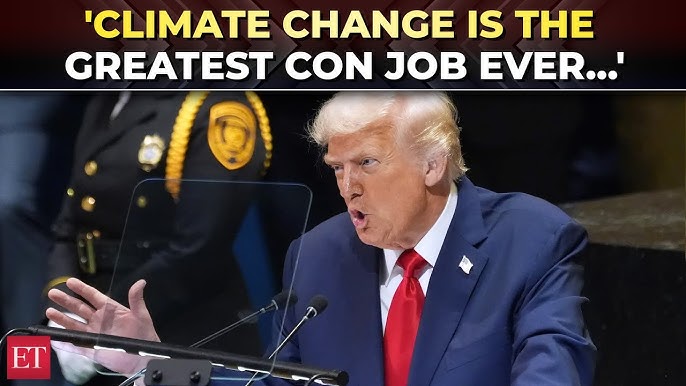
As you scroll through headlines over your morning coffee and notice something odd, the same person who once warned the planet was heading toward catastrophe now says climate change won’t destroy civilization. That’s Bill Gates. And just hours after that statement went public, Donald Trump took a victory lap, calling it proof that climate change has been a “hoax” all along.
So, what’s really happening here? The truth is, the landscape of climate change politics is shifting faster than most people realize. The old black-and-white debate, “Is it real or not?”, is fading. The conversation now sits at the intersection of economics, activism, and policy. Let’s unpack what that means.
What Prompted the Shift by Bill Gates and Why it Matters?
For years, Gates has warned of devastating climate consequences if humanity doesn’t act quickly. Then came his change in tone, a memo stating that while climate change remains serious, it’s not an existential threat to civilization.
That might sound subtle, but it represents a significant shift in messaging. And it’s important because when someone like Gates, a global voice for innovation and philanthropy, changes how he talks about climate, people pay attention. It reveals how climate change politics continues to evolve, reflecting new thinking on how societies can balance sustainability, growth, and resilience.
Instead of endless warnings about global collapse, there’s a growing focus on solutions that blend human welfare, technology, and economics. It’s an acknowledgment that the real action lies in the space where climate change and economics meet, investing in more intelligent infrastructure, cleaner energy, and public health.
Global Warming Sceptics’ Arguments
Global warming sceptics’ arguments aren’t new. They range from questioning climate models to downplaying human influence or claiming that the costs of mitigation outweigh the benefits. Yet, as evidence mounts, those arguments often shift toward economic or political concerns rather than outright denial.
Here’s a quick look at common claims and how they stack up:
| Sceptic argument | Mainstream counter-point | Implication for policy/economics |
| “Climate change is a hoax or exaggerated.” | Virtually all climate scientists agree that warming is ongoing and human-driven. | If policy ignores this, risk escalates; the opportunity of mitigation may be missed. |
| “The cost of mitigation exceeds the benefit.” | Many analyses show mitigation saves long-term costs (health, infrastructure, disaster response). | Evaluating climate change and economics, investments in clean tech often yield returns. |
| “Natural variability explains warming.” | Studies show that human-caused greenhouse gases have dominated recent warming trends. | Government policy must consider the human factor, not just natural cycles. |
| “Policy measures hurt business, jobs.” | Transition policies can create jobs (clean energy, efficiency) and reduce risk exposure. | For climate change activism and business strategy, the focus should shift to opportunity. |
The debate has evolved. It’s less about proving whether warming exists and more about determining what balance of policy, economics, and activism can drive realistic progress. That’s where climate change politics truly plays out, in how decisions shape industries, investments, and livelihoods.
Bill Gates, Trump, and The Politics of Messaging
When Trump claimed Gates had “finally admitted he was wrong” and doubled down on his long-standing stance that climate change is a hoax, it wasn’t just political theatre. It reflected a broader cultural divide, one that extends well beyond science.
Here’s what this moment tells us:
- Message matters. The framing of climate change is changing from a doomsday countdown to a practical discussion about resilience, energy security, and cost efficiency. That directly influences climate change and government policy, from energy subsidies to tax credits.
- Activism vs realism. For many climate activists, Gates’s words felt like a setback. For sceptics, it was validation. That tension highlights how climate change activism often battles not just policy inertia, but public fatigue from decades of fear-based messaging.
- Business and economics. The new tone opens doors for investors and industries. As climate change and economics become increasingly intertwined, companies are treating sustainability not as charity, but as good business, from climate-resilient construction to low-carbon logistics.
This isn’t just about who’s right or wrong. It’s about how societies define progress and how governments, corporations, and citizens adapt.
Actionable Steps: What Organisations and Individuals Should do Now?
Whether you’re a policymaker, a business strategist, or simply someone paying attention, this changing narrative calls for a more grounded response. Here’s where to start:
1. Audit risks and opportunities.
Understand how climate change affects your operations, supply chains, or local community. Explore the intersection of climate change and economics, such as lean energy, waste reduction, water resilience, or climate-smart agriculture.
2. Focus on people, not panic.
Instead of aiming only for emission numbers, target outcomes that protect lives and livelihoods. Better housing design, reliable healthcare during heatwaves, and smarter public transit matter just as much.
3. Collaborate, don’t polarize.
Partnerships between businesses, governments, and NGOs often yield faster results than those achieved through politics alone. Get involved in shaping climate change politics, not shouting from the sidelines.
4. Communicate with credibility.
Avoid sensationalism. People listen when you connect climate solutions to tangible benefits, such as jobs, stability, and affordability. Authentic voices make climate change activism more substantial and more persuasive.
5. Stay alert to policy shifts.
Laws are changing. From tax incentives for green technology to infrastructure funding for adaptation, climate change is no longer abstract; it affects business planning and long-term investments.
6. Prioritise resilience.
Energy efficiency and clean technology grab headlines, but adaptation —preparing for inevitable change, is equally vital. That means flood-ready cities, drought-proof crops, and climate-resilient utilities.
Each of these steps transforms concern into control. That’s where progress starts.
Why This Conversation Hits Home for Americans?
In the U.S., climate debates have always carried political weight. The phrase “climate change hoax” isn’t just scientific scepticism; it’s an identity marker, a dividing line in national discourse. Gates’s comments and Trump’s reaction only magnified that split.
However, here’s the truth: what happens in America has a significant impact on global outcomes. The U.S. is both one of the largest emitters and an important innovator in this area. Every choice made here, every shift in climate change and government policy, or private-sector investment, ripples worldwide.
For American citizens and businesses, that means:
- Economic stakes are real. The intersection of climate change and economics determines future competitiveness. Clean energy isn’t just ethical; it’s profitable.
- Policy direction matters; federal and state initiatives, from EV subsidies to infrastructure upgrades, shape markets and job creation.
- Activism must evolve. Fear alone won’t persuade. Grounded, solution-driven climate change activism will.
- Engagement beats avoidance. Sceptics will always exist. Listening, debating, and finding middle ground help bridge divides rather than deepen them.
The U.S. stands at the heart of the global climate conversation, and how that conversation is managed will define economic and political priorities for decades.
The Takeaway: Realism Beats Sensationalism
The big lesson from this moment is that sensationalist war-cry headlines about “planet doomed” can stir emotions, but long-term momentum comes from credible, actionable strategies. That’s exactly what this shift in tone illustrates. Gates didn’t abandon concern; he changed the framing. Sceptics didn’t suddenly “win”; the conversation was reframed.
That reframing matters for anyone in business, policy, or activism. It changes how we engage with climate change activism, how we shape climate change and government policy, how we evaluate arguments from global warming sceptics, and how we analyze climate change and economics.
When decisions are about where dollars go, where subsidies land, and where innovation happens, that’s when the game really changes.
Article by Apurva